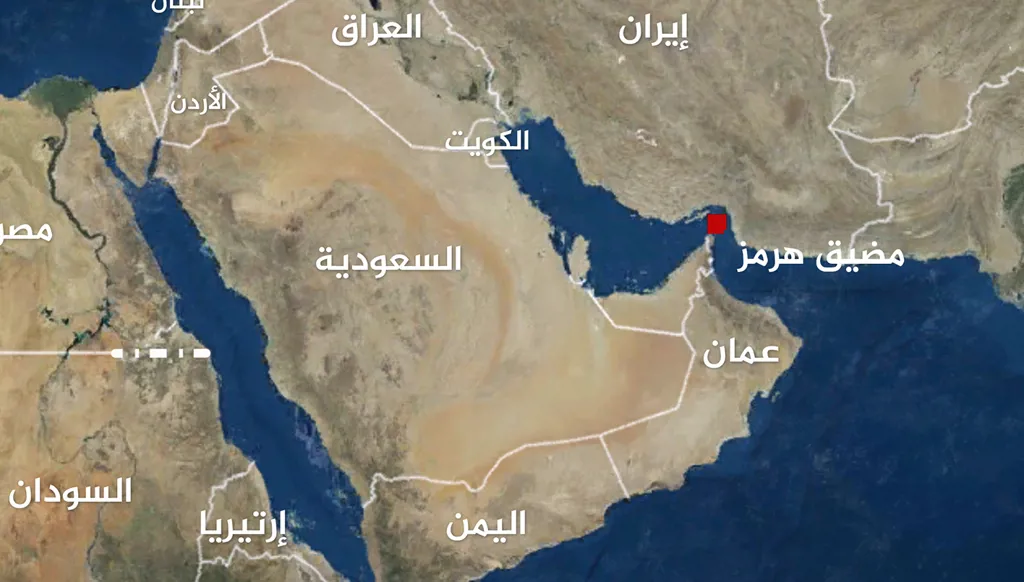
The Yemeni crisis can no longer be separated from the transformations reshaping the maps of influence in the Middle East and the Horn of Africa. Yemen's location at the southern entrance to the Red Sea and its position overlooking the Bab el-Mandeb Strait make control over its coasts and islands an issue that extends beyond its borders, affecting Gulf security, particularly that of Saudi Arabia and Egypt, international trade, and regional power balances.
This dimension gained further significance in September 2026, when the Houthis reached Mayyun Island, located in the middle of the Bab el-Mandeb Strait, according to Yemeni government sources. This development enhanced their ability to influence one of the world's most important maritime arteries. Yemen has thus become a test of the transition from containing threats to building regional deterrence capabilities, and from managing a prolonged crisis to addressing its political, military and strategic causes.
The Saudi-UAE rapprochement presents an opportunity to realign efforts in Yemen, moving beyond bilateral interests towards a shared vision of restoring Yemeni state institutions and preventing the country from becoming a permanent platform for threats to Islamic sanctities, the national security of neighboring countries, particularly Saudi Arabia, and international navigation.
The challenge extends beyond confronting the Houthis to addressing their military strength as part of the Iranian network of influence. Sustainable stability cannot be achieved by containing threats without tackling their sources, in line with Arab and international political and military frameworks for restoring Yemeni legitimacy and state sovereignty.
Ending the Houthi threat to Saudi Arabia and maritime passages should not become a standalone military objective detached from a political settlement. The goal must be to establish a federal Yemeni state capable of asserting its authority, securing its coasts and preventing its territory from being used in regional proxy conflicts. Otherwise, security arrangements will remain vulnerable to setbacks.
The geography of Bab el-Mandeb creates an intrinsic link between Gulf security and Egyptian national security. Any sustained disruption in the Red Sea affects trade flows and the Suez Canal, increasing economic and strategic pressures on Egypt, which also faces a significant water challenge due to the repercussions of the Ethiopian Renaissance Dam. This issue intersects with Ethiopia's ambition to secure a seaport under its sovereignty, extending beyond commercial facilities to the pursuit of a sovereign foothold on the coast. This adds a new dimension to competition for influence and the security balance in the Horn of Africa and the Red Sea.
In this context, Israel's recognition of Somaliland and the expansion of its relations with it acquire significance beyond the bilateral relationship. Somaliland's location on the Gulf of Aden, opposite the Yemeni coast, gives any advanced security cooperation there potential strategic value in monitoring maritime passages and influencing the geopolitical equations of the Horn of Africa.
Somaliland officials have acknowledged Israeli cooperation in training police and army forces, while its defense minister denied, in June 2026, the existence of an Israeli military base or open negotiations to establish one. Accordingly, interpreting this development as a strategic concern for Saudi Arabia and Egypt rests on the geographical location and nature of the cooperation, rather than on an assumption that a military base has been confirmed.
The Renaissance Dam, meanwhile, remains an ongoing challenge to Egyptian national and water security, requiring an integrated diplomatic, legal and strategic response. Although multiple regional and international interests intersect around the issue, the hypothesis of a direct Israeli plan to encircle Egypt through water is based on geopolitical conclusions linked to the announcement of the "Greater Israel" project. What is needed is to link maritime security with water security within a broader Egyptian and Arab deterrence vision.
Turkey enters this equation as a regional power with military capabilities, defense industries and an extensive network of relations stretching from the Arabian Gulf to Europe and North Africa. Its defense cooperation with Qatar provides a foundation for developing coordination, protecting maritime passages and confronting cross-border risks.
On October 21, 2026, Turkey, Qatar, Pakistan and Indonesia signed a memorandum of understanding to enhance defense cooperation, military industries, training, and research and development. This reflects a trend towards expanding defense partnerships without implying the formation of a unified alliance with shared defense commitments among all its parties.
The opportunity lies in aligning these partnerships with Saudi, Emirati and Egyptian interests amid American pressure on Iran, continued Houthi attacks on Saudi Arabia, and the public and religious outrage triggered by attacks targeting Mecca and Medina. The complete closure of Iran's land borders with Pakistan, Afghanistan, Azerbaijan and Turkey, alongside the congestion of around 17,000 Iranian trucks, adds a new dimension to these pressures. It brings the confrontation directly into Iran's commercial and logistical sphere and opens the door to tighter restrictions on Iranian land transport corridors in parallel with political and security pressures.
These converging factors could narrow Tehran's room for maneuver, expanding the use of political, economic and logistical deterrence tools alongside defense coordination. However, turning these intersections into an effective regional deterrence system depends on defining a framework of shared interests, establishing consultation mechanisms and agreeing on principles of cooperation while respecting state sovereignty. This must be done without assuming that the parties' policies are aligned or that a fully unified axis has been established.
Regional competition is not confined to military control; it also extends to trade, energy and transport routes that shape countries' positions in the global economy and the balance of influence. From Bab el-Mandeb and the Red Sea to the Gulf and the Eastern Mediterranean, maritime routes intersect with road, railway, and oil and gas pipeline projects, making economic geography an extension of security and strategy.
In this context, developing routes linking Saudi Arabia to Jordan, Syria, Iraq and Turkey, and extending towards Europe, could broaden transport and energy options while strengthening economic connectivity between the Gulf and the Levant. However, turning these possibilities into an integrated network will depend on political stability, available funding, infrastructure and cross-border agreements. These routes do not diminish the importance of the Suez Canal; rather, they could complement its role or redistribute some trade flows and regional centers of influence.
Economic interests may intersect without necessarily producing new political alignments. Nor can regional arrangements be separated from the Palestinian issue or from the circumstances of the countries concerned and their relations with Israel. Geography opens new avenues for cooperation and competition, but converting these opportunities into sustainable influence depends on political decisions and the ability to build balanced partnerships.
These issues converge on one strategic truth: Yemen's security is interconnected with that of the Gulf, Egypt, the Red Sea and the Horn of Africa. Protecting maritime routes requires addressing competition for influence while opening new horizons for economic integration.
The challenge lies in transforming intersecting interests into an institutional regional system that combines deterrence, diplomacy, maritime security and economic integration. Such a system would make it possible to move from managing recurring crises towards building a more stable balance, in which the national state serves as the foundation of security rather than a platform for settling proxy conflicts.
Disclaimer: The opinions expressed by the writers are their own and do not necessarily represent the views of Annahar.