Turkish researcher specializing in Middle Eastern politics and Director of the Academy of Thought for Strategic Studies
The Israeli elections did not bring about a decisive political shift, despite Benjamin Netanyahu's diminished ability to form a new government. His bloc's 53 seats in the Knesset fall short of the required majority, while Arab parties have secured a significant parliamentary presence with 19 seats, making the formation of the next government more complicated.
More important than the election results, however, is whether a change of government will lead to a shift in Israeli policies toward countries in the region, particularly Turkey. In my view, there are no indications to suggest that this is likely.
I see no fundamental difference between Netanyahu and Gadi Eisenkot in their policies toward the Palestinians and neighboring countries. Therefore, I do not believe that Eisenkot becoming prime minister would necessarily ease tensions with Ankara or lead to a reassessment of Israeli policy toward Syria. Instead, existing policies may continue or even become more hardline.
Syria holds particular importance in the relationship between the two countries, given the overlap of Turkish and Israeli security and political interests on Syrian territory. I do not believe that a change in the Israeli prime minister alone would be enough to reduce this competition or halt Israeli military operations.
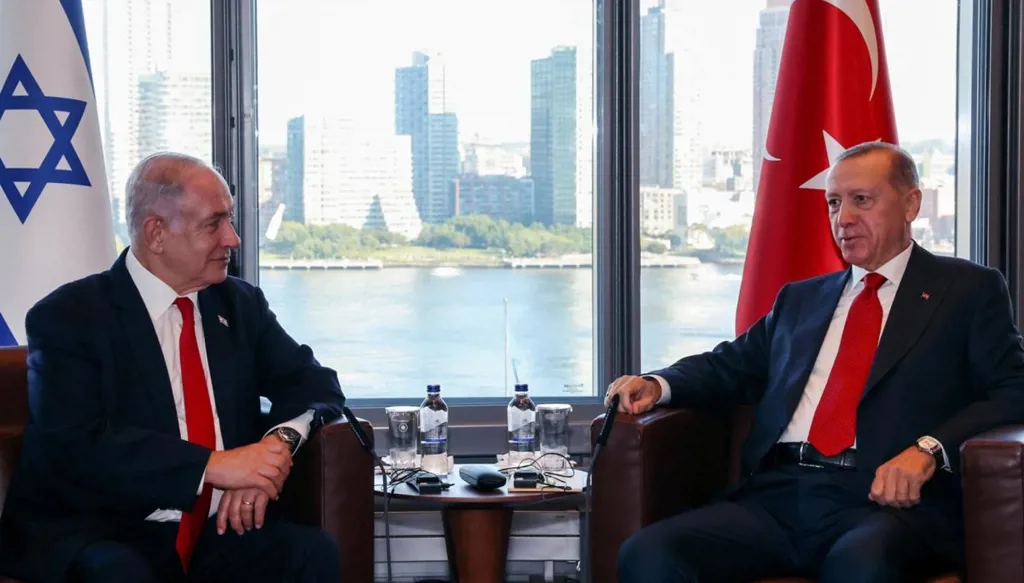
Turkish-Israeli relations have gone through periods of cooperation and rapprochement, but have deteriorated significantly following the events of October 7 and the war on Gaza. Israeli statements portraying Turkey as a potential adversary after Iran have heightened concerns about the future of the relationship and deepened mistrust between the two sides.
It is useful here to consider the experience of Egyptian-Israeli relations, which has shown that signing a peace agreement and maintaining official relations do not necessarily mean that political relations will remain at the same level or that disputes between the two states will disappear.
Nevertheless, my pessimism regarding the future of Turkish-Israeli relations does not mean that Ankara rejects diplomatic settlements. On the contrary, Turkey seeks peaceful coexistence and plays a mediating role between parties to regional and international conflicts, including the United States and Iran, and Russia and Ukraine.
Therefore, if future developments lead to broader regional understandings, Turkey may respond positively, as it seeks not war but rather stability and understanding.
However, I doubt that such understandings can endure unless there is a genuine change in Israeli policy toward the region. Political settlements may allow for periods of calm without addressing the underlying causes of tension, and I believe that continuing the current approach will ultimately lead to a confrontation between the two countries.
For this reason, I do not believe that the results of the Israeli elections, or a change in the prime minister alone, are enough to open a new chapter in relations with Ankara. What matters is not who holds power in Tel Aviv, but the policies pursued toward Turkey, the Palestinians, and neighboring countries.
Disclaimer: The opinions expressed by the writers are their own and do not necessarily represent the views of Annahar