The weak and powerless may not mind positioning themselves virtually close to giants when inflating their status proves useful in slightly boosting their morale. Lebanese people, therefore, often indulge in the same pathological stereotype, deluding themselves into believing that America, in its entirety, is losing sleep because Lebanon's authorities have failed to fulfill their firm commitments to exclusive arms control, namely the disarmament of "Hezbollah". They also believe that Europe, and even France, would experience a collapse if they were "expelled" from the south when UNIFIL's mandate comes to an end.
We present this example on the eve of the United States midterm elections, not to mock anyone, but to highlight how excessive wishful thinking and betting on the victory of either of the competing parties, under the assumption that Lebanon would be at the heart of the repercussions, could shock those who go too far once they realize Lebanon's secondary position on the list of priorities that will follow the elections.
The collapse of the resistance axis, along with the former defunct Syrian regime; the establishment of an American support umbrella for the current Lebanese authorities; America's mediation in Lebanese-Israeli negotiations; and the extensive presence of Lebanese figures around President Donald Trump, accompanied by vibrant engagement from the Lebanese-American lobby since Trump's election, are all prominent factors sustaining American attention to Lebanon. This comes alongside the shift in America's strategic focus towards the Middle East since the outbreak of its confrontations with Iran.
However, Lebanese people, starting with their official authorities and political forces, must review the constants governing Lebanese-American relations, on the one hand, and examine the dictionary of interests that guide and govern the world's greatest power, regardless of the emotional considerations that often narrow the vision of many Lebanese.
Despite a long history of experiences, it is accurate to refer to a "reference" approach when examining Lebanon's experience with America through three fundamental phases over the past four decades.
The first, and most influential at the time in shaping Lebanon's historical events, was the experience of the May 17, 1983 Agreement and the consequences of its collapse for Lebanon, despite American sponsorship. At the time, the balance of power was entirely skewed, allowing America's opponents to deliver a knockout blow to the agreement and President Amin Gemayel's era through it, as well as to America itself, with the dawn of Iranian influence in Lebanon emerging through bloody terrorism that claimed the lives of hundreds of Marines and French paratroopers on Beirut soil.
After that, America turned its back on Lebanon until the birth of Taif. However, its return was not based on purely sovereign criteria, as it quickly and tacitly accepted Syrian tutelage for years, leaving both Assad eras to exercise their infernal guardianship over the "brotherly nation".
That second experience came to an end with the earthquake of September 11 in America. Among the repercussions of those events was the third experience: the historic Resolution 1559, by all standards, which provided the international umbrella for the Cedar Revolution uprising.
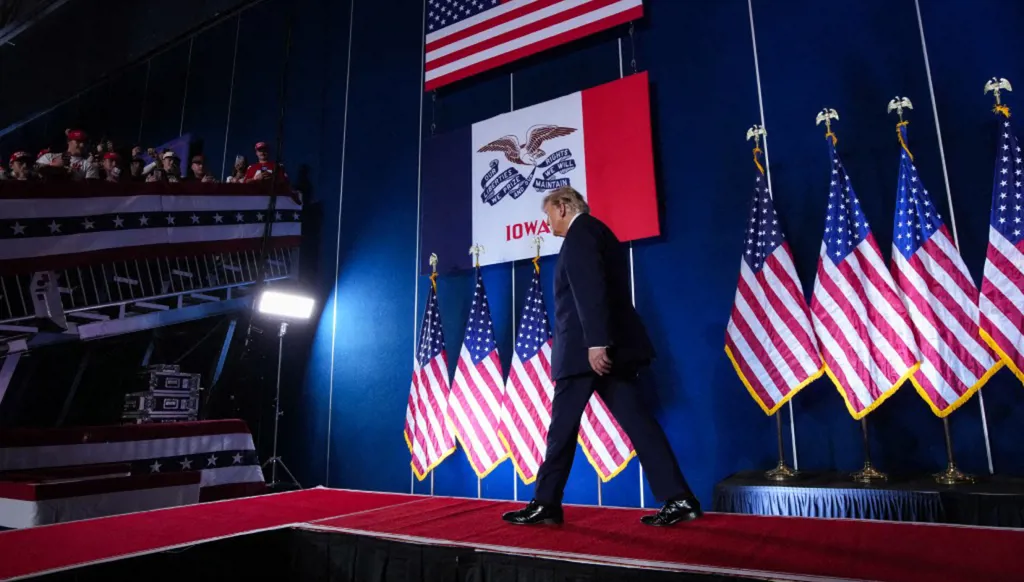
Now, at this critical moment, regardless of the image the American president emerges with on Tuesday night, Lebanon will face the reality that it is Lebanon alone that sustains America's continued attention to its affairs, and Lebanon alone that can "chase away" America once again if it slips into stagnation.
Republicans and Democrats in America do not differ significantly in their approaches to Lebanon. There is no need to inflate illusions or portray Lebanon's fate as lying alternately in Israel's ballot boxes and America's ballot boxes.
Advising that reflection on these "tedious" historical experiences deserves an attentive ear is quite different from what has habitually been heard according to one's wishes!
Disclaimer: The opinions expressed by the writers are their own and do not necessarily represent the views of Annahar.