Lebanese circles are no less keenly focused than their Israeli counterparts on the eve of the elections on the identity of the next prime minister, given the implications of the results for Lebanon’s crisis-ridden political landscape. Their attention is fixed on the future of negotiations, the fate of the framework agreement sponsored by Washington, and the conditions for an Israeli withdrawal. This raises an obvious question about Lebanon’s interests and the need to map out possible scenarios based on the outcome of the elections.
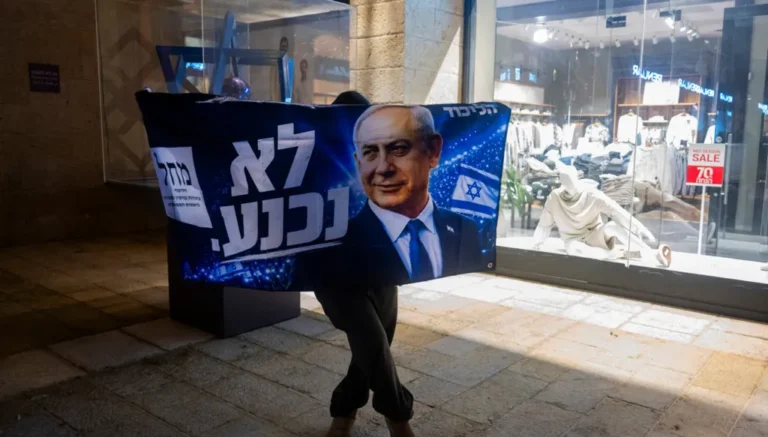
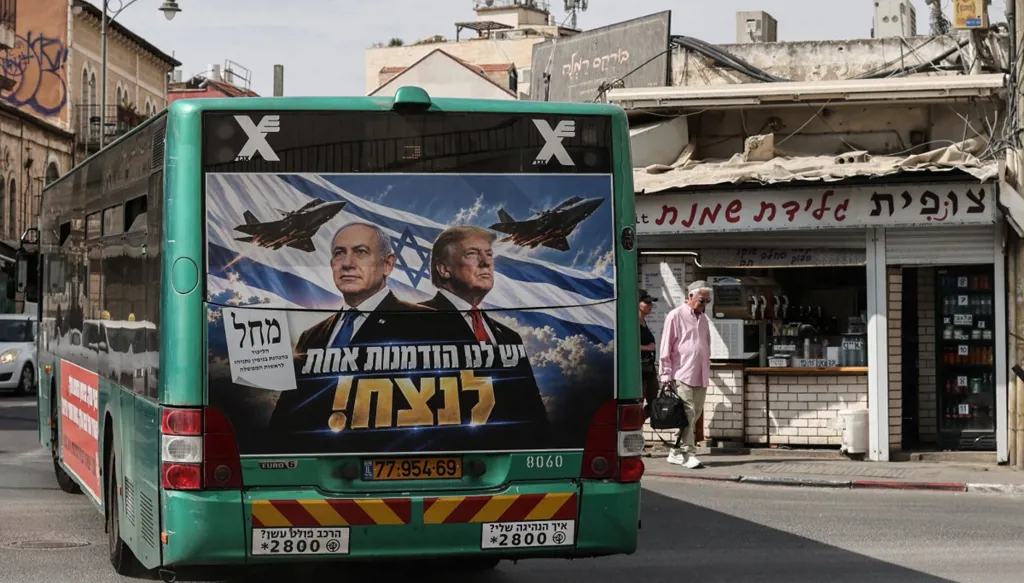
Lebanon, trapped in a state of suspended anticipation, is weighing the options on the table. The return of Benjamin Netanyahu, it should be noted, would further entrench the approach of applying military pressure and tying withdrawal to the disarmament of Hezbollah. Some, meanwhile, are wondering whether an opposition victory could pave the way for a different approach, opening the door to a political and security settlement.
So far, there is no indication that a change of government in Israel would bring about a major shift in its foreign policy toward Lebanon. There is little expectation that Israel would abandon the framework agreement, particularly since it transcends the individual prime minister and is linked to security understandings sponsored by Washington that touch on Israel’s strategic interests.
A Netanyahu victory would likely mean a continuation of the current approach, combining negotiations with military pressure while adhering to the terms of the framework agreement, particularly Hezbollah’s disarmament and the verification of the dismantling of its military infrastructure. This would come without any guarantees regarding a gradual Israeli withdrawal from Lebanese territory. The framework agreement stipulates that the state must reassert its authority over its territory, alongside the disarmament of armed groups operating outside state control, with Israeli withdrawal tied to verifiable progress in fulfilling these commitments.
However, the security annexes make clear that withdrawal is not governed by an independent timetable. Instead, it is subject to conditions linked to implementation, verification, and the concurrent deployment of the Lebanese Army. This gives Israel considerable leeway to delay its withdrawal if it considers the conditions unmet, as is currently the case.
Accordingly, a Netanyahu victory would mean continued use of the security zone inside Lebanese territory as leverage, while preserving Israel’s freedom to conduct military operations against what it describes as threats, alongside the continuation of negotiations.
Netanyahu’s main challenge, however, lies in translating military gains into sustainable arrangements without sliding into a long-term occupation or an open-ended war that would drain Israel’s resources and obstruct the restoration of stability in its north.
Netanyahu’s defeat would not necessarily mean that Lebanon would face an Israeli government more willing to withdraw or less hardline on Hezbollah. Even within Israel’s opposition camp, the possibility of maintaining a military presence in a security zone in southern Lebanon until the threat posed by Hezbollah is addressed cannot be ruled out.
This raises the possibility that a new government could adopt the same security approach but pursue it through different political and diplomatic means. The opposition might be more inclined to improve relations with the US administration and the West, and to apply political and economic pressure alongside military operations. This could create greater room for negotiations over implementation mechanisms, international monitoring, withdrawal phases, and the role of the Lebanese Army.
At the same time, it cannot be assumed that such a government would accept an unconditional withdrawal or abandon the demand that Hezbollah be prevented from rebuilding its military capabilities.
The difference, therefore, would lie in how the issue is managed and priorities are set, rather than in abandoning the substance of Israel’s security demands.
The real test is whether the next Israeli government will treat the framework agreement as a gradual process aimed at securing the border and restoring the Lebanese state’s authority in the south, or as a tool for maintaining pressure on Lebanon until Israel’s conditions are met.
Negotiating rounds have shown that the disagreement is not over the principle of negotiations itself, but over the sequencing of commitments, the scope of the occupation, verification mechanisms, and guarantees to prevent temporary arrangements from becoming a permanent reality. A change of government in Israel could therefore create an opportunity to renegotiate certain implementation details. However, amending the agreement or its security annexes requires an understanding among the parties concerned; such changes do not follow automatically from a change of prime minister.
Lebanon faces three possible scenarios, with no fourth option:
The first is the continuation of the current approach.
The second is the formation of an opposition-led government that adopts the same conditions, with negotiations expected to continue alongside military pressure and withdrawal remaining contingent on disarmament.
The third is a gradual settlement. If the new government decides to prioritize stability and relations with Washington, it may be more willing to agree on clear withdrawal phases, strengthen the role of the Lebanese Army, and expand international monitoring in exchange for verifiable security steps by Lebanon. This is the scenario most beneficial to Lebanon, but it requires genuine American guarantees.
The third scenario, however, could also take the form of political deadlock and escalation on the ground. If the elections fail to produce a majority capable of forming a stable government, political decision-making could be delayed. A freeze in negotiations would not necessarily mean a halt to military operations.
Lebanon should therefore not reduce its hopes to the identity of Israel’s next prime minister. The question is whether Washington will push for the reciprocal implementation of commitments or leave the Israeli withdrawal dependent solely on Israel’s own assessment of whether the security conditions have been met.
A change of leadership in Israel may offer an opportunity to reset the negotiations, but it will not automatically translate into a gain for Lebanon. Lebanon’s interests lie in transforming the framework agreement from an open-ended process in which Lebanon’s security commitments advance without corresponding guarantees into a clearly defined path with specific withdrawal phases, mutually agreed verification mechanisms, and guarantees against the continuation of the occupation under the pretext of security.
Disclaimer: The opinions expressed by the writers are their own and do not necessarily represent the views of Annahar