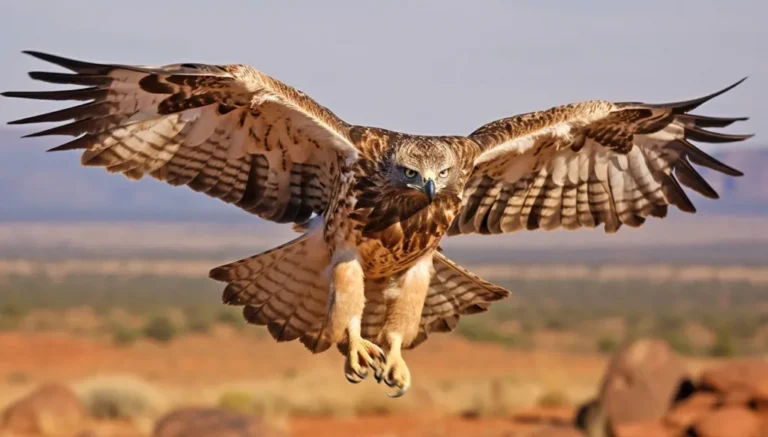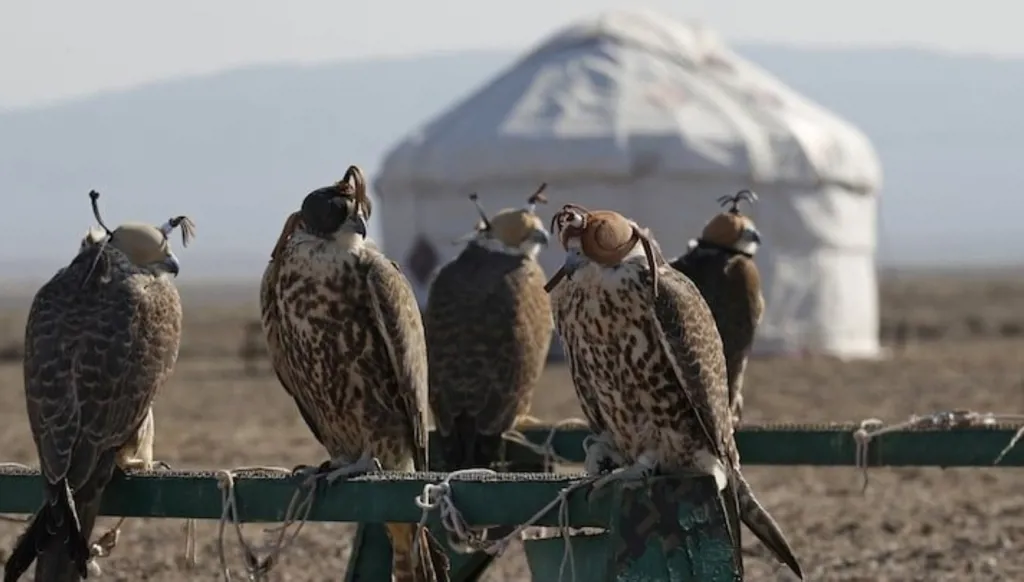
In the Asian steppes, the Saker falcon may escape hunters' nets, only to die on an electric pole it uses to watch for prey. This paradox captures the dilemma facing a bird that holds a prestigious place in falconry heritage but is becoming increasingly vulnerable in its natural habitat. Will it disappear from the wild? The precise answer is that it has not disappeared globally, but its population is declining, and it has already vanished from some of its breeding areas. Complete extinction, however, is not inevitable, although the threats pushing it towards that outcome persist.
The bird in question is the Saker falcon, scientifically known as Falco cherrug, not falcons in general or the Peregrine falcon. Its range extends across vast areas from Eastern Europe to Asia, reaching the Middle East, Africa, and South Asia during migration and winter. The International Union for Conservation of Nature's Red List classifies it as "Endangered." According to a 2021 assessment, its adult population was estimated at between 12,200 and 29,800, with a declining trend. These are dated estimates, not a new population count for 2026.
Its wide geographical range does not guarantee its survival. The presence of a passing falcon in a country does not mean that a stable breeding colony exists there, just as thousands of birds spread across a continent do not rule out local population collapses. Disappearance often begins with abandoned nests and lost breeding seasons before turning into complete absence. Understanding its situation therefore requires distinguishing between localized extinction, which has already occurred, and the threat of global extinction, which can still be avoided.
In Kazakhstan, field monitoring paints a worrying picture. Researchers estimated that the number of breeding pairs in the Karatau Mountains and surrounding areas stood at approximately 46 in 2022, representing a 77% decrease compared with 2010. They also observed the species disappearing from other nesting sites and raised concerns about the impact of capturing birds to meet demand from falconers. These findings reveal the scale of the crisis in specific areas, but should not be generalized statistically to the global population.
Unsustainable captivity is one of the main causes of population depletion, while illegal trade makes the problem even harder to control. The issue is not only the number of birds taken from the wild, but also their sex and reproductive role. Targeting females can leave males occupying nesting territories without partners, according to observations by researchers across the species' Asian range. As a result, the loss of a single bird also means losing future breeding opportunities, reducing the population's ability to replace deceased individuals.
But nets are not the only threat. In Mongolia's open steppes, power poles attract falcons because they provide elevated lookout points across landscapes with few trees. Contact with a live electrical conductor while perched on grounded parts of a pole can cause electrocution. One field study documented the deaths of 490 Saker falcons along a single 56-kilometer power line over one year. Young birds were particularly vulnerable, depleting future generations before they could enter the breeding cycle.
Other threats include habitat degradation, declining prey populations, and poisoning. The Saker falcon needs open spaces that provide food and safe nesting sites, not merely legal protection for the species. In Asian locations monitored by researchers, the decline of rodent populations was linked to reduced nesting activity. Thus, even when the natural landscape appears open, it may be losing its ability to sustain falcons. Protecting this predator requires safeguarding the food web on which it depends and monitoring the causes of declining prey populations.
There is evidence that conservation interventions can work. The Mohamed bin Zayed Raptor Conservation Fund announced that approximately 27,000 power poles had been isolated in Mongolia by 2022. A study published in 2025 showed that five pole-modification techniques reduced electrocution compared with untreated poles. In addition, the Environment Agency Abu Dhabi provided 5,000 artificial nesting sites in Mongolia, creating breeding opportunities in areas where natural nesting sites were lacking.
Europe offers another example. A study published in 2025 documented a clear increase in breeding pairs and breeding success in Austria between 2012 and 2021, with a positive correlation between these improvements and the availability of artificial nesting installations. These achievements demonstrate that recovery is possible, but they do not erase the global decline. Captive breeding and the release of birds alone are insufficient; real success is measured by their ability to survive and reproduce in the wild after sources of mortality and habitat depletion have been addressed.
The Saker falcon is therefore disappearing from parts of the wild, but it has not lost its battle entirely. Saving it requires making electricity infrastructure safer for birds, combating illegal trade, protecting prey and nesting sites, and conducting independent cross-border population monitoring. Falconers can also be partners in these efforts.
Ultimately, success should not be measured by the number of falcons displayed or bred in captivity, but by the continued existence of wild breeding pairs capable of producing new generations without permanent reliance on human intervention. The time available for action depends on the speed of population decline, not on how strongly the bird remains present in cultural memory.