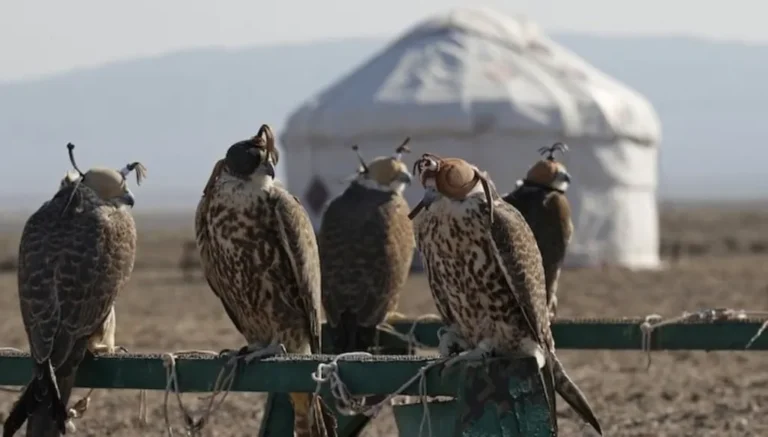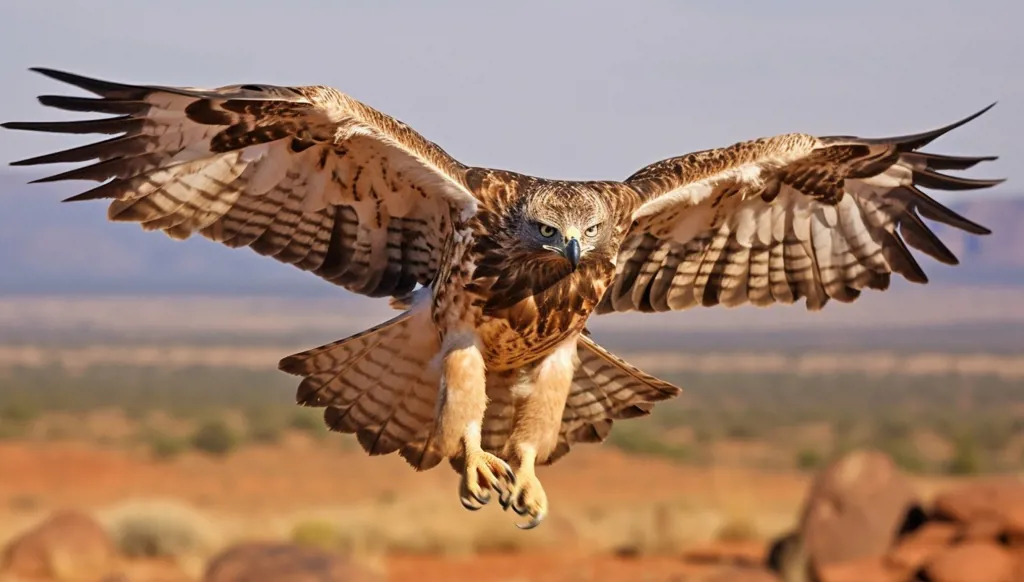
The falcon may retain its ability to fly thousands of kilometers, but upon arrival, it may find that it has lost the suitable place to build its nest or the essential food needed to feed its chicks. This is how climate change gradually affects the lives of these birds of prey: through summer heat, the timing of snowmelt, rainfall, and changing conditions in the habitats of their prey. Research indicates that global warming can redraw the distribution maps of certain falcon species, but it does not push all species in the same direction or at the same pace. While actual changes have been observed in breeding timing and success, significant parts of the projected future distribution maps remain scientific predictions that depend on emissions trajectories.
The Gyrfalcon, a species associated with polar environments, provides a clear example. In a study published in the journal Ecology and Evolution in February 2026, researchers combined genomic analysis with climate distribution modeling to study populations of this falcon in the Kola, Yamal, and Chukotka peninsulas of northern Eurasia.
The models predicted that climatically suitable areas for the Kola Gyrfalcon population would shift northward, with their size shrinking by approximately 66.7% by 2100 under a medium-emissions scenario and by more than 90% under a very high-emissions scenario. These percentages refer to the climatically suitable area for the studied population. They do not imply a global decline in Gyrfalcon numbers of the same magnitude, nor do they represent actual losses. The research team, which includes researchers Shen Liu and Xiangjiang Chan, emphasizes that these projections carry uncertainties related to climate models. However, they warn that habitat shrinkage, combined with the genetic vulnerability of the studied populations, is a cause for concern.
Moreover, the Gyrfalcon's response cannot be separated from its food supply. Its breeding success is linked to the availability of grouse species, including ptarmigans, making changes in prey habitats another pathway through which climate change can affect the bird.
As for the Peregrine Falcon, research shows that its long migratory routes are not permanently fixed. A study published in Nature in 2021 tracked 56 Peregrines from six groups breeding in the Eurasian Arctic using satellite technology and identified five migration routes. It predicted that rising temperatures would alter their migration strategies and reduce the breeding ranges of these groups. Explaining their findings, Chan and colleagues argue that human-induced climate change could reshape distribution patterns and migratory behavior much faster than ancient climate shifts that contributed to the development of these routes.
Before geographical boundaries shift, biological calendars may change. A comprehensive study published in Global Change Biology in 2026 analyzed 5,546 records of Peregrine Falcon hatching and 2,241 records of Gyrfalcon hatching from 11 and nine sites, respectively, across the Arctic. Researchers observed a trend toward earlier hatching at five Gyrfalcon sites and four Peregrine sites, although regional variations were evident and not all sites showed the same direction of change.
The Peregrine Fund, which participated in the research, explains this variation by noting that Gyrfalcons residing near their breeding grounds can respond directly to local conditions, whereas migratory Peregrines arriving from distant areas are more constrained by their annual schedules. However, warmer temperatures do not necessarily bring benefits. The study points to a link between summer heat and declining productivity, particularly among Peregrines, suggesting heat stress among chicks as a possible explanation that requires more precise investigation. A warm, exposed nesting site that is beneficial in spring may become excessively hot in summer.
The danger does not come from heat alone. An experimental study published in 2014 on Peregrines in the Canadian Arctic found that rain directly caused more than a third of recorded chick mortalities. Researchers noted the impact of storms bringing daily rainfall of eight millimeters or more, while the chances of survival increased for chicks sheltered from the rain in nest boxes.
Researchers Alexander Anctil, Alastair Frank, and Joel Bêty found that the increased frequency of heavy rainfall was a significant factor explaining the decline in chick survival and annual productivity among the studied population. Thus, falcons may experience the effects of warming through exposure to wet conditions and body heat loss, not only through direct heat.
For the Saker Falcon, monitoring temperatures alone is not enough to understand changes in its distribution. Researchers Luke Sutton and Robert Busheindorf, in a study published in Ibis, highlighted the importance of rainfall during the warmest seasons in determining the suitability of breeding areas, as well as the role of heat during the wettest seasons in wintering areas. They recommended conducting field surveys in areas predicted by models to be suitable, rather than treating these predictions as evidence of the falcon's actual presence.
A study published in Scientific Reports in 2026 on Saker Falcon wintering areas in Iran adds a regional dimension. Based on 193 observation points, annual precipitation was identified as the most important variable in predicting the species' distribution, accounting for 41%, followed by the vegetation greenness index at 21%. These percentages do not mean that rainfall causes 41% of the falcon's presence; rather, they reflect the importance of each variable within the model. The study also identified overlaps between suitable habitats near the Gulf and the Gulf of Oman and areas at high risk of illegal poaching.
In Lebanon and across the Arab region, these findings raise an important monitoring question before any conclusions can be drawn: Are changes in the timing of falcon migration, the duration of their stay, and their numbers occurring alongside shifts in rainfall, temperatures, and prey availability? The studies mentioned do not establish a specific shift in falcon distribution maps in Lebanon, but they clarify the type of data needed to investigate the possibility: continuous records collected over several years, movement tracking, and monitoring of habitats, food supplies, and human pressures.
Temperature can therefore alter falcon distribution maps, but protecting these birds requires looking at their entire life cycle. An alternative habitat does not become a safe haven simply because it is cooler; it must also provide suitable conditions for nesting, feeding, and safe passage. A falcon may change its destination, but its chances of survival remain dependent on what awaits it upon arrival.