Washington should tie further military aid to the Lebanese Army’s performance in disarming Hezbollah.
The only way to dismantle Hezbollah is to create the right incentives for the Lebanese government. That is the view of David Schenker, a senior fellow and former Assistant Secretary of State for Near Eastern Affairs at the U.S. State Department during President Trump’s first term. He adds: “When I served as Assistant Secretary of State, I spent most of my time trying to dissuade my French counterparts from their tendency to shield Lebanon from the financial crisis it had brought upon itself.”
Instead of taking part in yet another failed donors’ conference in Paris, the U.S. government pushed for a policy of conditionality making U.S. support for an International Monetary Fund program and the provision of aid conditional on the Lebanese government tying financial assistance to the implementation of serious and meaningful economic reforms. For the past seven years, Lebanon has been expected to embrace meaningful reform while its economy remains mired in a quagmire.
Washington’s approach still requires concrete action in return for the resumption of billions of dollars in aid, and this remains the right policy. The United States should take the same approach when it comes to military assistance to Lebanon.
Last June, Lebanon entered into negotiations with Israel, under Washington’s sponsorship and mediation, to disarm and dismantle Hezbollah and the Iran-backed militias. Lebanon’s signing of the “trilateral framework agreement” was a courageous decision. Unfortunately, however, early indications—including the implementation of previous commitments on economic reform—suggested that Lebanon was failing to fulfill its commitments and obligations.
President Donald Trump says his administration has a “clear and coherent plan” to help the Lebanese Army carry out the process of disarming Hezbollah. Before committing to funding this process, however, it may be advisable to wait and see whether the Lebanese Army demonstrates or will demonstrate signs that it intends to carry out this mission. France, however, predictably did not wait. Despite the stagnation of the disarmament process to which Beirut had committed, Paris expressed its readiness to hold another donors’ conference for Lebanon.
Today, French President Emmanuel Macron will host a preparatory meeting ahead of another meeting or summit later on to raise funds to support the Lebanese Army and the Lebanese Internal Security Forces. The French initiative aims to “strengthen these institutions,” enhance their operational capabilities, provide them with weapons, and train their members.
The key objective is to give the Lebanese Army the capacity to deploy and replace the Israeli forces currently occupying Lebanese territory. Macron is right that the Lebanese Army needs assistance. It needs cash and is struggling to pay the salaries of its officers and soldiers. It is also struggling to secure the fuel needed to operate its vehicles. But the main reason it has failed to carry out its duties is not simply a lack of resources, particularly financial ones. The problem appears to be one of will. Either Beirut has failed to issue clear instructions to the Lebanese Army, or the army is not carrying out the orders it has been given. Neither scenario bodes well for the precise, serious and genuine implementation of the plan to disarm Hezbollah.
This lack of will was evident in Zawtar al-Gharbiya in southern Lebanon. It was the first area selected for the launch of Hezbollah’s disarmament, beginning in southern Lebanon and specifically in the areas occupied by Israel during its most recent war, which has yet to end.
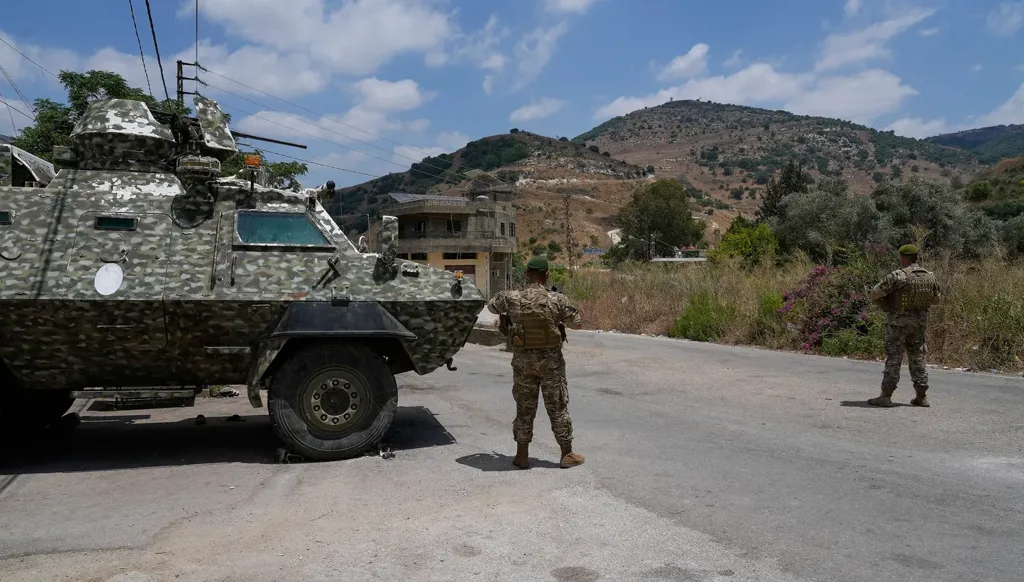
Israeli forces withdrew from Zawtar al-Gharbiya late last July. Under the terms of the agreement, the Lebanese Army deployed a force to secure the area and prevent Hezbollah members from returning with their equipment, vehicles and other assets. While Lebanese Army forces uncovered and confiscated weapons caches, they appeared to be avoiding the full implementation of their mission in order to prevent a confrontation with Hezbollah.
Of course, the fear of these militias is understandable, but the consequences of shirking one’s duties are serious. If the Zawtar al-Gharbiya experience fails, an Israeli withdrawal from additional areas is unlikely. That would bring the agreed mechanism to a halt. Ultimately, to end Israel’s military and non-military presence in Lebanon and to halt or at least freeze the military deterioration, Beirut must deploy the Lebanese Army wherever it is needed. The army is supposed to be under the government’s command and to carry out whatever it is instructed to do.
It must be stressed, however, that Lebanon is not the only party whose performance has fallen short of expectations. Israeli officials, perhaps driven by electoral considerations, have spoken impulsively and at times tensely about remaining in Lebanon militarily, in their current positions and possibly in several new locations, for a long time. The two sides have yet to sign any agreement addressing or even referring to an Israeli withdrawal from Lebanon.
There are also almost daily Israeli military operations against “Hezbollah terrorists” or raids on its weapons caches, resulting in civilian casualties. This reminds the Lebanese that the ceasefire exists in name only. Israel’s actions may be useful, but if the Lebanese Army continues to fail to carry out the missions required of it and agreed upon with it, that will mark the end of the framework agreement signed by Lebanon and Israel under U.S. auspices.

