In the world of diplomacy, immunity is considered a shield that protects political representatives and facilitates their work. However, this protection is not absolute; it is subject to strict controls defined by international law. When individual statements or political positions cross the host state's red lines, the strongest weapon in the diplomatic lexicon can be wielded: a direct expulsion decision under the designation of persona non grata, Latin for an unwelcome person.
When the Shield of Immunity Falls: The Legal Dimensions of the Vienna Conventions
In an interview with Annahar, Dr. Darina Saliba Abi Shdid, a professor of public international law, pointed out that international law strictly governs this procedure through the Vienna Convention on Diplomatic Relations of 1961, specifically Article 9, and its equivalent in the Vienna Convention on Consular Relations of 1963, Article 23.
These articles grant the host state an absolute sovereign discretionary right to inform the sending state that the head of a mission or any member of its staff has become persona non grata, without the need to provide any reason or justification. This procedure does not allow for any form of appeal or judicial review.
Conversely, these conventions impose parallel obligations. Article 55 stipulates that mission members must respect the laws and regulations of the host state and refrain from interfering in its internal affairs. In the event of a breach, the sending state is obliged to terminate the concerned person's duties and immediately withdraw them or end their service at the mission. If it refuses, the host state has the right to revoke their immunity and refuse to recognize them as a member of the consulate.
The Mask and Diplomacy: The Story of the Lebanese Consul in Michigan
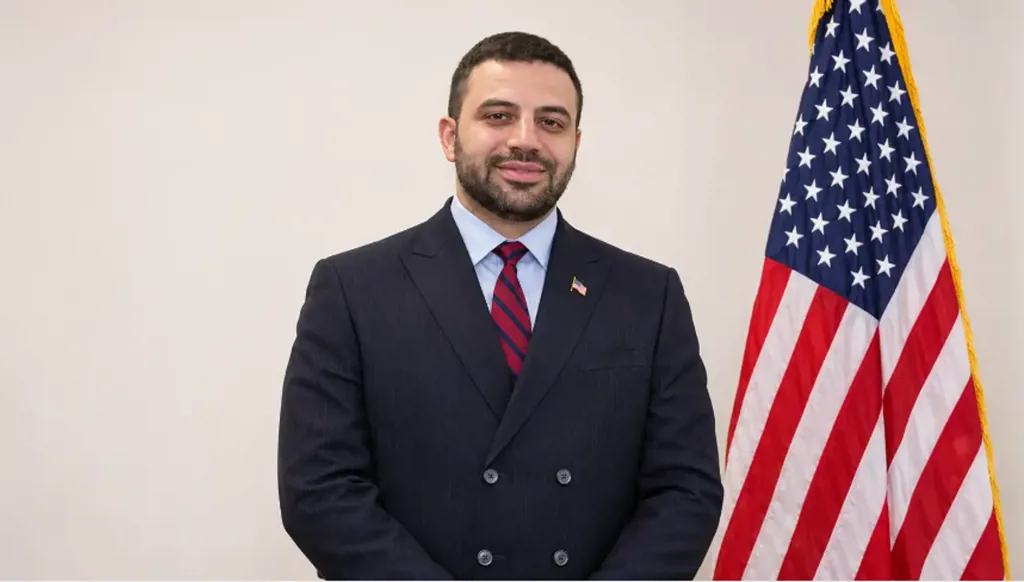
This strict application is now reflected in the U.S. political scene, following the U.S. Department of State's decision to expel the Lebanese consul in the state of Michigan, Ibrahim Charara, and declare him persona non grata.
This decisive move came after a review of previous statements and digital posts attributed to the consul on social media, which were described as praising past military operations targeting U.S. forces, notably the Beirut Marine barracks bombing in 1983.
Faced with this non-negotiable sovereign decision, Dr. Saliba affirmed that Lebanese diplomacy must move to address the administrative void. Lebanon must officially terminate the expelled consul's duties, appoint an acting chargé d'affaires to temporarily manage the consular post, and ensure that community affairs continue to be handled.
At the same time, Beirut needs to nominate a new consul to replace him and await the issuance of the consular exequatur and official accreditation from the U.S. Department of State before allowing the new appointee to commence duties.
This incident clearly highlights how the digital sphere has become an unforgiving diplomatic mirror, where personal positions expressed in the past can abruptly become the spark that ends an entire diplomatic career, in what represents a purely practical application of the Vienna Conventions' texts.