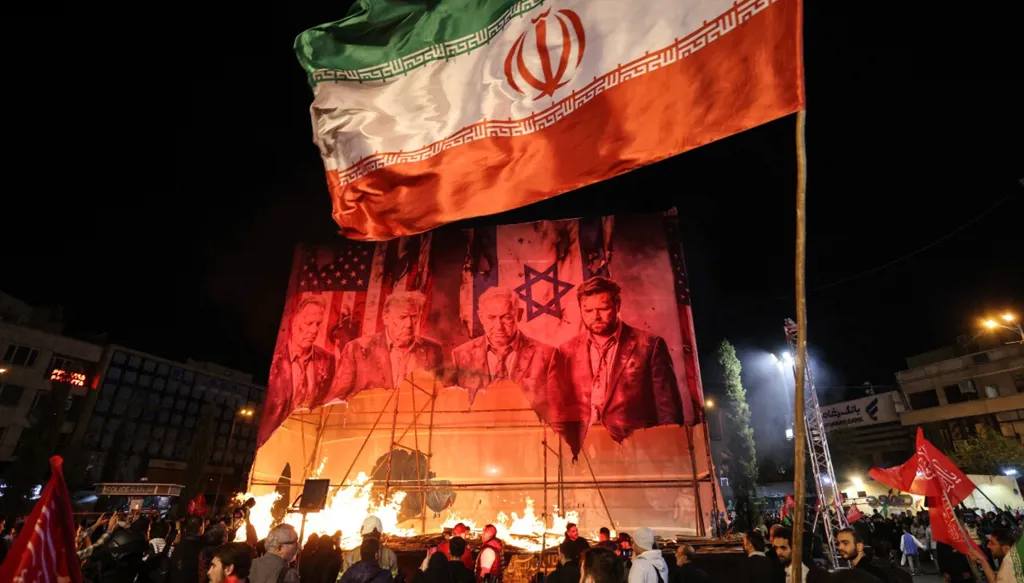
Officials and the public in Iran have rarely anticipated the outcome of U.S. Congress elections with as much interest as they did this year, as the two countries stand on the brink of two completely opposing possibilities: a comprehensive confrontation and the resumption of war, or a peace agreement and an official end to the conflict.
Observers and analysts see the outcome of the U.S. elections as having a direct impact on the choice between war and peace.
Iranian officials believe that the Democrats' victory reduces the likelihood of a new U.S. attack on Iran, although it does not eliminate the possibility entirely. It also gives the Iranian diplomatic team more room to secure concessions from Washington in any potential agreement.
Based on this assessment, estimates of the possibility of a U.S. attack on Iran were high before the elections. Those who believed an attack would remain highly likely after the elections had largely conditioned that scenario on a Republican victory, which did not happen.
During the latest Doha negotiations, Iran requested that the United States lift economic sanctions and the maritime blockade and release frozen Iranian funds in exchange for Tehran's readiness to reopen the Strait of Hormuz within two days under new conditions. Washington, however, maintains that it is not prepared to make any concessions to Iran without obtaining a significant nuclear concession, such as transferring 400 kilograms of enriched uranium out of the country or diluting it domestically. This disagreement raises the possibility of renewed confrontation between the two countries.
Some high-level political and military officials in the Islamic Republic insist that there is no difference between Democrats and Republicans in their hostility towards Iran, often commenting on U.S. elections with the famous adage: "The yellow dog is the jackal's brother." More pragmatic politicians, however, argue that the difference in policy and performance between Democrats and Republicans towards the Islamic Republic over the past fifty years is clear and cannot be ignored, viewing Tehran's approach to them essentially as a choice between the bad and the worse.
These politicians and experts believe that both American parties seek to contain the Islamic Republic and weaken it as a regional force opposed to Washington's policies in the Middle East, and that neither wants to recognize this political system in its current form. However, they argue that Democrats pursue this goal, to the maximum extent possible, through economic sanctions and political and media pressure, while Republicans rely on these tools in addition to the military option and direct war.
During the Ramadan War, for example, they crossed what Iran considers the Islamic Republic's main red line: the assassination of the regime's leader. This has led a faction in Iran to argue that the war with America should not end before avenging Ayatollah Khamenei's blood. Messages and positions from Mojtaba Khamenei, the new leader of the Islamic Republic, indicate that his views lean more towards this latter faction.
The public in Iran has welcomed the Democrats' victory for three reasons:
Firstly, because it reduces the likelihood of a new attack on Iran.
Secondly, because the defeat of U.S. President Donald Trump and his weakening within the American political structure are a source of relief in themselves for Iranians, as Trump does not enjoy a positive image among the Iranian people.
Thirdly, because it opens the door to hope that a strengthened Democratic majority in Congress and the victory of a Democratic candidate in the 2028 presidential elections may lead to improved relations between the two countries. Many people and experts in Iran believe that during President Barack Obama's tenure, not only did American pressure on Iran decrease, but living conditions and economic opportunities for Iranians also improved following the nuclear agreement between 2015 and 2016.
Therefore, they argue that the difference between Democrats and Republicans cannot and should not be ignored, as existing divisions between the two parties create opportunities to advance Iran's interests.
A minority of experts in Iran believe that officials in the Islamic Republic, following the experiences of the last two wars with the U.S. and Israel, are seeking an opportunity to review their foreign policy in a way that preserves the regime's frameworks while reducing tensions with Washington. However, they see the persona of Trump and the Republicans dominating the White House, including Secretary of State Marco Rubio, as the main obstacle. Meanwhile, strengthening the Democrats' power opens the door to implementing this new approach for the Islamic Republic.
Iranian officials welcomed the message from J.D. Vance, the U.S. Vice President, who, despite being Republican, takes a softer stance on Iran compared to other American officials, indicating that such an approach exists within Iran. However, in official positions, particularly the written messages of Mojtaba Khamenei, no change can be observed in Iran's general policy towards America.
In the initial Iranian reactions to the U.S. election results, some sarcastically commented that Donald Trump had sought to change the regime in Iran, but with the Democrats' sweeping victory in both the House and the Senate, that change had instead occurred within the U.S. political structure itself.
Many Iranians also welcomed the stance of J.D. Vance, the U.S. Vice President, who said that the war with Iran and rising gasoline prices in America contributed to the American public's growing aversion to the Republicans and called for a review of Washington's policy towards Israel.
On the other hand, some analysts argue that despite Trump's and the Republicans' heavy defeat in the latest elections, it cannot be confirmed that the specter of war has completely dissipated from Iran. Trump, they warn, may resort, out of desperation, obstinacy or under pressure from Netanyahu, to imposing a full-scale and heavy war on Tehran.
In any case, the ruling leadership in the Islamic Republic is preparing for both possibilities. The armed forces remain on high alert to respond to any U.S. or Israeli attacks should a new confrontation erupt, and it is said that Iran might target U.S. bases in some European countries as well if the fighting intensifies.
At the same time, the Iranian diplomatic team is seeking, through Qatari mediation, to revive the Islamabad Agreement and declare an end to the war.