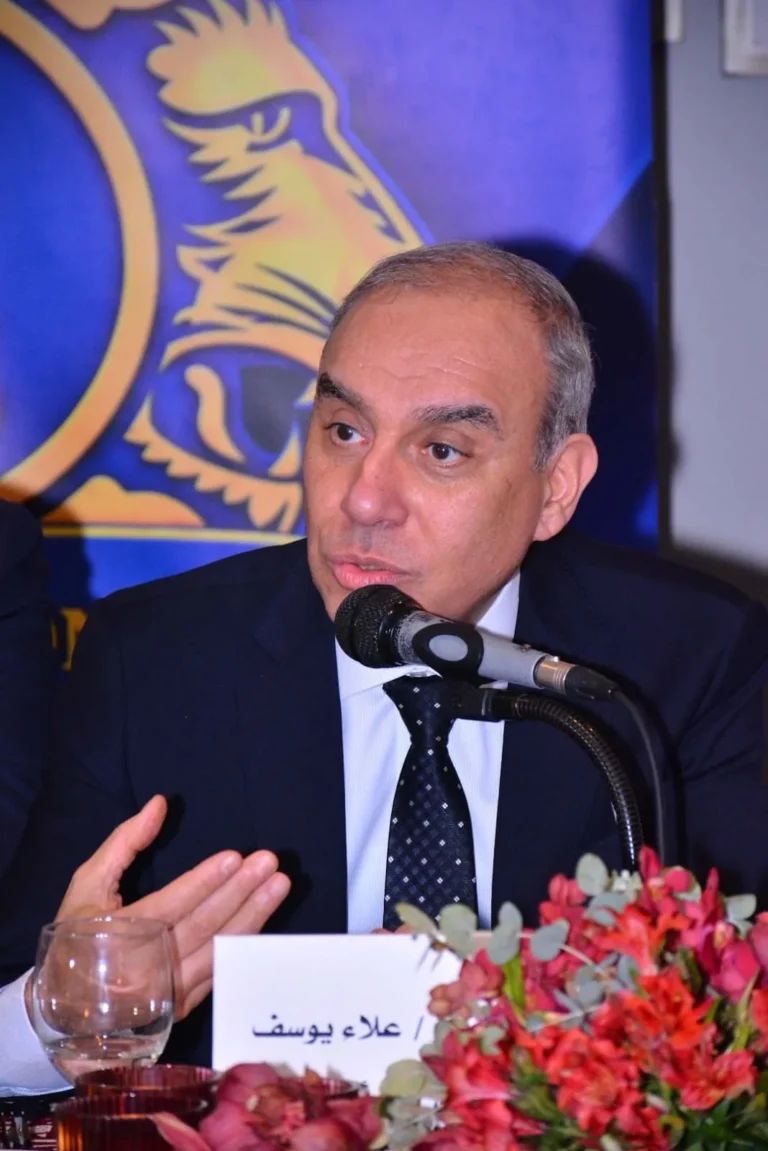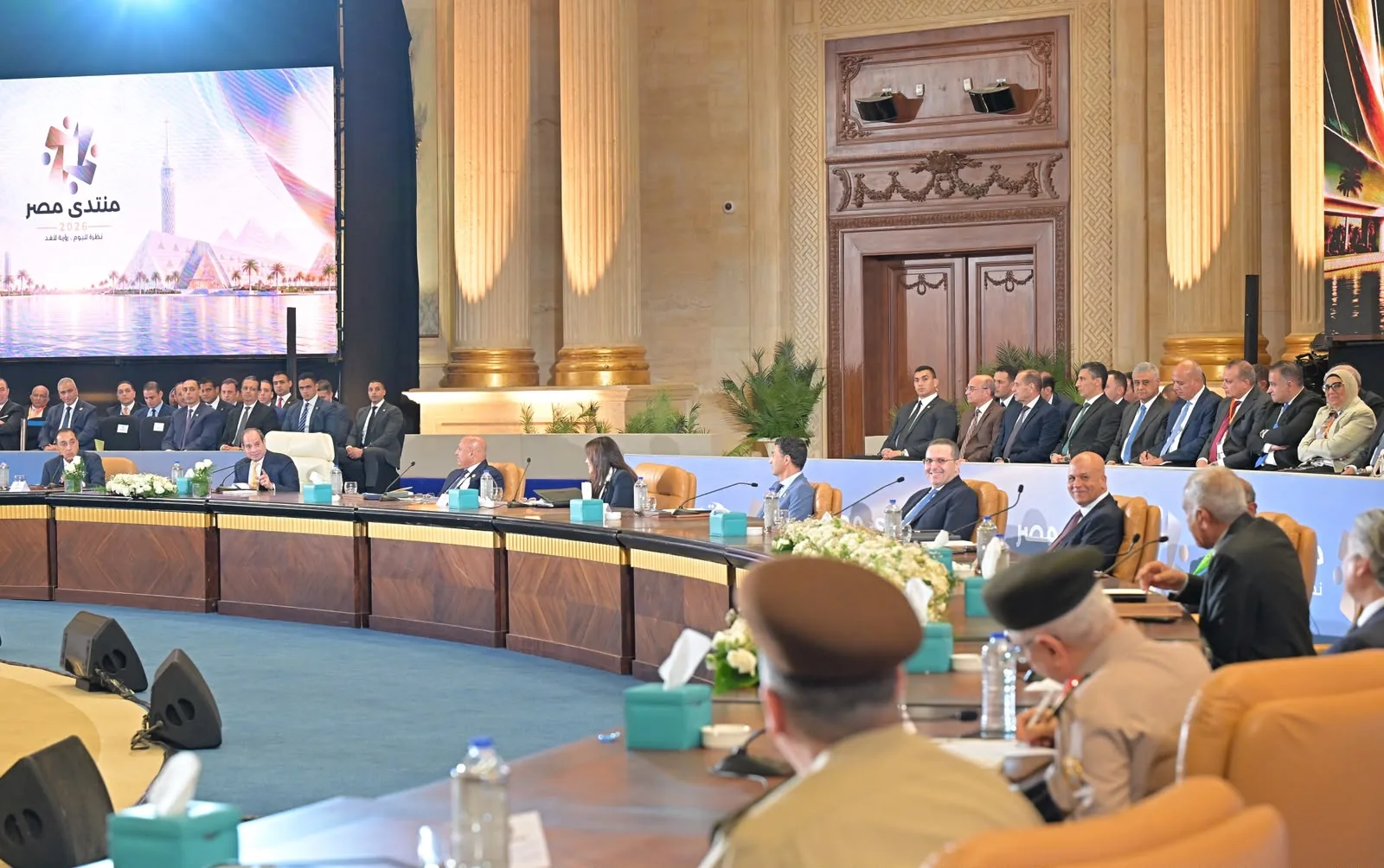
President Abdel Fattah El-Sisi attended on Tuesday a session on urban development on the second day of Egypt Forum 2026, in the presence of Prime Minister Mostafa Madbouly. Discussions covered Egypt’s urban development since 2014, including roads, bridges, ports, public transport, railways, metro networks, rural infrastructure, drinking water, sanitation and new cities. Participants also reviewed governance measures, road safety, green public transport and the economic, social and environmental impact of completed and ongoing projects. The session highlighted the establishment of 61 new cities, efforts to upgrade major cities and governorate capitals in 13 governorates, and progress in eliminating informal settlements. It also reviewed the development of Khedivial Cairo, 522 drinking water projects and housing schemes that have delivered or are delivering a total of 1.96 million new housing units, alongside ongoing sanitation projects and rural development initiatives. In his remarks, El-Sisi said Egypt’s concentration of population on around 7 per cent of its territory had created social, security, cultural and investment challenges. He described this pattern of settlement as detrimental to human welfare and economic growth, noting that the absence of integrated urban planning had contributed to the spread of informal settlements around Cairo, inadequate transport services and harmful practices. He argued that addressing such challenges required practical solutions rather than ideal proposals that did not account for available resources. He also noted that current road tolls did not cover the cost of road investment or maintenance, and cited the resolution of the electricity crisis as a key achievement supporting development and state stability. Addressing the removal of some graves, El-Sisi said the decision was driven partly by groundwater problems affecting a significant number of burial sites. While leaving the graves untouched might appear to be the ideal solution, he said practical considerations required action on religious and humanitarian grounds and out of respect for citizens. He added that the state had built, and was in the process of building, around 70,000 new graves in three phases near Helwan and 10th of Ramadan City, bearing the associated costs in the public interest. The president praised the experience of Wafai Mekadi, mayor of Al-Sararia village in Minya Governorate, in addressing local challenges, describing it as a model that could bring positive change to villages nationwide while easing the burden on the state. He stressed the importance of ensuring that public opinion was informed of the facts and urged the media and officials in their respective positions to raise public awareness. On housing, El-Sisi directed the government and Tahya Misr Fund to work together to build 200,000 rental housing units, with the two sides sharing the cost equally. Discussing the old rent law, he said its purpose was to promote home ownership while reviving rental housing as an option. He argued that the previous approach had contributed to a major crisis of informal and unplanned housing, partly because the state could not replace the private sector and civil society in meeting housing demand. He stressed that Egypt’s scale of challenges and limited resources made it unrealistic to expect decades of development to be completed within 10 to 12 years, noting that national development typically takes between 50 and 100 years. He said completing the current development and modernisation plans by 2030 remained a priority, while acknowledging that achieving substantial progress could take 20 to 30 years. On the sidelines of the forum, El-Sisi witnessed the announcement of an agreement between the Egyptian state and Talaat Moustafa Group to develop and operate four major mixed-use projects with a stated value of LE 11 trillion. The projects include North Madinaty, a development covering 11.3 million square metres in central Alexandria, an integrated industrial, logistics and real estate project in Abu Qir, and a coastal destination on the North Coast modelled on SouthMED. El-Sisi congratulated the parties on the agreement and reiterated the state’s commitment to encouraging investment across sectors, stressing that investment projects should also serve the community. He called on the government to co-operate with Talaat Moustafa Group on the proposed 200,000 rental units. He also stressed that all projects under the Decent Life initiative must be completed by 2030 at the latest, highlighting the importance of partnerships with the private sector and continued state support. The post Sisi reviews urban development progress, announces 200,000 rental homes plan appeared first on Egyptian Gazette.