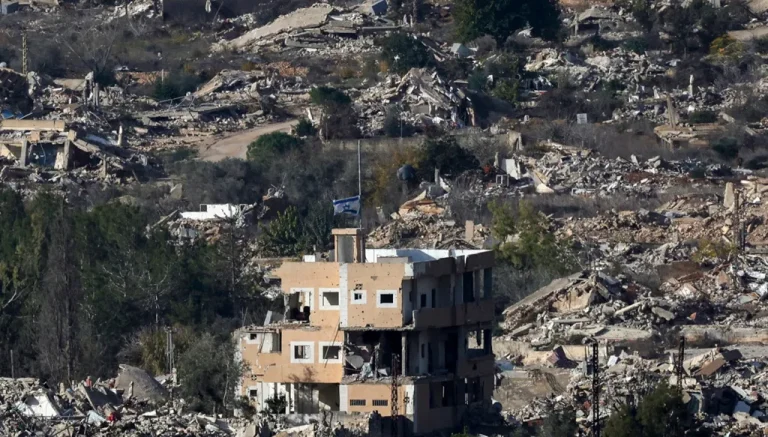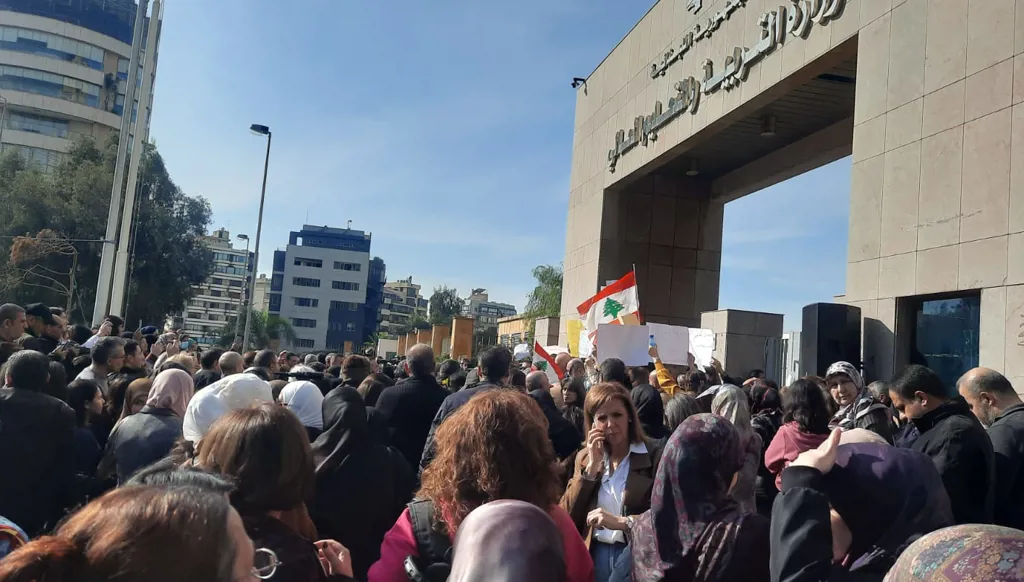
The educational sector in Lebanon has suffered catastrophic losses due to the Israeli wars between 2024 and 2026 and continues to struggle with their aftermath. Meanwhile, the education crisis has worsened due to the financial collapse in 2019 and subsequent political unrest and teacher strikes demanding better conditions. These were followed by the COVID-19 pandemic, which forced distance learning and shortened school days, resulting in educational disruptions that will take years to recover from.
Education in Lebanon has reached its worst state after once being among the best in the region, with its academic standards topping all indicators in the Arab world. This decline began in 2010, when the intensifying Syrian crisis placed an enormous burden on Lebanon’s education sector through waves of displaced people, without adequate development plans. The resulting crises exploded after the financial collapse and the wars that ravaged the country.
The education sector in Lebanon has lost most of its strengths, with reports indicating serious gaps between the public and private sectors and a decline in students’ basic skills in mathematics and sciences. Since 2019, school days have been reduced to three days a week, with complete closures during the COVID-19 pandemic lasting about four months, when in-person education was replaced with remote learning.
Public school teaching was also disrupted for months due to strikes in 2022 and 2023, followed by the Israeli wars in 2024 and 2026, depriving more than 250,000 students of education as over 600 schools were turned into shelters for displaced people.
In 2026, school days remained limited to four days a week in the public sector, meaning the academic year ranged between 80 and 100 days. This has created a huge gap between the public and private sectors and significant educational loss.
Before 2019, annual school days in Lebanon did not exceed 120 days, particularly after they were reduced by former Minister of Education Elias Bou Saab in 2016. Meanwhile, international standards, especially in OECD countries, require 186 school days.
Today, Lebanon does not meet the minimum standards, despite discussions of non-formal education programs or compensatory courses that have turned into entertainment for students and activities in the absence of specialized teachers demanding their rights.
Education in Lebanon has declined to alarming levels, not only due to crises but also because of hasty and deficient educational policies that do not rely on accurate assessment. Efforts were made in previous years to enhance teachers’ abilities and improve learners’ performance by preparing new curricula. Yet, indicators show a decline affecting both private and public sectors at varying rates.
According to assessments, many students advance in their academic journey while their performance remains far below the required level.
This discrepancy was clearly reflected in the 2025 official examinations, as the results did not accurately reflect Lebanese students’ academic performance. They revealed that learning quality, one of the key indicators of educational system efficiency, remains inadequate, with actual learning falling short of the required level.
A student’s regular attendance at school or transition from one class to another does not necessarily mean they have acquired the necessary knowledge and skills, as demonstrated through reading, comprehension, mathematics and critical thinking. These skills are said to be included in the new curricula but do not appear to be priorities.
The gap was evident in Lebanon’s results in the PISA 2025 test, where the country scored 86 points below the OECD average in mathematics and 110 points below the organization’s average score of 482 points in sciences. Lebanon recorded 331 points in reading, 130 points below the average of 461 points. In digital world learning (LDW), Lebanon scored 358 points, 142 points below the average of 500.
The crisis has affected both private and public education, although higher education has its own specific evaluation mechanisms, which differ from those of pre-university education. Lebanese universities continue to lead in many programs, evaluations and standards.
However, Lebanon’s educational system, which once topped the Arab world, is now going through its hardest phase after crises shook confidence in it and caused a decline that may not stop at private education fees, which add to the burdens on Lebanese people despite their greater trust in private schools than in public ones.
This is attributed to the suffering and neglect of the public sector, which was once leading before the Lebanese wars. Today, it has lost its distinctive features and accommodates no more than 28% of Lebanese students, according to the latest 2025 census by the Educational Center for Research and Development. It also appears unable to attract students, with a 20% decrease in the number of Lebanese students.
The most significant crises contributing to this decline are the wars, which have increased educational loss and widened the gap in basic skills, starting with literacy and numeracy, the foundations of all subsequent subjects. This has led to difficulties in learning mathematics and sciences and increased the risk of dropout.
Critically, 340 public, private and vocational schools were damaged during the 2026 war, including 17 completely destroyed schools, according to an assessment by the Ministry of Education supported by UNICEF in June 2026. Today, 100,000 students are considered displaced.
Education in Lebanon is intertwined with political, economic, social, psychological and security factors, reflecting a deep structural crisis affecting society as educational gaps widen.
The absence of sustainable solutions raises serious questions about the educational system’s ability to recover, the possibility of saving an entire generation, and the ability to protect schools and learners from the impact of crises on their concentration and achievement.
There is a need for educational reform, infrastructure development, compensation for educational losses, mental health support, assistance for teachers, the development of digital education, and the establishment of mechanisms to ensure education is prepared for times of crisis.
Disclaimer: The opinions expressed by the writers are their own and do not necessarily represent the views of Annahar.