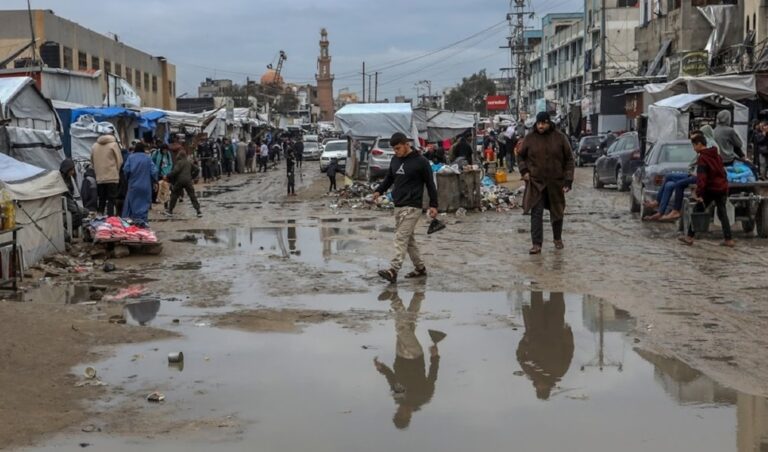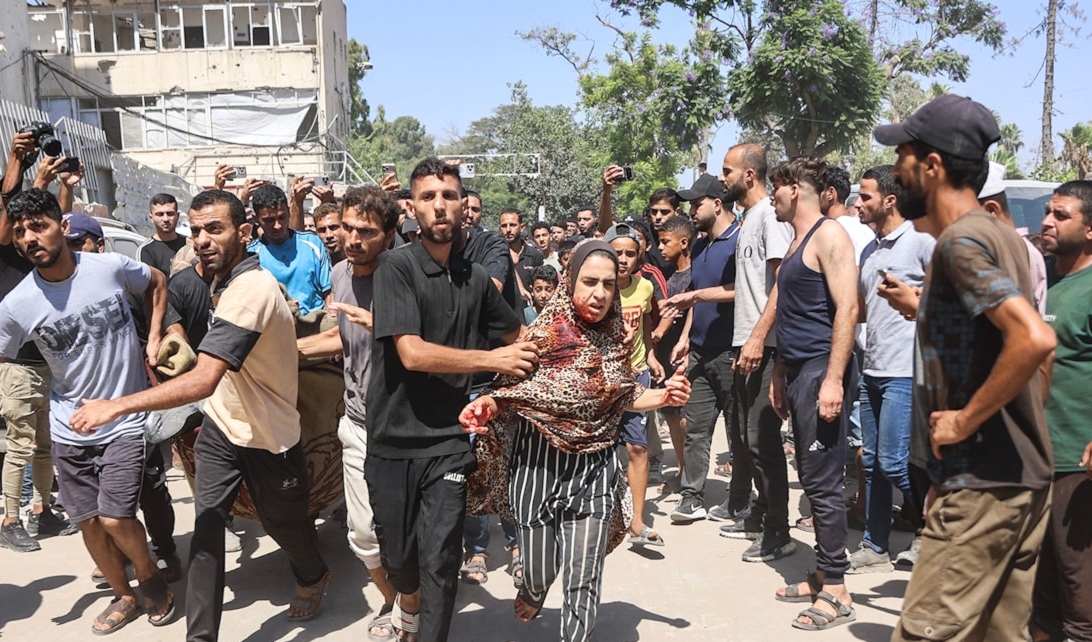
Israel’s response to US President Donald Trump’s directive to Prime Minister Benjamin Netanyahu to halt strikes on Gaza after Hamas agreed to surrender its weapons took only hours. Less than 24 hours after US envoy Jared Kushner left Tel Aviv, Israeli forces moved from targeted killings to mass casualties, opening a new escalation that effectively undermined optimism over consolidating the Sharm Al-Sheikh agreement and moving to its second phase. The escalation began at Gaza port, where Israeli drones struck a shelter crowded with displaced people. Hamas said the site hosted a meeting of resistance leaders discussing weapons collection ahead of the second phase. Medical sources said seven people, including a child, were killed and 17 wounded, many suffering amputations. The Israeli military claimed that the strike targeted several resistance commanders, including a battalion commander from Hamas’ Al-Qassam Brigades and three officials from other factions. The scene, however, appeared to signal a broader policy reportedly backed directly by Netanyahu and supported by far-right ministers Bezalel Smotrich and Itamar Ben-Gvir, who have openly called for the “elimination” of what remains of Hamas rather than negotiations. The port strike was followed by another mass killing in Gaza City, where Israeli forces targeted a meeting of police officials, killing 10 security officers and officials. Among those killed were Gaza’s newly appointed police chief, Brigadier General Ayman Jundiya, his predecessor having been assassinated, Gaza City police director Brigadier General Ibrahim Tamraz and several other senior officers. Yedioth Ahronoth reported that the strike was carried out on Netanyahu’s direct recommendations as part of a “new Israeli policy” based on targeting “all available threats and targets” regardless of political recommendations or negotiations. i24NEWS also quoted a Board of Peace official as saying a “dedicated mechanism” was being developed to assess similar incidents, taking into account the damage caused, the level of planning and the “necessity” of the operation. Over two days of mass killings, Israel established a military course at odds with the political track Kushner sought to reinforce. Rather than restraining strikes and assassinations, Netanyahu appeared to be using escalation to demonstrate his independence and commitment to the far right’s broader war aims, including the forced displacement of Gaza’s population and control of the territory. This may not surprise Kushner and his team, who understand Israel’s domestic politics and its growing right-wing current. Political analyst Ahmad Al-Tanani argues that “Kushner’s priority was not to restrain Netanyahu militarily, but to keep the agreement intact in its broad form, without focusing substantially on its Palestinian content and obligations.” The US, he says, is working with Netanyahu to prevent the Board of Peace roadmap from collapsing while taking his political and electoral interests into account. Major obligations are being “postponed until after the Israeli elections,” he adds, while maintaining the impression that the second phase is already underway. Until then, Gaza’s death toll will remain tied to Israeli electoral calculations and opinion polls, while Washington turns a blind eye to violations that have brought the war back to its early days. This is an edited translation for a report published in Arabic.