Lebanese citizens followed the Israeli elections with both anticipation and anxiety, given the potential security and military repercussions of the results for Lebanon, already engulfed in crisis amid Israel's war against Lebanon.
The irony lies in the fact that Lebanese citizens are placing their hopes in Israeli voters and their ability to use the ballot box to hold Benjamin Netanyahu accountable for his domestic and foreign policies, his handling of wars and their consequences.
Yet Lebanese voters themselves have been unable to hold accountable those responsible for decisions and policies that have helped drag the country into devastating wars, squander its resources, weaken its institutions and deepen its economic and social crises.
What makes this comparison relevant is the tendency of Lebanese citizens to focus on external factors and their influence on domestic politics and conditions, without paying sufficient attention to the effectiveness of their own votes as a means of accountability.
Admittedly, this comparison does not necessarily mean that Israeli elections guarantee Netanyahu's removal or that all officials will be held accountable according to the same standards. Nevertheless, it raises a clear political principle: no official should be immune from electoral accountability, regardless of how long they have remained in power.
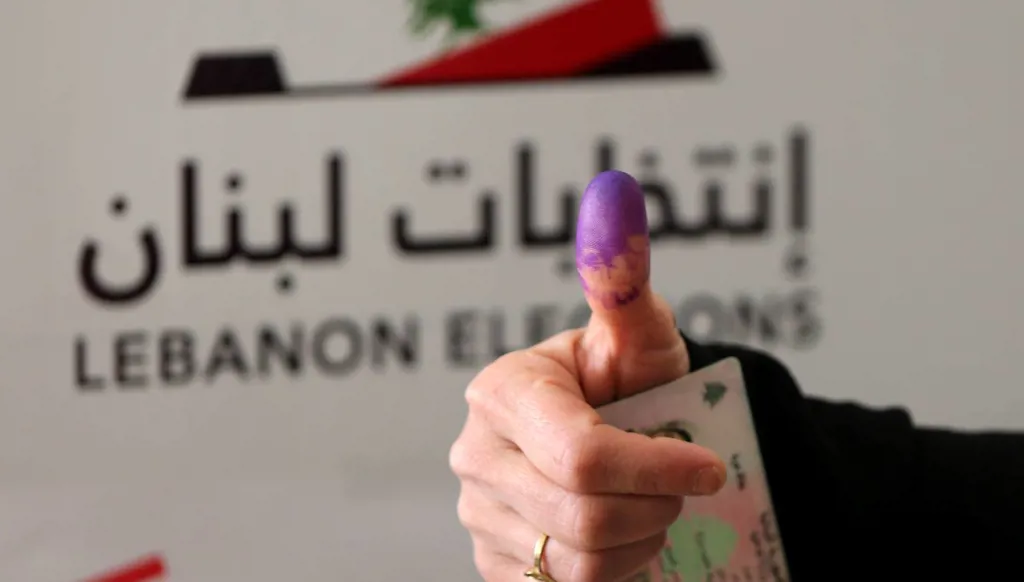
Can Lebanese voters turn their ballots into an effective means of assessing the performance of the ruling political forces, rewarding good governance and withdrawing their confidence from those who have failed?
Political accountability does not mean making unfounded accusations, nor is it limited to legal or criminal responsibility, which can only be established through evidence and judicial procedures.
Voters are not mere spectators in public life. They participate in shaping or changing those in power, even if their choices are influenced by complex economic, sectarian and security circumstances.
The political establishment sometimes benefits from sectarian alliances, networks of vested interests, patronage services and rhetoric that invokes existential fears during every electoral contest.
However, the continued presence of some of its components in power also depends on votes that renew confidence in them, refrain from holding them accountable or accept the exchange of rights for temporary benefits.
This does not mean assigning voters the same level of responsibility as decision-makers. Rather, it highlights their role in renewing political authority or limiting its ability to remain in power.
In Lebanon, wars and their consequences often become tools for political mobilization and renewed polarization instead of opportunities to reassess decisions that contributed to destruction, displacement and economic losses.
Determining responsibility, however, requires distinguishing between those who made the decisions, those who supported or provided political cover for them, those who were unable to prevent them and those who suffered their consequences.
These are different roles that should not be judged in the same way.
The examples are numerous and glaring, from the financial collapse and the loss of bank deposits to the wars launched in support of other conflicts and the Beirut port explosion. The scale of these tragedies defies comprehension, yet no official has been held accountable and no minister has been dismissed.
Even the 2019 uprising, which charted a path toward change and inspired hope that it could be achieved, was thwarted by the political establishment once it sensed a threat to its existence and survival.
Political accountability extends beyond those who decided to go to war or drew the country into conflicts beyond its capacity. It also encompasses those who contributed to obstructing reforms, mismanaging public funds or preventing the development of institutions capable of protecting Lebanese citizens.
Legal responsibility, however, differs from political and public accountability. A legal conviction cannot be established through electoral campaigns or media accusations. It requires independent investigations, evidence and procedures that guarantee the right to a defense.
Political responsibility, by contrast, can be assessed by voters based on decisions, outcomes and transparency, even when the conditions for a judicial conviction have not been met.
Public and media oversight, alongside the role of civil society, remain essential tools for uncovering facts, monitoring performance and holding decision-makers accountable.
Lebanese voters can choose not to renew their confidence in officials whom they believe have failed to manage public affairs.
Yet they often refrain from doing so because of their unwillingness to abandon their political leaders, yielding to the use of sectarian identity, fear or immediate personal benefits as substitutes for accountability.
A vote is not a judicial verdict. It is a political and public decision about a candidate's suitability to remain in power. It represents a conditional mandate that can either be renewed or withdrawn.
This reluctance may also stem from the absence of credible alternatives, feasible political programs, candidates independent of vested-interest networks and organizations capable of transforming public dissatisfaction into electoral strength.
It also requires an awareness that voters' responsibility does not end on election day. It continues through monitoring performance, demanding transparency, supporting independent investigations and resisting attempts to justify failures or consistently blame others.
At the same time, the concept of voter responsibility must not be used to absolve decision-makers or equate ordinary citizens with those who control the instruments of power, resources and influence.
Voters possess the ballot, while officials have the authority to make decisions, shape policies and influence institutions.
Ultimately, the lesson is not simply whether Israeli voters hold Netanyahu accountable. It is whether Lebanese citizens recognize that their ability to bring about change begins with their electoral choices, without treating those choices as a substitute for the judiciary or institutional reform.
Disclaimer: The opinions expressed by the writers are their own and do not necessarily represent the views of Annahar.