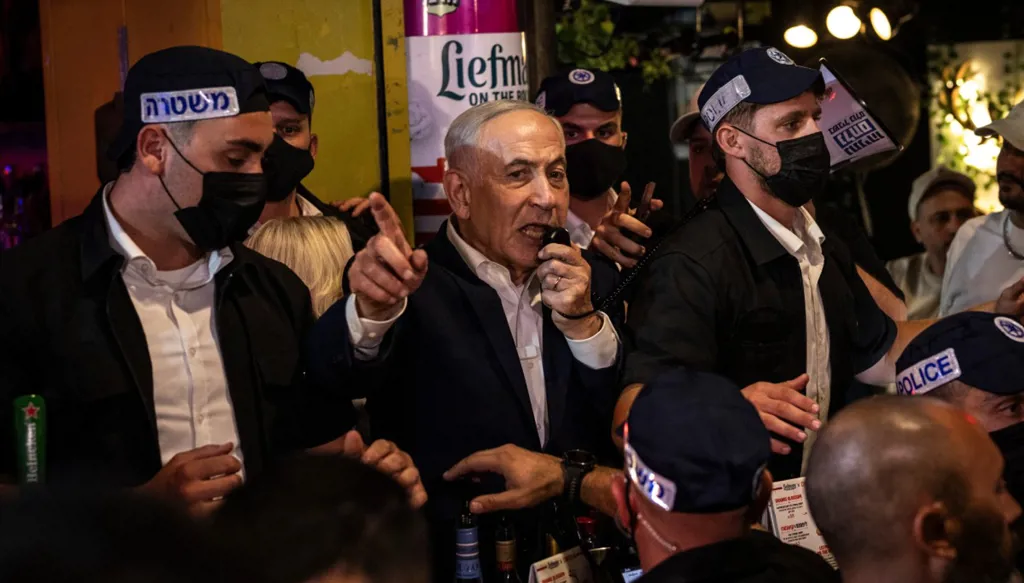
JERUSALEM: Israelis will head to the polls in two days in an election still dominated by the aftermath of Hamas’s October 7, 2023, attack and the subsequent “perpetual” Israeli wars on “seven fronts,” as described by Prime Minister Benjamin Netanyahu.
Although competition among Jewish parties is fierce, nearly all embrace a new security doctrine that calls for Israel to preemptively thwart planned attacks rather than merely contain the threats it faces. This doctrine also requires Israel to maintain the “yellow lines” it has established in Gaza, southern Lebanon and southern Syria as “security buffer zones,” while continuing its policy of “mowing the grass.”
Among Israeli parties, only Arab lists within the “Green Line” support the establishment of a Palestinian state. Even opposition parties, led by Gadi Eisenkot’s Yeshar party and Yair Golan’s Democratic party, which are viewed as heirs to the left-wing Labor party, do not endorse granting Palestinians the right to self-determination through the establishment of an independent state.
Meanwhile, Likud’s far-right allies, including Avigdor Lieberman’s Jewish Power party and Bezalel Smotrich’s Religious Zionism party, advocate the voluntary or forcible evacuation of Palestinians from Gaza and the West Bank.
No Jewish party in either camp, whether supporting or opposing Netanyahu, except for the Democratic party, endorses expanding settlements, annexing the West Bank or most of its territory, rejecting negotiations with the Palestinian Authority, advocating the release of Palestinian detainees, or recognizing settler attacks in the West Bank as Jewish terrorism. Such positions could deepen Israel’s international isolation.
According to political analyst and Israeli public opinion researcher Dahlia Scheindlin, Israeli youth, unlike their counterparts in global trends, lean more to the right than older generations. They are likely to vote for a new Knesset with more right-wing members than the outgoing one.
Ultra-Orthodox and right-wing nationalist communities make up an increasing proportion of Israel’s Jewish population, yet they represent only a quarter of voters. Demographic changes alone, therefore, do not explain the widening age gap in political attitudes.
Despite U.S. President Donald Trump’s endorsement of Netanyahu, amid warnings of a potential new U.S.-Israeli war on Iran, Eisenkot was ahead of the Israeli Prime Minister. However, this does not guarantee that Eisenkot will secure the 61 votes needed to form a new government unless he is willing to enter a coalition with Arab parties, a possibility that appears unlikely.
All eyes are therefore on how Trump’s support for Netanyahu will translate at the ballot box and whether it can help him remain Prime Minister for another term, after 19 years in power.
If neither camp secures a clear result, Israel could head to another election within a few months, with Netanyahu remaining as interim Prime Minister while a new Knesset operates under a different balance of power.
Amos Harel, a commentator at Haaretz, echoes this assessment, observing that “Netanyahu’s main goal under these circumstances is clear: to impose political paralysis, allowing him to continue leading a caretaker government until another election round. In the meantime, he might contemplate incorporating opposition parties into a national unity government.”
This is the political landscape in Israel, unless Trump’s endorsement of Netanyahu shifts the balance and changes voter sentiment in the two days remaining before the polls open.