JERUSALEM: Israel found itself at the center of a debate that erupted in the United States following the Republican Party's resounding defeat in the November 3 midterm elections. This may mark the first time that questions have been raised in the United States about the negative consequences of the close ties between President Donald Trump and the Republicans more broadly, and Israeli Prime Minister Benjamin Netanyahu.
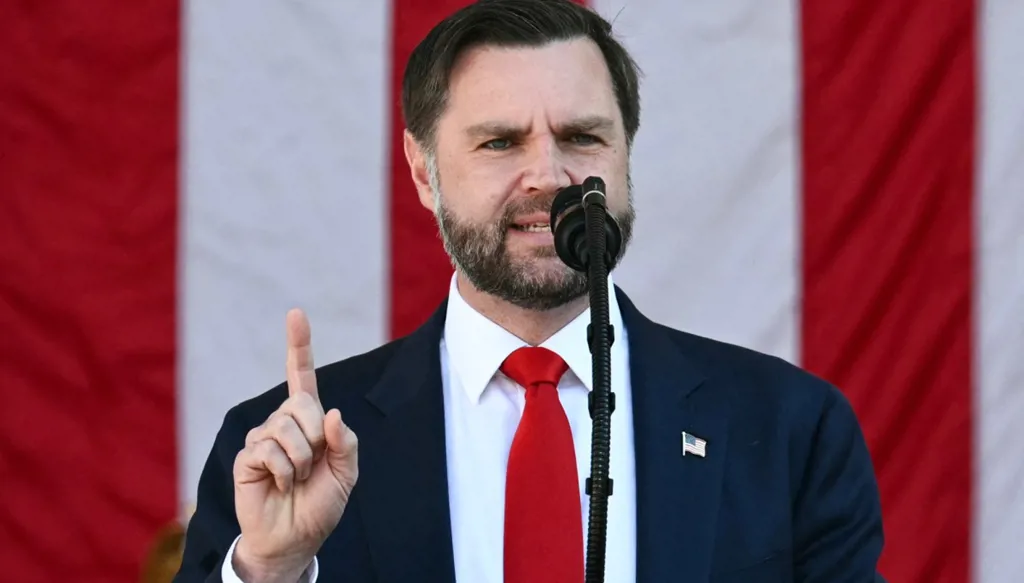
Vice President J.D. Vance conveyed a message in this regard, arguing that America's unconditional support for Israel was among the reasons voters turned away from the Republican Party, ultimately costing it control of both chambers of Congress to the Democrats. Of course, Vance did not overlook the war with Iran, which he identified as the primary reason for the defeat, alongside inflation and rising fuel and food prices.
However, it is rare for a sitting American official to openly blame relations with Israel for domestic political repercussions in the United States. Even Trump himself has begun to recognize the political consequences of unconditional support for Israel in American political discourse. Just hours before the midterm elections, he announced the suspension of four billion dollars in annual military aid to Israel, although the decision had little impact on voters' choices.
The shift in American perceptions of Israel is becoming increasingly evident. Notably, during these elections, some Democratic candidates rejected donations from the American-Israeli Public Affairs Committee (AIPAC), reflecting changes within the Democratic base driven by Israel's war on Gaza. Democratic senators and representatives have repeatedly called for a halt to arms shipments to Israel or for arms sales to be made conditional on a change in its policies towards the Palestinians, not only in Gaza but also in the West Bank, where settlers wreak havoc in Palestinian towns and villages under the watch and with the approval of the Israeli government. The government continues to expand settlement projects, further complicating Palestinians' lives and making the establishment of a Palestinian state in the future impossible.
Trump acknowledges the widespread hostility towards Israel in the United States and claims that, without him, Israel would have been wiped off the map. He points to his decision to bomb Iranian nuclear facilities in June 2025 and the war he launched alongside Netanyahu on February 28, which caused significant destruction to Iran's military capabilities.
In January, the new Democratic-majority Congress will officially take office. Speculation has already begun over the pressure Congress will exert on Trump to push Israel to reconsider its policies in Gaza and the West Bank. Democratic lawmakers may pass resolutions urging the US administration to halt arms sales to Israel. Similar bills have been introduced by Democrats over the past two years but were blocked by Republican opposition, as Republicans held majorities in both the House and Senate. However, Trump can still veto any decision of this kind, while Democrats lack the two-thirds majority required to override a presidential veto.
More importantly, the shift in Democrats' views on Israel is now also affecting a new generation within the Republican Party, with surveys indicating increasingly negative views of Israel. This is reflected in Israel's declining levels of sympathy in the United States, a sentiment that has long served as a fundamental pillar of the broad support the Jewish state has enjoyed from successive American administrations, whether Republican or Democratic.
Ironically, Netanyahu has responded to this shift in American public opinion, as well as the earlier shift in European public opinion, with indifference. He has called for preparations to transition to a cryptocurrency-based economy, anticipating the possibility of European and American sanctions against Israel, and seeking to turn the country into the "Sparta" of the 21st century.
Netanyahu overlooks the fact that Israel, as it exists today, and its military and economic strength, owe much to the continued support and sympathy of Western countries since its founding.
Accordingly, the potential loss of political influence in Europe and the United States should not be underestimated.
Disclaimer: The opinions expressed by the writers are their own and do not necessarily represent the views of Annahar.