The escalating pace of Iranian attacks on oil and gas tankers in the Strait of Hormuz is not merely intended to exert maximum pressure on oil prices. Remarks by Iran's chief negotiator and Speaker of Parliament, Mohammad Bagher Ghalibaf, that his country "will not remain in a state of neither war nor peace" point to the strategy behind the expansion of Iranian attacks to Gulf states such as Bahrain and Oman for the first time since September.
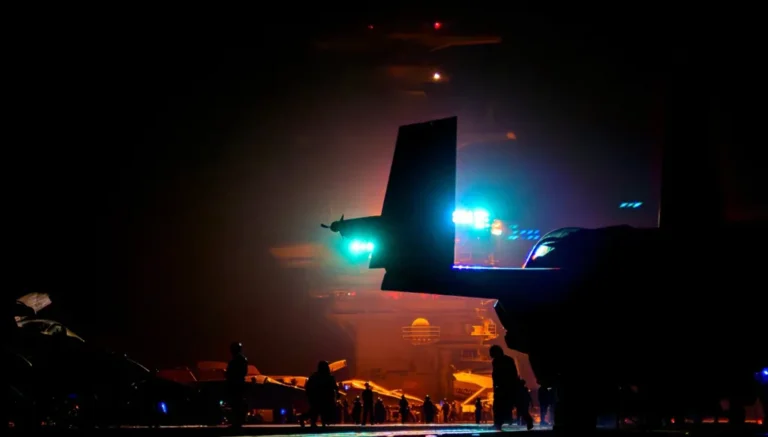
What Tehran is trying to do is raise the cost of the course of action currently pursued by US President Donald Trump: continuing the policy of economically strangling Iran through a naval blockade, seeking to cut overland supply routes with neighbouring countries, deploying the US Navy to protect tankers entering and leaving the Strait of Hormuz, through which around 18 million barrels of oil pass daily, and bombing radar and missile installations on Iranian islands in the strait.
With mediation efforts at a standstill after Trump asked his Vice President, JD Vance, to step away from the Iran file and focus on domestic US issues, Iran has moved to expand its attacks in an effort to increase pressure on the US president and push him back towards the memorandum of understanding. To prevent Washington from even considering a resumption of the war, Iranian officials are warning that Iranian forces will then determine the "geography of the battle", as Ghalibaf put it. When Tehran unveiled an underground "missile city" last week, it sent a clear message that it possesses the military capabilities to carry out its threats.
Iran is thus presenting Trump with two difficult choices: return to the memorandum of understanding or resume a war that lacks public support at home in the United States and has already dealt the Republican Party a historic defeat in the midterm elections held on 3 November.
If the war that began on 28 February, drawing the region into a conflict now approaching its ninth month, has cost Republicans their position in Congress, a new war could be enough to drive them out of the White House in 2028. This is what Vance sought to convey publicly when explaining the need to reach a peaceful settlement with Iran. Trump, however, who tends to embrace narratives that run counter to reality, has chosen to maintain his economic pressure strategy as a means of persuading the regime to agree to return to dialogue, with the nuclear file at the top of the agenda. Last week, during a Veterans Day speech, Trump declared that America had "won" the war and that all that remained was to turn a "93 per cent victory" into a complete one.
Events on the ground, however, do not necessarily align with Trump's narrative. Iranian officials believe time is on their side, and the pattern of recent attacks suggests that they could launch broader strikes targeting even locations in Europe, as threatened by Iranian Supreme National Security Council Chairman Mohsen Rezaei. The United States and European countries are taking this threat seriously. Even within the United States, Treasury Secretary Scott Bessent, who is spearheading the economic strangulation policy, has been moved from his home to a military base.
On 19 November, Trump is scheduled to meet his Chinese and Russian counterparts, Xi Jinping and Vladimir Putin, in the Chinese city of Shenzhen on the sidelines of the Asia-Pacific Economic Cooperation (APEC) summit. Beijing has announced that "world peace" will be the first item on the summit's agenda, an indirect reference to international conflicts, foremost among them Ukraine and Iran.
All eyes are now on Shenzhen, in the hope that the summit will produce an outcome capable of cooling the various fronts.
Disclaimer: The opinions expressed by the writers are their own and do not necessarily represent the views of Annahar