Riham Shakib Monzer- Clinical Psychology Specialist
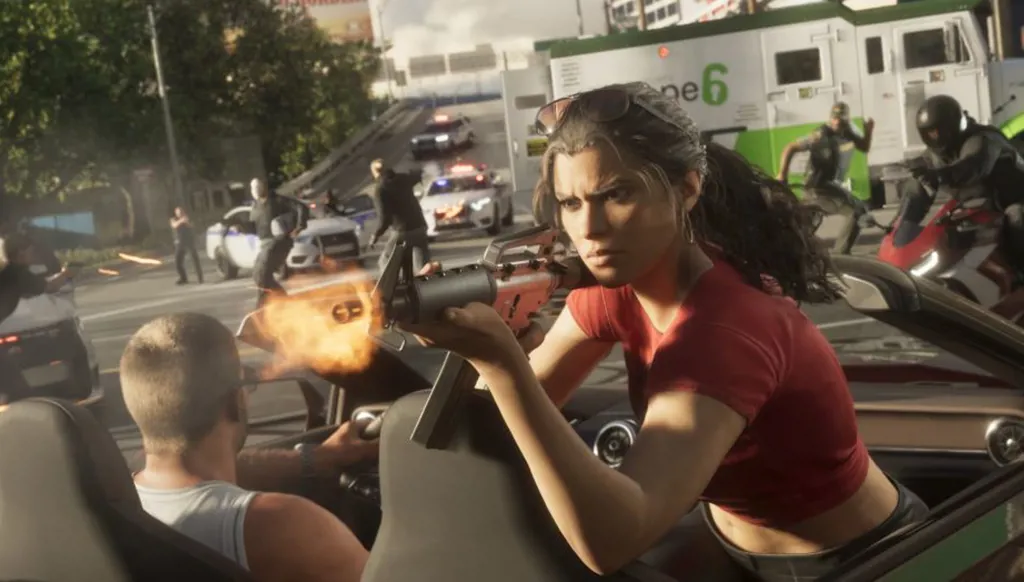
Imagine your fifteen-year-old child asking you to buy a game in which cars are stolen, people are assaulted to advance through missions, and shocking sexual scenes, as well as explicit depictions of drug and alcohol use, are part of the experience. This is part of what Grand Theft Auto 6 (GTA 6), released on November 19, 2026, includes.
Your child might argue that they know it is just a game. But knowing that something is fictional does not spare you from a more difficult question: Does that mean it has no psychological or mental impact on them? Could it not influence their perception of what is right, acceptable and "normal"? And as a parent, would you accept this content as part of your children's daily entertainment?
In the game's missions, assault and violence become tools for advancement. This is a point worth noting. Teenagers make decisions within the game, repeatedly attempt different actions, and discover which ones lead to success. A meta-analysis of longitudinal studies found an association between playing violent video games and increased physical aggression over time.
The presence of drugs and alcohol raises another question. The character who fascinates a teenager with their courage or power is also the character they see using substances. A British study found that alcohol and tobacco use was more prevalent among young people who played games depicting their use.
As for explicit sexual scenes, parents are entitled to ask what their children come to understand about human relationships when they are reduced to displays of bodies or jokes.
GTA 6 has received a North American age rating of 17 and above. In my opinion, seventeen is not an appropriate age for such degenerate content. Certainly, it is not right to put this kind of material in the hands of a fifteen-year-old simply because their friends are playing it.
Parents can explain their decision in straightforward terms: "I understand that you want to join your friends in playing. I've read the description of this game, and its content is not suitable for your age. Let's find a game you can play with them."
If the teenager has already seen snippets of the game with a friend or on their phone, the conversation can begin by asking what they saw and how they perceived it. A teenager who can tell their parents what they have seen, even when they know their parents disapprove of buying the game, has an opportunity to understand with them what sparked their curiosity or made them uncomfortable.
In my opinion, we are facing a new educational disaster. Day after day, we see rules, standards and moral values being obliterated in games that reach our children's hands. So what is the purpose of turning the violation of these boundaries into entertainment?
The most concerning thing is for a parent to say, "I can't prevent it." What more disturbing content do we need to see before intervening and putting a clear and firm stop to it?
What kind of generation do we want to raise when we ask our children to uphold ethical values and respect themselves and others, only to leave them spending hours in worlds where offenders are rewarded for their violations, humiliating others becomes a source of mockery, drug use is presented as an everyday habit, and sexual relationships are reduced to playful scenes devoid of mutual respect and boundaries?
I fear that our children will become so accustomed to these scenes that they pass by cruelty without stopping to consider the pain it causes, that sex portrayed in this way becomes a cliché of everyday life, and that drug use comes to seem normal.
This, in my view, is where the educational catastrophe lies. We demand that an entire generation adhere to values and show respect, while violations of those same values and disregard for the dignity of others become part of their daily entertainment.
What concerns me is how these perceptions could extend into teenagers' relationships with others and manifest in everyday situations they might not recognize as problematic:
- When strength is confused with dominance: They might perceive a difference of opinion as an attack on their status. During a disagreement with a partner or colleague, they might resort to threats or humiliation and interpret the other person's silence as a resolution, even when that silence stems from fear.
- When other people's pain becomes easy to ignore: They might join in ridiculing a colleague in a group, then tell them, "You're too sensitive," when they object. My concern is that the group's laughter might outweigh, in their eyes, the impact of the insult on the person receiving it.
- When rejection in intimate relationships is seen as an invitation to insist: If they become accustomed to portrayals of sex that revolve around one person's desires, they might overlook the other person's hesitation or discomfort. They might believe that consent obtained after pressure is sufficient, without asking whether the other person feels free to say "no."
- When widespread substance use is mistaken for low risk: They might be offered drugs at a party and feel reassured because everyone around them treats their use casually. They might also overlook warning signs in a friend who has started using regularly because they are accustomed to seeing substance use as a normal part of socializing and having fun.
- When actions are justified by their outcomes: They might know they have humiliated someone or crossed boundaries, yet justify their behavior because of what they achieved or because others do the same. Here, a concerning moral standard emerges: judging an action by its gains while ignoring the consequences others have to endure.
- When victims are expected to defend themselves: They might witness clear abuse in a workplace and say, "If it bothers them, they should speak up." They might fail to recognize that their colleague fears losing their job or that objecting in front of a group could lead to further humiliation. Silence is then interpreted as acceptance, leaving the least powerful person to bear the burden of protesting alone.
- When major harm is needed before misconduct is acknowledged: They might dismiss repeated insults because each incident seems minor on its own. Yet the impact could become evident when a partner starts weighing every word before speaking or a colleague avoids meetings to escape becoming the target of mockery again. Will they notice these behavioral changes, or will they wait for a more serious incident before taking complaints seriously?
- When they seek to end conflicts without understanding the harm caused: They might say, "I was just joking," and expect everything to return to normal. If the other person remains distant, they might blame them for prolonging the disagreement. Here, the impact becomes evident in their ability to repair relationships and rebuild trust: Can they listen to what their behavior has caused, apologize, and change their actions when the situation happens again?