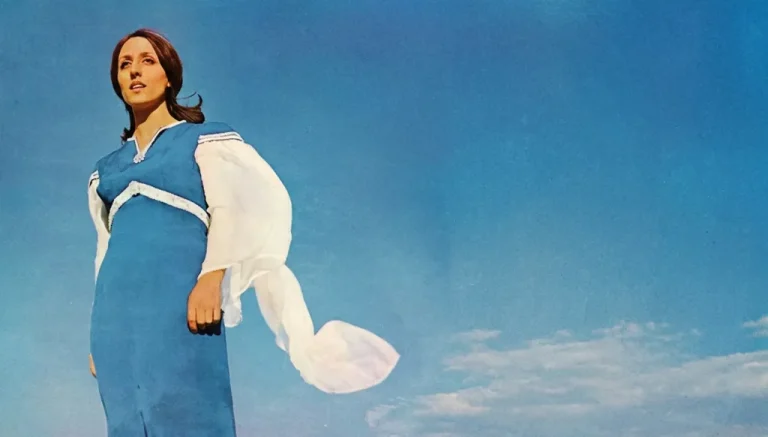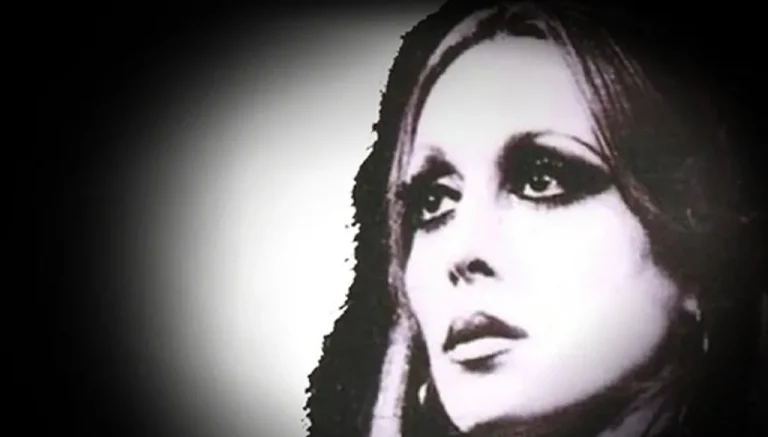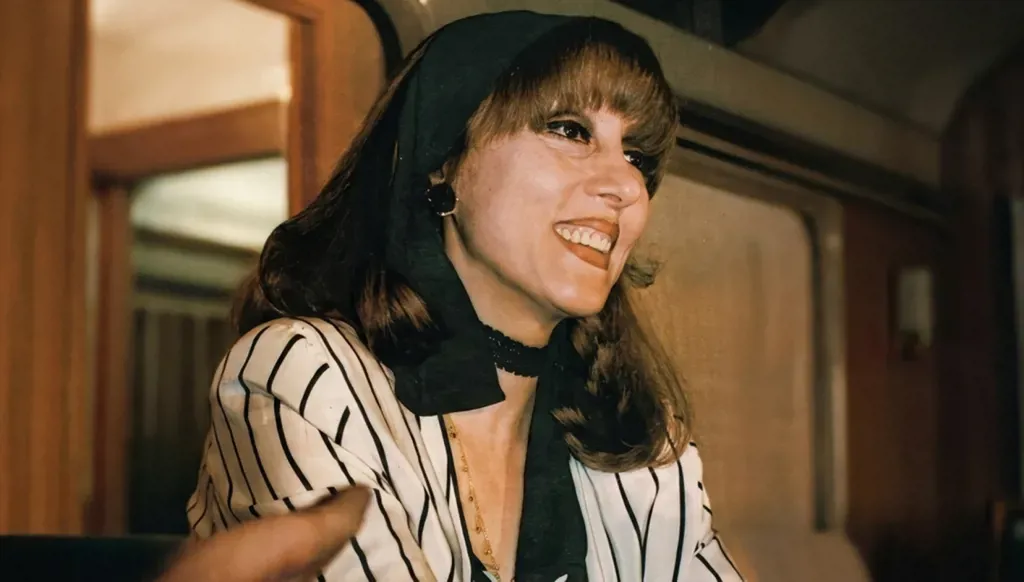
Whenever artistic works precisely capture the sensitivity of Lebanese identity, they become more resistant to classification. Such is the case with Fairuz, Icon of Lebanon, a painting by Mathilda Riyad Al-Feghali, in which expressive decorative art intertwines with the distinct influences of the Symbolist school and Art Nouveau style.
What stands out most in this painting is its resemblance to the style of Austrian painter Gustav Klimt, particularly in its blending of text and symbols, flattening of shapes, avoidance of realistic landscapes, and dense use of decorations, geometric patterns and spiral forms.
The only certainty is that Mathilda has embarked on a path of endless discoveries and boundless adventures in artistic expression. Although she knew the path and had defined its landmarks, it quickly branched into innumerable variations.
The artist reshaped the image of national life in a way that strips it of its spiritual anxiety and chaotic expressions, giving it a meaningful form filled with connotations and lending the scene a genuine spiritual yet tangible value.
Al-Feghali sought to unleash the erupting volcano buried deep within Lebanon's contradictions, when our ambassador to the stars, Mrs. Fairuz, carried the burden of the nation through its ordeal and cries. Peace was more distant than ever in those days, freedom remained more dead, and the nation screamed in search of itself.
The entire painting became a single cry, speaking through national symbols, as the nation releases its own cry through Fairuz's voice in the depths of darkness.
The painting features acrylic on canvas, using a mixed-media approach that incorporates pieces of cedarwood among numerous symbols. Mrs. Fairuz appears surrounded by a halo of labyrinths and imaginary circles. If this halo signifies anything, it is an epoch in the nation's lifespan, charged with anger, during which Fairuz sang for it and with it in an angelic voice, free of melancholy, hoping to dispel its gloom.
The cedar, a symbol of immortality, rests on her throat, while a dove of peace carrying an olive branch appears across the expanse of the painting. Lebanese flags flutter to the heartbeat of our Fairuz, while the titles of national songs emerge from the maze, as though drawing the imaginary circles toward clarity.
Unfortunately, the painting continues to express the obscurity of the dire present. Only Fairuz's image illuminates the painting and its maze, rising above the earthy colors and the barrier over the green, the symbol of the nation for which she sang: "...the world is beautified, beautified in green Lebanon...".
Mathilda Al-Feghali painted Mrs. Fairuz as her true self: an icon whose voice invites us into a land of glory and resonates with joy, like the symbols in the painting racing toward the sun's borders. These symbols rise like stars falling into dreams. An icon that has traversed emotions, crowned with a majestic voice and presence.
And when we look at the painting, we mourn a nation and a time stolen from our children and grandchildren by its leaders.
Fairuz, Icon of Lebanon is a theatrical story, meticulously shaped by Mathilda's brush and the effort of her mind to construct its symbolism. In doing so, it leaves a deeper impression on the viewer's memory than legendary narratives passed down over thousands of years.
This painting, crafted with a golden imagination, is enough to open vast spaces in the mind's eye, adorned by Al-Feghali with national symbols that help us understand Fairuz's place in the national imagination and Arab sentiment, across the East and West.
It is a painting resembling an intellectual and aromatic state, offering an escape from the reality of every oppressed Lebanese and Arab, who found in the era of the Rahbani brothers the aspirations of a people who dared to dream.