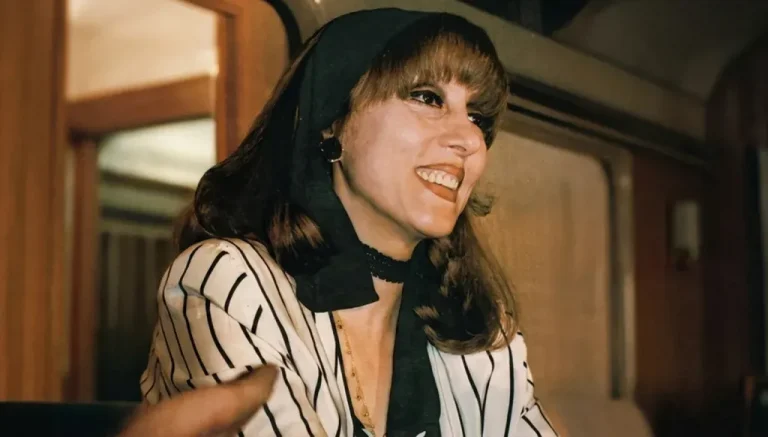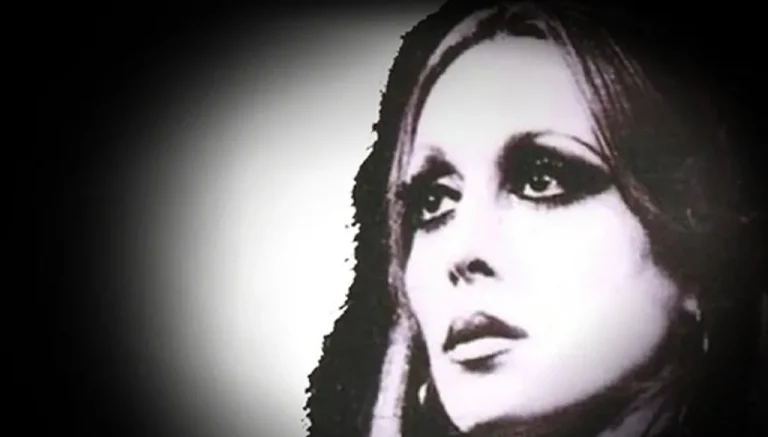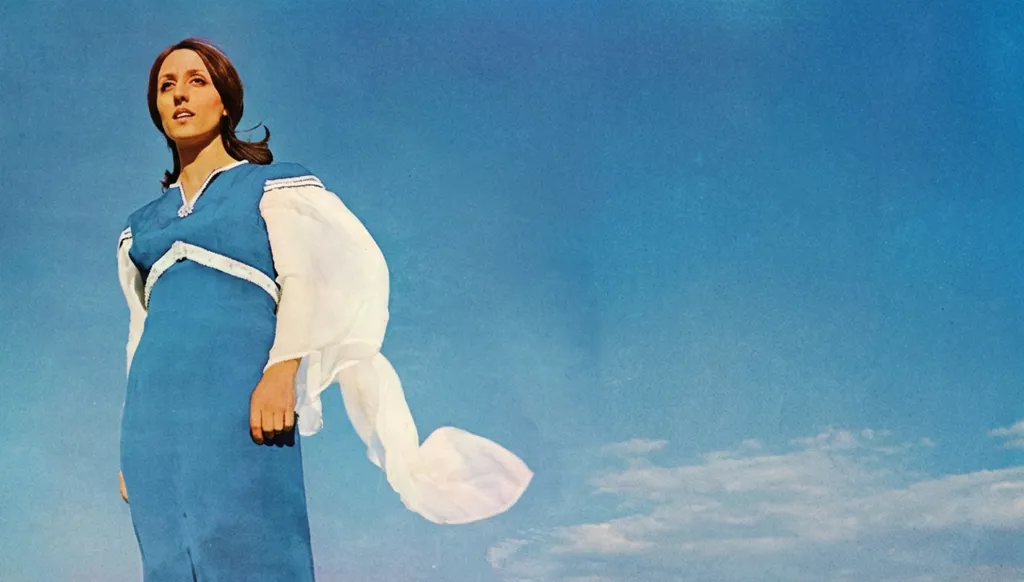
When examining the relationship between Fairouz and Damascus, and Syria more broadly, we find a musical journey that goes far beyond the idea of a simple tribute or a fleeting moment of nostalgia. Fairouz never sang for a regime or an individual, but for the land and its people.
Since the early 1950s, when Damascus Radio opened its doors to Fairouz and the Rahbani brothers in 1953 at the invitation of Prince Yahya al-Shihabi, and her subsequent appearances at the Damascus International Fair, the Syrian capital has held a special place in her artistic journey. Her concerts and the Rahbani brothers' theatrical productions continued for years, culminating in the 2008 staging of the play "Sahh al-Nawm" at the Damascus Opera House.
Damascus was never merely a performance venue; it was a vital space where words, melodies, and the presence of an audience were tested within a broader Eastern cultural context.
However, an objective examination of this musical legacy requires a clear distinction between poems and works firmly documented within Fairouz's repertoire and lists of national songs and archival indexes containing titles with varying degrees of documentation and overlap across radio archives and digital platforms.
One of the most significant poems cementing Damascus's presence in Fairouz's repertoire, this work brings together Said Akl's dense poetry, rich in historical and cultural references, and the Rahbani brothers' musical composition, which lends the text fluidity and expressive power. Here, Damascus is not portrayed as a city being praised from afar, but as a deeply rooted emotional state.
A remarkable work featuring lyrics by Said Akl and music by the Rahbani brothers, this poem carries a strong national and celebratory tone, paying tribute to Damascus's history and symbolism. Drawing on the language of chivalry and pride in the past, its musical style resonated with the atmosphere of major festivals and public concerts in Damascus.
It is as though the great poet Said Akl wanted to portray Syria through his poetry and was not content with a single poem. What better brush could there be for such a creative painter than Fairouz's voice?
In "Nasmat Min Soub Souria Eljanoub," Akl's poetic spirit is present through a breeze crossing distances to evoke the features of the land, particularly the Barada River and Mount Hermon. What distinguishes this kind of writing is its ability to transform geographical and natural elements into an emotional rhythm that captures the warmth of longing and nostalgia.
This poem is associated with the memory of Fairouz's performances at the Damascus International Fair, where its poetic and conversational tone meets the interaction of a live audience. It showcases the Rahbani experience's ability to combine the clarity of classical Arabic with the theatrical intensity of the brothers' writing and musical composition.
In this work, the Rahbani brothers continue their musical dialogue with Damascus through a tone of greeting and loyalty, reflecting the city's enduring place in the emotional landscape of their art and its constant presence in their collective memory.
It is a message to Damascus from everyone who carries the pain of separation from their homeland, whether living in exile or forcibly separated from it: the anguish that comes with love.
This song captures a historical moment charged with tension. The contrast between "laurel" and "fire" intensifies the drama and uncertainty of the moment, while the melody lends the work a dramatic weight that moves beyond light musical arrangements towards a more intense and realistic expression.
Through this song, Said Akl, Fairouz, and Damascus seem to form a trilogy built on history, music shaped by words and melody, and the power of an extraordinary voice.
A remarkable meeting between Said Akl's poetry, Fairouz's voice, and the melodies of composer Mohamed Abdel Wahab, this work also brings the Barada River into the poem's imagery.
The contrast between the familiar Rahbani musical structure and the distinctive school of Abdel Wahab, known as the musician of generations, gives the text a noticeably different vocal and musical dimension.
Among the famous songs Fairouz performed for Syria, this work features a poem by Said Akl. It presents history as something familiar and accessible, relying on the eloquence of the words and the clarity of Fairouz's vocal performance to highlight Damascus's historical depth without excessive verbal ornamentation.
The song is almost anthem-like, and Syrian television and radio channels have traditionally used it to open their broadcasts after the Syrian national anthem.
Among the poems written by the Rahbani brothers for Syria, this song showcases the richness of its natural landscape and pride in its civilization.
This is evident from its opening lines, as Fairouz sings: "Our country on the lips of deserts, its pastures embrace the clouds," followed by: "Our proud country, minarets distributing peace."
A classical approach to national songs, this work addresses a collective sense of pride and belonging through lyrics and melodies by the Rahbani brothers.
It belongs to the repertoire and lists of songs dedicated to Syria, alongside other works such as "Ya Layl Biladi" and "Maisaloun."
Set to the Nahawand maqam, the song combines joy with solemnity. Written and composed by the Rahbani brothers, "Our Country Belongs to Us" can be classified among the hymns that recall the works of the Flayfel brothers and the anthems they helped popularize across the Arab world.
The poem focuses on belonging to the land, pride in its plains and countryside, and the spirit of generosity and collective work.
The title of this song, written and composed by the Rahbani brothers, perhaps best captures its content.
Its melody lends itself to performances by scouting or military bands, giving the work the character of an anthem. It opens with the words: "Syria's girl, let us march; Syria's girl, the future shines for you."
This idea is reinforced when the song addresses "the working women of my country."
The Rahbani brothers adapted this piece from a poem by Lebanese poet Bishara al-Khoury, better known as Al-Akhtal al-Saghir.
The song opens with the lines: "Ask about my old love in this valley... Did anyone else's heart beat there?"
"The Memory of Barada" is among the works worth revisiting when exploring the artistic relationship between Fairouz and Syria. It reveals how a song can preserve Damascus's image in Arab memory, transforming its river into a story that transcends the boundaries of time and place.
Classified within the Eastern maqamat, specifically the Kurd maqam, and set to a gentle waltz rhythm, this song was written by the Rahbani brothers.
It is associated with Fairouz's early presence in the Syrian capital. Artistic accounts indicate that she performed at the Officers' Club in the summer of 1957, while her name became closely associated with musical evenings and the Damascus International Fair.
This song belongs to a series of works Fairouz dedicated to Syria. Maysaloun and its historic battle remain present in the Syrian collective consciousness as symbols of resistance against occupation.
Sources differ regarding the song's authorship, with some attributing it to the Flayfel brothers and others to the Rahbani brothers. What remains undisputed is Fairouz's voice.
Fairouz's "Mouwwal Dimashqi" carries the spirit and fragrance of Damascus's history, drawing on a poem by Syrian poet Nizar Qabbani, who consistently made his city a space for love, nostalgia, and beauty.
In this work, the Damascene word meets Fairouz's voice, bringing the image of Sham back to life with all its memories and emotions. It reflects the city as Nizar Qabbani saw it: a place of love, jasmine, and history, capturing an enduring story of beauty and nostalgia.
Fairouz also sang for Dummar, on the outskirts of Damascus. The song celebrates the area, known for its natural beauty and orchards.
Performed during the Damascus International Fair concerts in the 1960s, alongside works by the Rahbani brothers, it evokes the atmosphere of summer nights, oases, and rivers in the Damascus countryside.
In the end, the songs that connect Fairouz to Damascus and Syria reveal an artistic journey spanning more than half a century. Beginning with her association with Damascus Radio in the early 1950s, continuing through her appearances at the Damascus International Fair, and reaching the stage of the Damascus Opera House in 2008, this relationship has remained an enduring part of her musical legacy.