In the Israeli mindset, which is rooted in a biblical doctrine that regards Lebanese, Syrian, Jordanian, Egyptian and, of course, Palestinian territories as the Promised Land and part of the envisioned Greater Israel, policies do not change when names change. The so-called deep state remains one and the same, and interests remain unchanged, although methods and tools may differ.
What is certain, however, according to a Lebanese source, is that Lebanon is waiting for the results of the Israeli elections and the outcome of the process of forming a new government in Israel in the hope of restarting negotiations that have been stalled since the signing of the “framework agreement”. This is a circular process that has made no real progress.
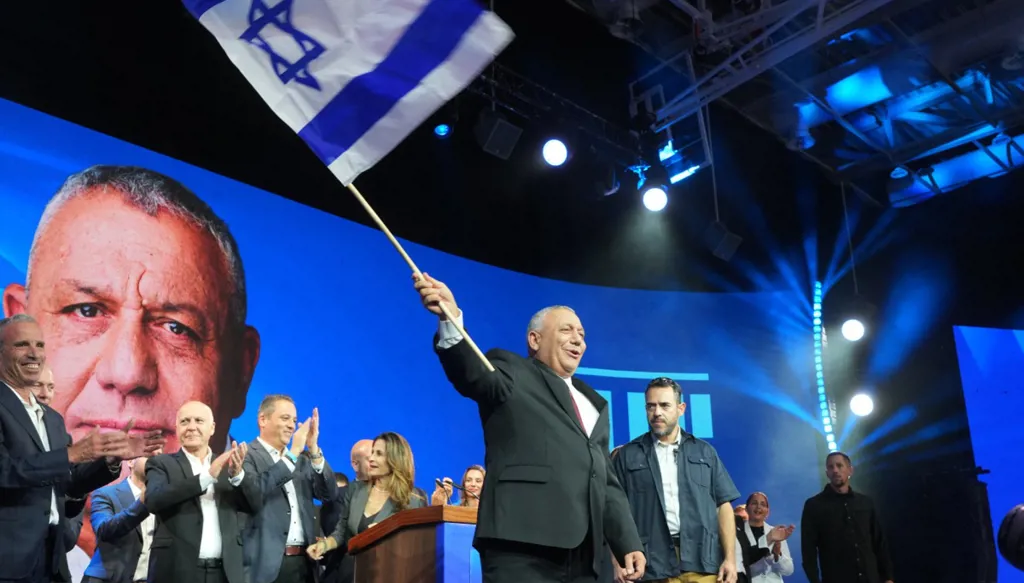
Despite all of the above, Lebanese official circles believe that a victory for Gadi Eisenkot could be preferable to one for Benjamin Netanyahu, not necessarily because Eisenkot would adopt a more conciliatory policy towards Lebanon, but because the comparison between the two men concerns how the war is managed, the limits of military force, and the possibility of reaching a sustainable political and security settlement along the Lebanese-Israeli border. Netanyahu, in particular, has increasingly resorted to war to escape mounting pressure and potential legal proceedings against him.
The Lebanese source therefore believes that Eisenkot might be more pragmatic in his dealings, as he fully understands the military establishment’s circumstances, the impact of a prolonged war on military personnel, and the repercussions for public opinion both inside Israel and around the world.
The distinction between the two men lies in their differing political and military approaches, although Eisenkot also comes from the Israeli military establishment, takes a hard-line security stance towards Hezbollah, and wants a buffer zone in southern Lebanon.
In Lebanon, Eisenkot is viewed as a security figure with extensive military experience, but one who may be more willing to combine military pressure with political understandings. He has criticised Netanyahu’s handling of the war, arguing that it lacks a clear vision of achievable political objectives.
Israeli analyses suggest that Eisenkot may seek to restore France to a more active role in the Lebanese file and broaden the scope for understanding with countries concerned with the situation in southern Lebanon. This could open an additional diplomatic window for Lebanon, according to The Jerusalem Post. Paris and Washington could consequently be better positioned to coordinate their efforts to reach understandings on an Israeli withdrawal, the deployment of the Lebanese army, and security arrangements along the border. A shift in Israel’s political dynamics could remove the veto on a French role, which is considered urgently needed amid Washington’s reluctance to become directly involved on the ground and the declining role of the United Nations Interim Force in Lebanon (UNIFIL).
Eisenkot’s arrival in the premiership could also pave the way for a government with a different composition and set of priorities, and one more willing to coordinate with international actors.
However, this difference should not be overstated, as Eisenkot does not necessarily support the concessions Lebanon is demanding. More importantly, his public positions do not point to any fundamental departure from Netanyahu’s security objectives regarding Lebanon. Analyses suggest that the two men are close in their insistence on maintaining a security zone in southern Lebanon and in linking an Israeli withdrawal to Lebanese measures to push Hezbollah away from the border.
Beyond all this, the Lebanese public, as distinct from the official establishment, may feel that it has achieved a partial victory by getting rid of Netanyahu, offering a small measure of moral compensation for the enormous losses suffered on every level.
Disclaimer: The opinions expressed by the writers are their own and do not necessarily represent the views of Annahar