It is hardly surprising that Israel’s first elections since the October 7 onslaught, an event that has become a date requiring no introduction, much like September 11, are receiving unprecedented global media and diplomatic attention. This is due to the scale of the internal turmoil expected to unfold in Israel, perhaps for the first time since its establishment with such intensity. However skilled analysts and experts may be at reading the signs of Israel’s internal political upheaval, this time around, firm predictions of the election results before the polls close have become virtually impossible. It goes without saying that even Israel’s electoral system, widely regarded as highly democratic because of its proportional representation, which offers a particularly broad reflection of the various segments and groups within society, will not make it easy to answer the most difficult question of all: What kind of Israel will the Middle East face after the elections, regardless of who wins or which new governing coalition emerges?
There is, moreover, no guarantee that the elections alone will be enough to define what many believe to be the red lines separating two eras, before and after. The nature of the conflicts unleashed by Operation Al-Aqsa Flood, and the successive wars that have stemmed from it over the past three uninterrupted years, makes it impossible to impose restraints on them in this post-onslaught Israel. Its longest-serving prime minister in terms of his repeated returns to power since the 1990s, and the leader of the right-wing camp, Benjamin Netanyahu, now boasts that he has surpassed Ben-Gurion, the founders, and even the most hardline leaders of previous wars, including the trio who invaded Beirut in 1982: Begin, Sharon, and Shamir. Having launched eight wars in succession, sometimes simultaneously across most fronts, Netanyahu has now become the “king of wars” in the Middle East.
Under this “manufactured” pattern of the post-October 7 era, Lebanon will have to proceed with considerable caution. Across the political spectrum, and among most of its political, media, and strategic commentators, there will be a need to resist rushing into premature and immediate forecasts as soon as the final results are announced. The questions remain unresolved: When and how will Israel withdraw from the occupied areas in southern Lebanon, by what means, and at what cost? What fate and outcome will emerge from negotiations between Lebanon and Israel? And what kind of Israel will return to the negotiating table with Lebanon after its elections?
These are the first elections in the Israeli state since the October 7 onslaught, and they will turn conventional wisdom on its head, overturning the classical rules previously used to assess Israeli election results and their repercussions for neighboring countries.
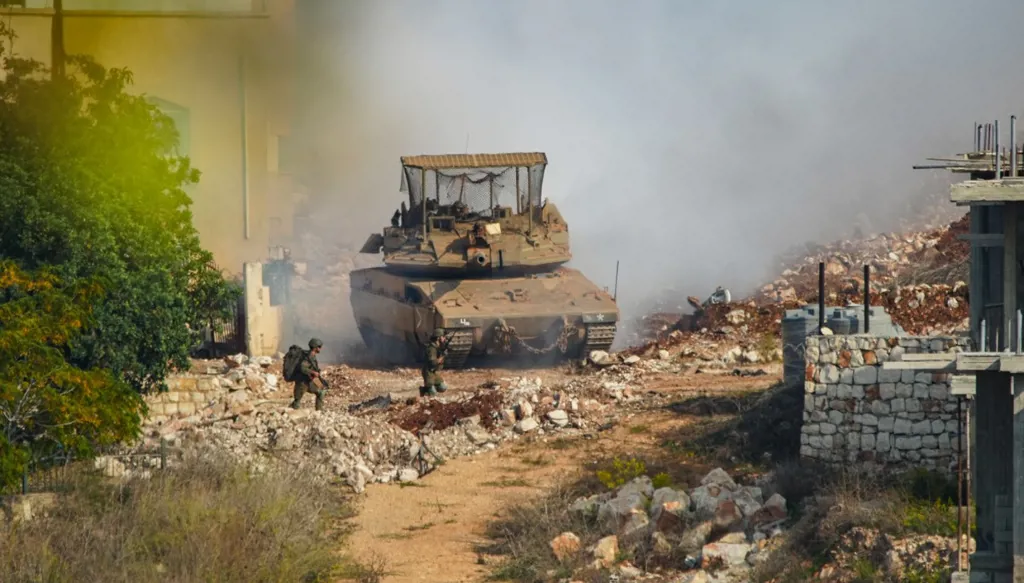
Yet there is another point that must be considered on the opposite side, namely, the countries directly affected by Israeli occupations of their territories, some of which have been transformed into scorched-earth security zones stripped of life, as in Lebanon and Gaza. The “first time” also applies to the parties confronting Israel and engaged in wars with it, as well as to those forcibly drawn into these conflicts and who have become their direct or indirect victims. Lebanon, for example, will remain under constant scrutiny as a state responsible for fulfilling its commitments to ensuring that weapons are held exclusively by the state, regardless of whether its Israeli negotiating counterpart is new or old. Hezbollah, above all, will have to recognize, once and for all, the danger of testing either Israel’s new or its incumbent leaders at a time when the entire country is poised to strike at the group. To ignore the growing mobilization against it, for the first time on such a scale and with such intensity, would be a potentially fatal mistake.
Disclaimer: The opinions expressed by the writers are their own and do not necessarily represent the views of Annahar