Against the backdrop of the democratic accountability that elections in Israel could bring about, and that the US midterm elections scheduled for next week are expected to deliver, Iran can position itself as though it had simply waited on the riverbank for the current to carry the corpses of its enemies to it: Israeli Prime Minister Benjamin Netanyahu and US President Donald Trump.
Even if the potential changes do not lead to radical shifts specifically in relation to Iran, given that developments in Israel or the war against it are not the only factors that could influence the prospect of Netanyahu’s ouster, while the situation is different for Trump because of the impact of the war on Iran on the US economy, Iran is benefiting to some extent from the alarming repercussions of this war on several levels. This does not mean, however, that it is in the best possible position, or that its leadership could survive if Iranians were given the opportunity to hold it democratically accountable, an opportunity that is not available in Iran in the first place.
Global shifts, linked to approaches to the current US administration’s foreign policy, as seen in developments in Latin America, Trump’s failed bet on political change in Brazil, and European reactions, do not allow Iran to claim exclusive gains. The question therefore remains: Has Iran succeeded in weakening the United States’ resolve to continue the war against it by increasing the economic and political costs of ongoing US military operations, or could the elections free the US president from the pressure they have created and once again give him a free hand to wage war against Iran?
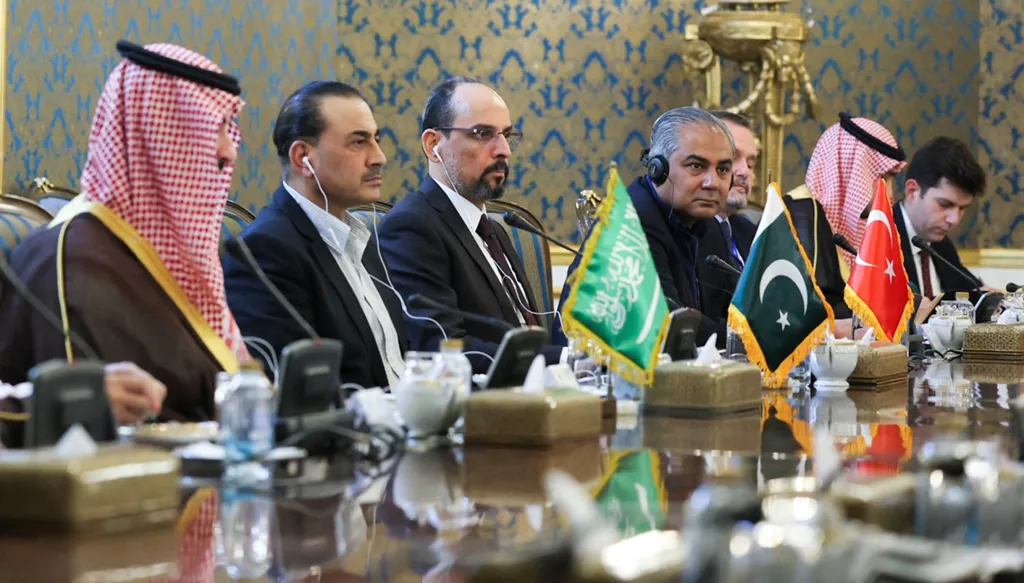
In reality, the efforts of regional governments seeking to contain the conflict, along with the notable diplomatic engagement reflected in the visit to Tehran by a delegation from the Mecca Agreement, go beyond the attacks targeting Saudi Arabia, despite the challenges posed by those attacks. All these governments have set aside their fears that any renewed confrontation between the United States, Israel and Iran could threaten maritime security, energy infrastructure and telecommunications networks throughout the Gulf region. This does not mean, however, that the single meeting will necessarily bring a breakthrough. Any such outcome ultimately remains contingent on Iranian flexibility and a degree of US acceptance, provided the latter is not merely superficial, and on the emergence of a strategic shift in the region based on Iranian-Saudi relations that differ fundamentally from the two countries’ long history of relations.
Accordingly, the question that Lebanon is preparing to position itself around is this: Which external bet will prove right? Will it be the authorities’ bet on US-led solutions, which have so far proved disappointing in ways that cannot be ignored, particularly since repeated rounds of negotiations, including the latest talks in Tampa, have yielded no positive results? In other words, they have failed to give Lebanon a strong card on which to rely in support of the state’s course, while depriving the framework agreement of the momentum Lebanon needs. Or will it be Hezbollah’s bet on Iran’s attrition of the region’s resources and its bargaining with regional states as part of its confrontation with the Americans, in an effort to pressure them into leaving the region?
Calculations now revolve around a strong belief, or bet, that Israeli policy shows no readiness to do anything positive, and that the Americans are unwilling to ask or pressure Israel to do anything. These calculations also include bets on how regional relations will take shape amid attacks targeting Saudi Arabia, the Gulf states and Jordan, as well as the implications of all this for Lebanon, particularly whether the state’s position will be preserved or whether outcomes will come at its expense. According to diplomatic sources, this issue cannot be viewed solely through the lens of Hezbollah’s weakening. More than a year and a half after the state began seeking to regain control, and following two devastating wars into which Hezbollah dragged Lebanon, the authorities are still searching for domestic guarantees that they will not be drawn into a third war if the regional confrontation resumes. This indicates that the state has yet to reclaim control over decisions of war and peace, an issue that goes far beyond Hezbollah’s disarmament.
This means that decision-making remains in Iran’s hands despite everything that has happened. Iran is unlikely to risk opening a new war from Lebanon, so as to avoid further weakening Hezbollah or destroying it altogether. Yet the entire debate over the war and the guarantees surrounding it serves to convey an Iranian message, through Lebanon, to Israel and the United States: Iran is the one calling the shots in Lebanon, too, despite all the changes, including the authorities’ continued insistence that they are the ones conducting negotiations and speaking on Lebanon’s behalf. It is well known that the domestic situation is hardly conducive to progress, with divisions over this very issue proving deeply frustrating, whatever the calculations or considerations. Meanwhile, many remain haunted by the fear of a settlement that comes at Lebanon’s expense.
Disclaimer: The opinions expressed by the writers are their own and do not necessarily represent the views of Annahar