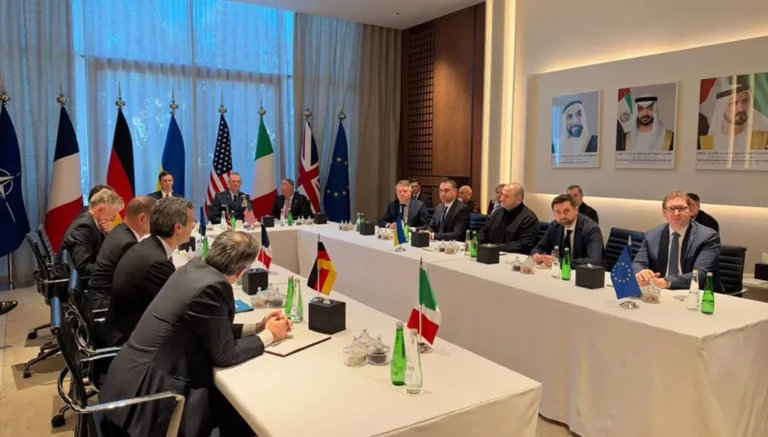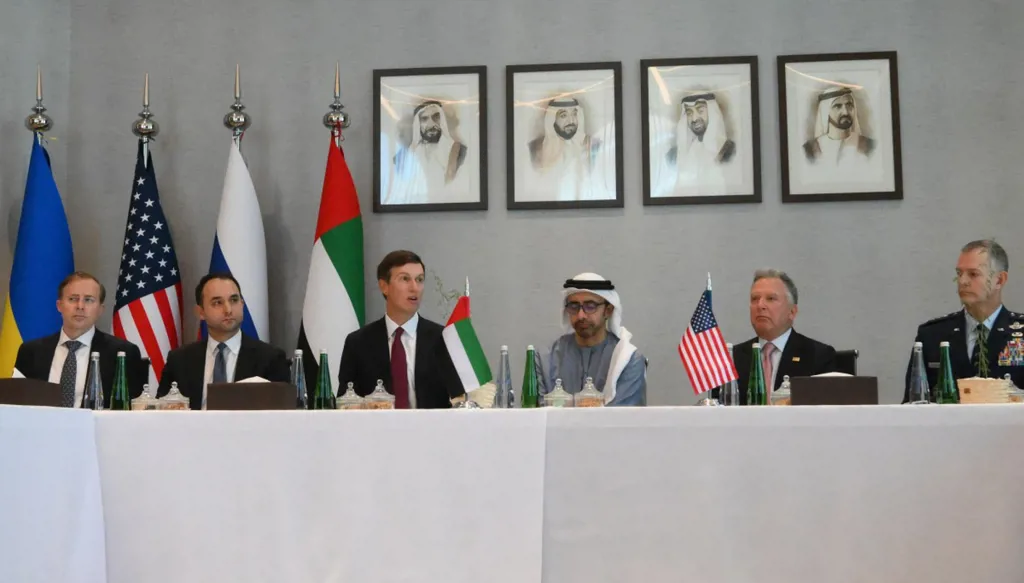
In Abu Dhabi, words were shaking hands while drones were crossing paths on their way to cities. When Vladimir Medinsky, head of the Russian delegation, emerged to describe the November 10 and 11 talks as having taken place in a “friendly and businesslike atmosphere” and thank the United Arab Emirates for their excellent organization, the scene seemed like a historical paradox: adversaries can disagree over the fate of a continent while agreeing on the courtesy of sitting at the same table. But the distance between the courtesy of sitting down and the courage to make concessions is greater than diplomatic statements can measure.
For the third time this year, following the January and February rounds, Abu Dhabi has opened its doors to Russian-Ukrainian negotiations under US auspices. No agreement has yet been reached to silence the guns, but something has managed to save people from their clutches: 8,537 prisoners have returned home through 27 Emirati mediation efforts, the latest of which involved an exchange of 540 prisoners in October, along with a new understanding on a broader exchange. Why can the warring parties agree to return prisoners but fail to end the war that produces more prisoners? Because returning a person to their family does not require a state to abandon its vision of security, whereas peace demands that each side surrender part of its leverage to a future it does not trust.
This is where the first impasse begins: Russia and Ukraine do not simply disagree over the terms of a single agreement; they disagree over what the agreement itself should entail. Kyiv is negotiating to end a war and defend its sovereignty, while Moscow is negotiating to redraw Europe's security order. A source within the Russian delegation described a settlement in Ukraine as secondary to a broader objective: establishing a comprehensive security framework for the continent.
The implications are serious. When a country's borders become a bargaining chip in calculations involving an entire continent, that country fears its peace may turn into a deal struck by powers greater than itself. This is when Europe's historical memory revives an old question: who has the right to determine the security of small states, sovereign nations or those who wield power? Moscow is not content with seeking an end to the confrontation; it also wants written recognition that spheres of influence will form part of the rules of the game to come.
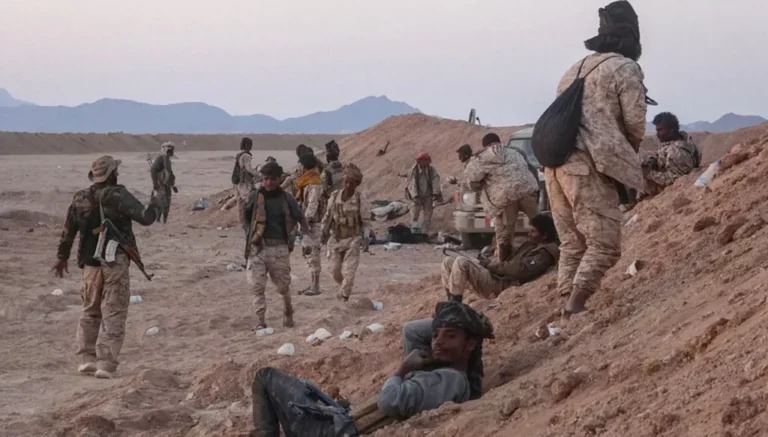
The second impasse concerns the sequencing of steps, an issue that may appear procedural but is, in fact, among the most politically sensitive. Kyiv wants a ceasefire first, freezing the front lines and preventing Moscow from seizing the remaining parts of Donetsk by force of arms. Moscow rejects a truce that it sees as an opportunity for Ukraine to rearm, and insists that security arrangements be settled before the guns fall silent. The two sides are therefore not negotiating when the silence should begin, but what each will possess once that silence prevails. That is why strikes on energy facilities continue, while the battlefield keeps writing its own terms even as diplomacy attempts to erase their consequences. War is not always the opposite of negotiation; it can become its harshest instrument.
The third impasse is that one side's guarantee is the other side's source of fear. Kyiv wants binding defense commitments to deter another invasion, while Moscow demands Ukraine's neutrality and restrictions on its armament and NATO ambitions. What the former calls protection, the latter calls encirclement. And what the latter calls reassurance, the former sees as an infringement on its sovereignty. Even the maps of Donbas are not described in the same terms by both sides. If they cannot agree on the reality on the ground, how can they sign an agreement on its future?
Outside the negotiating room, Europe was present yet absent. Delegations from its capitals and institutions were in Abu Dhabi, but without a seat at the trilateral negotiations. Lavrov even said they could “sit in the hotel.” The irony goes beyond mockery: Russia wants to redesign Europe's security architecture but does not want Europeans around the same table. Meanwhile, Washington's envoys, Jared Kushner and Steve Witkoff, are scheduled to travel to Moscow today to meet Putin, then to Dublin tomorrow to meet Zelenskyy on the sidelines of a meeting of European leaders. It is as though Abu Dhabi brought the questions together, while the authority to provide the answers remained scattered across different capitals.
Abu Dhabi has something to take pride in here, beyond the noise of praise. It has never claimed to hold the decisions of the warring parties in its hands, but it has created a space they can enter and reunited thousands of families. A mediator cannot grant peace to those who have not decided to pay its price, but can protect what remains of humanity amid war.
Perhaps the greatest lesson Abu Dhabi offers is that peace does not begin with signatures alone, but with the belief that every human being has a right to a tomorrow that is not held hostage to the balance of firepower. The day may come when the war ends, but history will not ask only who won the land; it will also ask who delayed saving those who inhabit it. Countries are not lines drawn on negotiators' maps; they are people. And if the people are gone, on what land will the victors sign their peace?
Disclaimer: The opinions expressed by the writers are their own and do not necessarily represent the views of Annahar