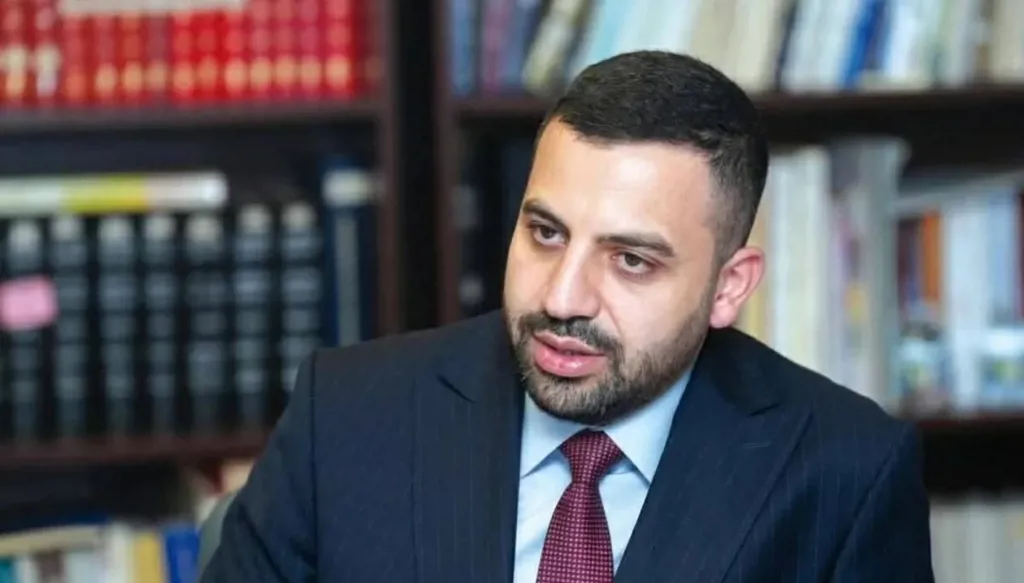
Beyond a previous tweet and an anti-American stance, responsibility for the case of Lebanon’s consul in Michigan, Ibrahim Sharara, and the decision to expel him from the United States rests with the very authorities that appointed him to the post. Sharara had no diplomatic background, yet someone chose him to serve in the United States. The state to which he was assigned for his consular mission is home to a large number of Arab immigrants, particularly Lebanese, a significant proportion of whom belong to the Shiite community. Many of them remain politically loyal to the Amal Movement, while others are politically and ideologically aligned with Hezbollah.
In the case of the Amal Movement, this is nothing unusual in the United States. A large proportion of Americans of Lebanese descent who have acquired US citizenship are divided among various Lebanese political affiliations.
The situation is different, however, when it comes to Hezbollah, particularly given that it has officially been designated a terrorist organisation for decades. The Lebanese consul had previously glorified the 1983 bombing of the Marines' barracks in Lebanon, describing it as the "end of neocolonialism". This did not prevent him from emigrating to the United States, applying for American citizenship, and then seeking the position of consul in Michigan, a state with a sizeable Lebanese Shiite community.
Glorifying a bombing classified as a terrorist attack, which targeted a US military installation and killed 241 American servicemen, is not something that can simply be overlooked. Above all, it is fundamentally at odds with the very idea of the consul's decision to emigrate to the country of "neocolonialism" before becoming a consul. Given his political and ideological convictions, would it not have been more appropriate for him to seek to emigrate to countries more in line with his views, such as Russia, China, Iran or North Korea?
As for accountability, the main issue is not the consul himself, but the person who appointed him. And we are not referring solely to the Foreign Ministry at the time, which was under the control of the pro-resistance camp, but also to the leading political authority within the Shiite community: President Nabih Berri, who, logically speaking, was the one who selected Sharara for the position. Was he aware of the tweet and other matters? There is no confirmed information on this point. Nevertheless, responsibility ultimately rests with whoever initially selected Ibrahim Sharara for the position of Lebanon's consul.
All of this brings us back to a closer examination of President Berri's current political positioning. A few days ago, unidentified individuals tore down a picture of him in the town of Kfara, in the Bint Jbeil district. The same large billboard also featured Imam Moussa al-Sadr, whose picture was left untouched. The individuals in question defaced Berri's image but did not touch al-Sadr's. Some are asking: Were the perpetrators Hezbollah supporters expressing their discontent with Berri's growing distance from the party? After all, Berri recently commented in the media on the nature of his relationship with Hezbollah, saying: "There is no older brother or younger brother!"
Could the perpetrators instead be Amal Movement supporters who have grown tired of Berri's tolerance towards Hezbollah, particularly in light of the dire situation that has befallen the South as a result of the two wars waged in support of the party, the destruction of dozens of southern villages and towns, and the occupation of 700 square kilometres of territory, a quarter of a century after Israel's withdrawal? Has the time not come to revive the Lebanese identity of Imam Moussa al-Sadr by having President Berri break with Hezbollah and abandon the choices that have devastated the Shiite community, undermined coexistence, and threaten to destroy what remains of a united Lebanon?
Disclaimer: The opinions expressed by the writers are their own and do not necessarily represent the views of Annahar