From the rising costs of raising children to the demands of caring for aging parents, smaller families are reshaping the way people experience kinship, responsibility and memory.
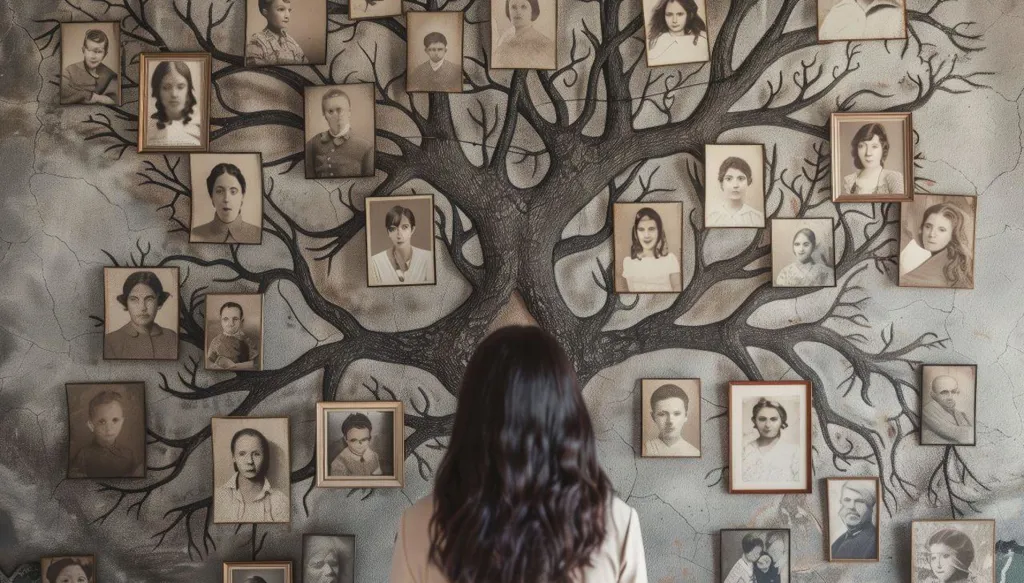
A single image of a lone child standing before a family tree filled with names and faces is enough to raise a question that goes beyond the number of family members: What becomes of that tree if having one child becomes the pattern repeated from one generation to the next?
Behind the child are grandparents who had children of their own, who in turn built sprawling families. Ahead of the child, the branches may gradually thin out, until the network of siblings, uncles, aunts and cousins narrows into a single family line connecting two parents to one child, and perhaps one grandchild further down the line.
The transformation seems quiet at first. One fewer chair around the table, a single room for the children, a smaller family photograph. Yet its real impact becomes apparent over the years, as parents grow older, caregiving responsibilities emerge, inheritance matters come into play, and one person realizes they must carry what an entire family once shared.
Sociologists use the term “vertical family” to describe a structure in which several generations are alive at the same time as life expectancy rises, while the family’s horizontal reach, shaped by siblings and relatives within the same generation, becomes increasingly limited.
A child may know their grandparents but grow up surrounded by a limited number of people with whom they share ancestry, memories and responsibilities. The family becomes longer across generations but smaller in size, while its “kinship capital” becomes concentrated among just a few people.
This capital cannot be measured simply by the number of names on a family tree. It is the sum of relationships that provide a person with social and emotional support: a brother who answers an emergency call, a sister who handles a doctor’s appointment, a relative who can help make a decision that cannot reasonably rest on the shoulders of just two people.
This shift is unfolding against a global demographic backdrop. According to United Nations estimates for 2024, fertility rates have fallen below the replacement level of around 2.1 births per woman in 55 percent of the world’s countries and areas, which together account for more than two-thirds of the global population.
These figures do not mean that all families are choosing to have only one child, as they also reflect later marriage and childbearing, as well as rising rates of childlessness. But they do point to a clear shift toward smaller families, in which traditional family ties are becoming less dense.
The number of children may appear to be a personal decision, but economic and social circumstances help determine its real limits. In a survey conducted by the United Nations Population Fund in partnership with YouGov, involving around 14,000 people across 14 countries, nearly 20 percent of adults of reproductive age said they expected to have fewer children than they wanted.
The cost of housing, education and healthcare, precarious employment, the difficulty of balancing work and family, and fears of wars and crises all find their way into the most private corners of people’s lives. The question, then, is no longer simply whether people want to have children, but whether they can give a child a life that they feel is secure and adequate.
In Lebanon, this question carries additional weight. Many people imagine having a larger family, then start doing the math: school tuition, the cost of hospitalization, a cramped home, an unstable income, and perhaps a postponed plan to emigrate. The dream gives way to the numbers, and the number of children becomes a brutally demanding economic calculation rather than an emotional desire.
For this reason, shrinking family sizes cannot simply be attributed to changing values or a declining desire for parenthood. Sometimes, a small family is a reflection of the gap between the life people want and the life their circumstances allow them to have.
The most sensitive consequences emerge as parents grow older. Without siblings, the only child becomes the first person responsible for managing their parents’ treatment, expenses, paperwork and day-to-day decisions. They may find themselves caught between raising their own children, caring for their parents and keeping their job, with little real room to step away or rest.
This situation reflects what could be called the family’s “care economy”: unpaid time, emotional and mental effort, and small tasks that quietly accumulate. Booking an appointment, securing medication, accompanying a parent to the hospital, fixing something that breaks at home, and reassuring parents who are afraid of growing old. These tasks may seem separate, but over the years they can consume the life of a single person.
Migration makes this family structure even more fragile in Lebanon. A family may appear large in the civil registry and in old holiday photographs, only for it to become clear when help is needed that its members are scattered across cities and continents, with just one person still living close to the family home.
That person knows the doctor and pharmacist, keeps copies of medical test results and receives the late-night call when an emergency arises. The others try to help through money transfers, phone calls and infrequent visits, often accompanied by a heavy sense of guilt.
In other cases, the only child lives abroad as well. They watch their parents grow older through a phone screen, hear the fatigue in their voices and try to make medical decisions from another country. Distance becomes part of the burden of care, and every unanswered or delayed call becomes a source of fear.