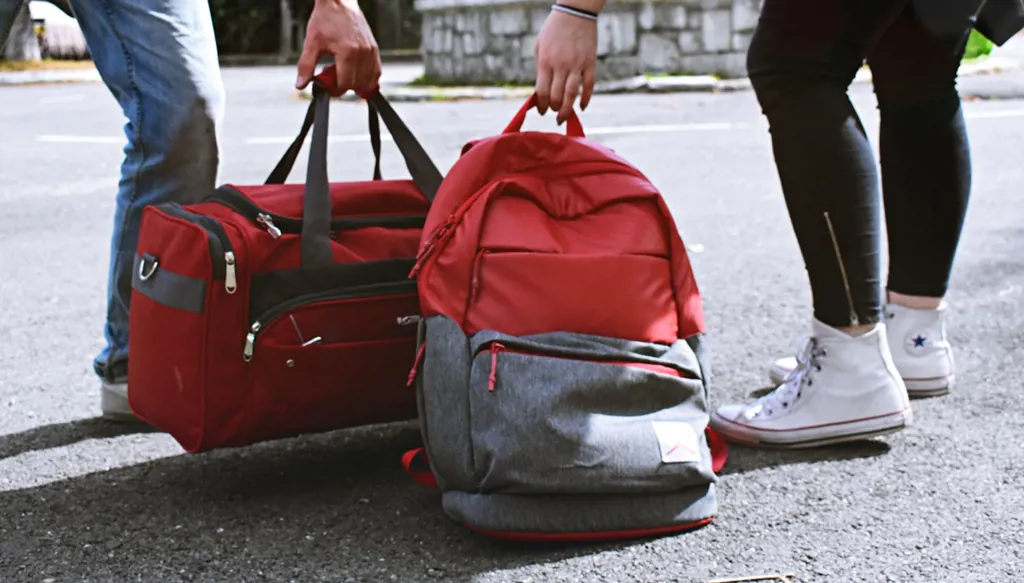
We pack our bags, and our minds freeze in shame at the mere thought of being only passing through when returning is a duty, and our steps falter each time we look back.
We are the youth of Lebanon. We carry a throne of dreams on our shoulders, walking with steady steps that look like certainty on the outside, while inside lies a silence torn apart by fear of what lies ahead.
We whisper softly amid the rubble of crises. We cry without visible tears, because bursts of gunfire have crept into the very depths of our sense of safety, in our souls and on our land.
We search for a future that we secretly hide behind a smile of hope that politicians make false, and behind every warm hug from a mother at the gates of schools and universities. We search for it through the cold stories of emigration, and in the planes crossing our horizon that we wave at, hoping they might take us to a safer homeland.
The emotional loss this generation is living through isn’t just a matter of bottled-up feelings; it is a reality documented by international figures. The United Nations Children’s Fund (UNICEF) released a rapid analysis titled “Youth Assessment,” aimed at studying the impact of the military escalation in the country on the lives of young men and women aged 18 to 29.
The survey included 1,007 participants of different nationalities, with the aim of understanding the psychological, social, economic and educational challenges they face, and identifying their basic needs during the crisis.
It comes amid successive crises in Lebanon, from economic collapse to armed conflict, which have made their situation more fragile and reduced their chances of building a stable future.
The report’s findings showed that 28.2% of the young people surveyed have been forced to flee their homes since the escalation began, while 16.9% are still away from home. Airstrikes, shelling and fear for their personal safety were among the main reasons.
Displaced young people face major difficulties meeting their daily needs: 76.5% said financial assistance was the most urgent need, followed by safe shelter at 59.4% and job opportunities at 48.2%.
These findings show that displacement doesn’t just mean losing one’s home; it also leads to a loss of stability and independence, and to being cut off from family, friends and sources of income.
Mental Health and Social Well-being
Mental health is one of the areas hit hardest by the crisis: 95.4% of young people said they sometimes feel sad or depressed, while 66.2% experience these feelings frequently.
“90.7% reported losing interest in activities they used to enjoy, and 62.7% said their quality of life had worsened compared to last year.”
These figures reflect the scale of the psychological pressure caused by war, fear, displacement and uncertainty about the future. It is therefore essential to provide psychosocial support services and create safe spaces where young people can express their feelings and get the help they need.
Work and the Economic Situation
The report showed that 66.6% of participants had not worked in the seven days before the survey, reflecting the scale of their financial hardship amid the rising cost of living and shrinking sources of income.
Collective Moral Injury: How Does Corruption Destroy People’s Trust in Society?What we are going through isn’t a disorder born of inner weakness; it reflects our humanity in shock in the face of an oppressive reality and a deep psychosocial wound.
Education, Emigration and the Future
The findings showed that only 22.2% of participants are continuing their studies at school or university, with financial costs among the main obstacles preventing young people from completing their education.
The conversion of a number of schools into shelters has also disrupted education, so it is important to support students and help them keep studying despite the difficult circumstances.
51.4% said they want to emigrate within the next year, because of the difficult conditions, the lack of jobs and the fading sense of peace.
68.9% of those who want to leave said they might choose to stay in Lebanon if conditions improved, as they look for real opportunities and a life of dignity.
In closing, the report sounds the alarm: Lebanon’s young people are paying the price for crises they didn’t cause, and their only fault is having been born on this soil.
Building a comprehensive support system that cares for their exhausted souls can no longer be postponed. That means throwing them a financial lifeline and providing work that respects their rights and protects their dignity, along with education, healthcare and a roof to shelter them from the storms of life.
We, the youth of Lebanon, aren’t just numbers on aid lists. We are full of life and energy, waiting for a fair chance to build a homeland that flourishes through us and that lifts us up in return.