As Israel maintains military and political pressure in southern Lebanon, negotiations remain stalled amid demands over Hezbollah’s weapons, the deployment of the Lebanese Army and the future of UNIFIL, while Washington continues to link aid to Hezbollah’s disarmam
The Israeli military escalation and demolition operations in the south reveal the extent of the pressure Lebanon is under, as it is being forced to accept the realities imposed by the occupation, while the political and diplomatic avenues on which the state is relying to halt the escalation, establish arrangements to contain the situation on the ground, and launch the eighth round of negotiations remain blocked. The aim is to secure an Israeli withdrawal in return for Lebanon’s commitment to the state’s exclusive control of weapons and the deployment of the army in the pilot areas within the Yellow Line.
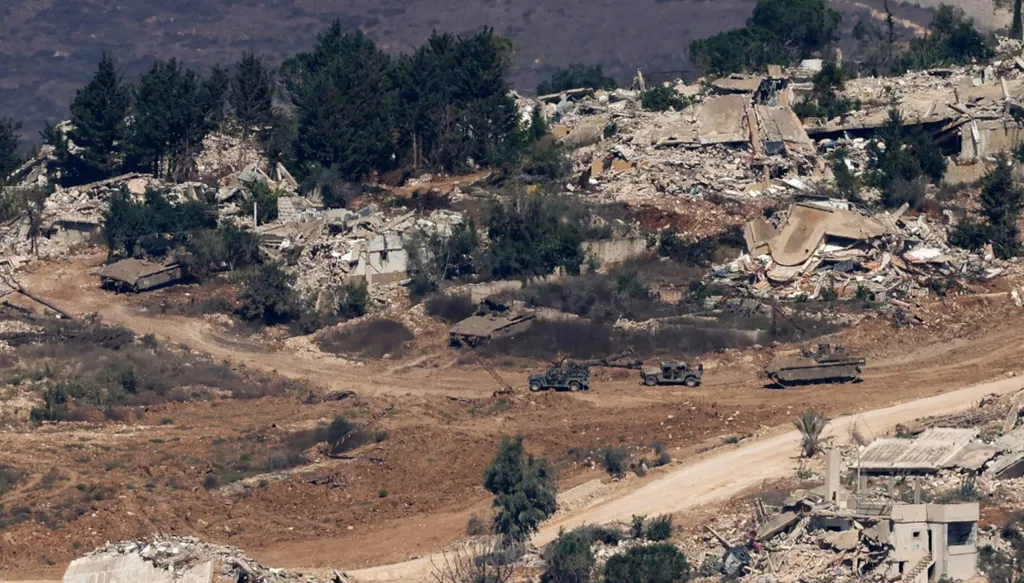
It has become clear that Israel is seeking to impose security realities in southern Lebanon in order to force Lebanon to accept its terms in the negotiations. Chief among these is for the state to move to disarm "Hezbollah" north of the Litani River and prevent it from operating south of the river. Israel is also demanding coordination with the Lebanese Army and verification of its movements. It is therefore putting pressure on army units deployed in the south. The confrontation involving its position in Deir Mimas was intended to convey to the state that any movement by its forces must be coordinated with the Israeli army in the security areas that Israel considers to be under its control. This raises questions about the period after UNIFIL, as diplomatic sources following the matter say it would be difficult for the army to take over the positions of the international forces at locations under Israeli control. This means that, by rejecting alternative European forces, Israel wants to create a complete security vacuum south of the Litani while maintaining the occupation for a prolonged period.
The Lebanese-Israeli negotiations also remain suspended by decision of Tel Aviv, which has set conditions for holding the eighth round. These include Lebanon not demanding the withdrawal of the Israeli army before Hezbollah’s infrastructure is dismantled, its weapons are withdrawn, and its financial, educational, and social institutions are dissolved. More seriously, according to the sources, Israel wants decisive and direct Lebanese measures, including the Lebanese Army confronting Hezbollah. It is therefore putting pressure on the state and on Lebanon’s domestic front, first through the continued occupation and ongoing operations, while increasing the burden on Lebanon as around 270,000 Lebanese remain displaced, most of their homes destroyed and their return prevented. If this situation continues, it will increase the state’s burdens, lead to shifts in sectarian balances and demographic changes, and also exploit Lebanon’s internal divisions, which Hezbollah is further exacerbating through its continued reliance on the Iranian track and its wait for shifts in the balance of power on the Hormuz and Bab el-Mandeb fronts, in an attempt to capitalize on them in Lebanon. At the same time, it has made no initiative or concessions to the state, as all efforts to relaunch dialogue with the presidency are running up against the issue of weapons and its refusal to hand over control to the state or, at the very least, help strengthen its position in the negotiations.
Political sources say that the party is reorganizing its capabilities under direct Iranian supervision, with no indications that it intends to hand over its positions or weapons to the army. They do not rule out the possibility that the party could carry out some operations to demonstrate that it remains on the front, while external pressure on the state is calling for its isolation. This leaves Lebanon facing dangerous possibilities.
External conditions, particularly those imposed by the United States on Lebanon, remain unchanged. Aid remains suspended pending the disarmament of the party, meaning that the period leading up to the Israeli and U.S. elections could further deepen Lebanon’s predicament amid Arab and international preoccupation with developments in the region. For now, diplomatic sources say there will be no negotiations between Lebanon and Israel for at least two months, with the possibility that they could be postponed even further. This could lead to the expiration of the framework agreement’s effects, unless the United States decides to intervene to give it a UN mandate by referring it to the Security Council. Meanwhile, Israel continues to exert military and political pressure, refuses to withdraw, and blocks any alternative forces to UNIFIL in coordination with Washington, which wants to bring Resolution 1701 to an end and, according to the sources, replace it with resolutions incorporated into the Lebanese-Israeli framework agreement. This further deepens Lebanon’s predicament and leaves the country facing the unknown.
Disclaimer: The opinions expressed by the writers are their own and do not necessarily represent the views of Annahar
Thank you for subscribing to our newsletter