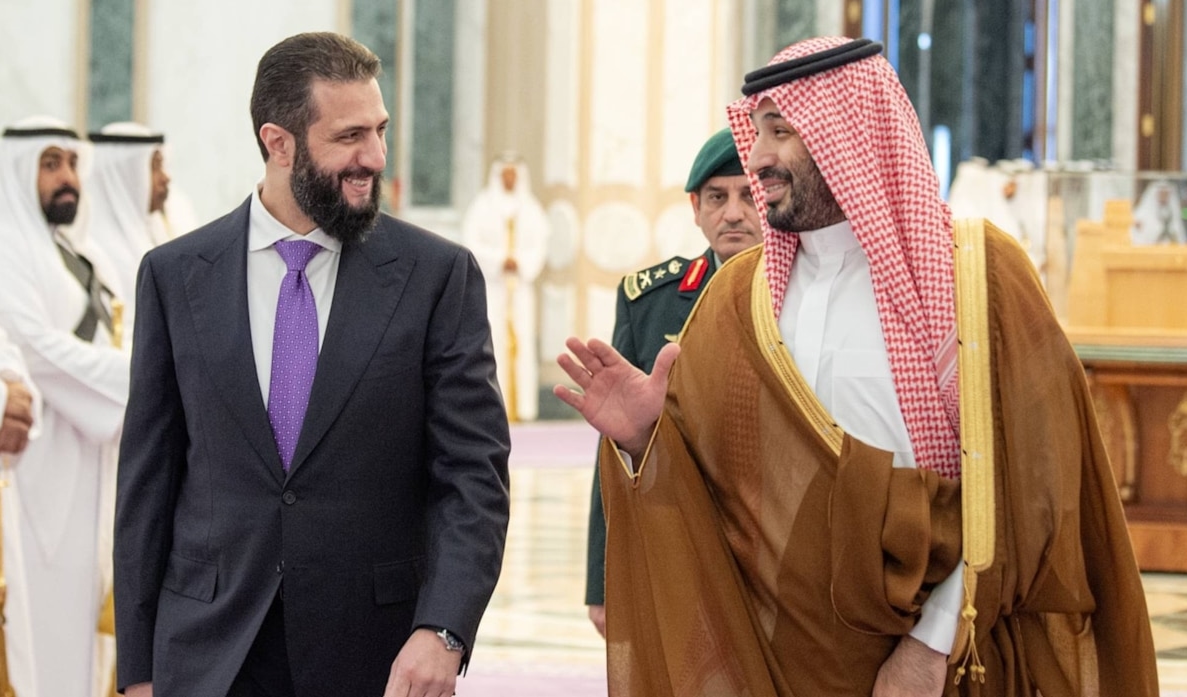
Transitional Syrian President Ahmad al-Sharaa arrived in Riyadh on Wednesday for his second visit in less than a month. He led a delegation of government, military and security officials and met Crown Prince Mohammed bin Salman and other Saudi officials. The delegation's composition reflected the broad agenda, covering political, economic, security and military affairs. It included Foreign Minister Asaad Al-Shaibani, Defense Minister Murhaf Abu Qasra, Finance Minister Mohammed Yisr Barnieh, Industry Minister Basel Abdul Hannan and General Intelligence chief Abdul Qader Tahan. Initial official statements offered few details, saying only that Al-Sharaa and bin Salman discussed bilateral relations. However, Saudi media reported that the two sides had signed dozens of agreements without disclosing their terms. This suggests the visit marked a shift toward implementing understandings that may have emerged during Al-Sharaa's previous trip. The visit came days after Shaibani said Syria was considering joining the Mecca Pact, which includes Saudi Arabia, Türkiye and Pakistan. It also followed reports less than a month ago that Riyadh had asked Damascus to send Syrian fighters to take part in the war in Yemen, a request previously denied by Syria's transitional authorities. A subsequent statement from the Syrian Foreign Ministry confirmed that the two countries had signed a defense cooperation agreement. Although the ministry did not explain its scope, the agreement appears consistent with the reported Saudi request and could pave the way for a military role ahead of Syria's potential entry into the alliance. But the growing prominence of security and military issues on the agenda raises a central question. What does Riyadh expect in return this time, particularly given the considerable influence it already wields over Syria? The economic agreements form part of Saudi Arabia's declared support for Syria's transitional authorities. That support previously included around 80 agreements and cooperation memorandums worth more than 40 billion Saudi riyals ($10.7 billion), according to Investment Minister Khalid Al-Falih in February. The Saudi Fund for Development also approved $406 million in concessional loans, as part of a broader financing package under discussion worth up to $1.5 billion. Riyadh has additionally pledged 1.65 million barrels of crude oil, joined Qatar in covering Syria's arrears to the World Bank and helped finance salaries for Syrian public-sector employees. Saudi aid and investment are crucial for Damascus as Syria faces successive economic crises and a continued decline in living standards. The authorities have raised fuel, electricity and bread prices while cutting subsidies. Unemployment has increased, purchasing power has weakened and wage rises have failed to keep pace with inflation. Saudi support could help finance economic recovery and reconstruction projects while giving the government more room to ease mounting public discontent. Anger has already erupted in protests across several areas. Authorities have contained some demonstrations, while others continue intermittently. The efforts also align with an October 18 agreement between the Syrian authorities and the World Bank Group to establish a trust fund for Syria's recovery and reconstruction. The World Bank will manage the fund according to priorities set by Damascus. Syrian officials hope Gulf countries, particularly Saudi Arabia and Qatar, will play a leading role in financing it. The visit also followed recent remarks by US envoy for Syria and Iraq Thomas Barrack, who acknowledged that attracting foreign investors to Syria remains extremely difficult. He cited the weak banking system, lack of security guarantees and remaining economic restrictions. Energy investments, he added, could take 10 to 15 years to generate returns. With foreign companies reluctant to enter the Syrian market, Saudi Arabia's financial resources and political backing make it one of the few options available to Damascus for securing rapid funding and long-term investment. But the growing prominence of security and military issues on the agenda raises a central question. What does Riyadh expect in return this time, particularly given the considerable influence it already wields over Syria? This is an edited translation of an article originally published in Arabic.