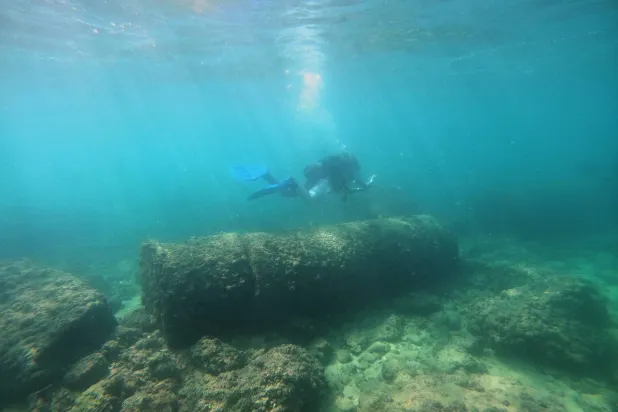
Beneath the Mediterranean waters off the southern Lebanese city of Tyre, divers swim past stone walls, ancient structures and a submerged road — remnants of parts of a city that once stood above the water. With a shaky ceasefire in place after the latest Israel-Hezbollah war, visitors are returning to Tyre, a city known for its Roman ruins and its much older Phoenician history. Diving operators say interest in the underwater archaeological sites is increasing, though the number of visitors remains below prewar levels, The Associated Press said. “The diving season is not like it used to be before, but the number of people coming to dive to see the ruins is increasing day by day,” said Yousef al-Jundi, manager of the Lebanon Diving Center. The remains underwater are part of Tyre’s wider archaeological landscape. UNESCO says substantial archaeological remains of the ancient city are submerged, while underwater archaeological research has documented walls, harbor structures and other remains along the former island and coastline. “This is the identity of this city, which tells us how old this city is and what its history is,” al-Jundi said. He said the underwater sites attract divers from around the world who want to see what is commonly described as Tyre’s “sunken city.” Tyre was one of the major Phoenician maritime cities of antiquity, with trading networks that extended across the Mediterranean. The city was also famous for its purple dye and later became an important Greek and Roman center. Its archaeological remains were added to UNESCO’s World Heritage List in 1984. The war raised concerns over the preservation of those remains, both on land and underwater. “We were worried about the archaeological sites on land, which were affected by the war and the strikes, but at the same time we were also worried about the archaeological sites underwater, but thank God they were not affected,” al-Jundi said. Before the ceasefire in late June, Tyre came under intense Israeli airstrikes, with neighborhoods in the coastal city heavily damaged during the fighting. UNESCO’s World Heritage Committee placed Tyre on its List of World Heritage in Danger in July 2026, citing the threat and damage caused by the ongoing hostilities. Ali Badawi of Lebanon’s Directorate General of Antiquities said protecting the underwater sites remains a challenge. “They’re not very well protected," Badawi said, adding that “encroachments” sometimes happen. “But we are trying very hard through surveys and research that we’re conducting, and we’re trying to develop laws to ensure their safety in the future.” Badawi said the authorities also want to expand research and investment in underwater tourism, including the creation of underwater archaeological parks that would allow more visitors to see the sites. The effort comes as Tyre seeks to rebuild its tourism sector after the war, while preserving archaeological remains that reflect thousands of years of the city’s history.