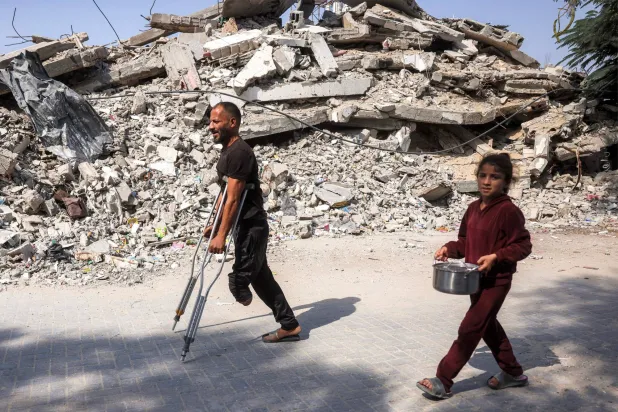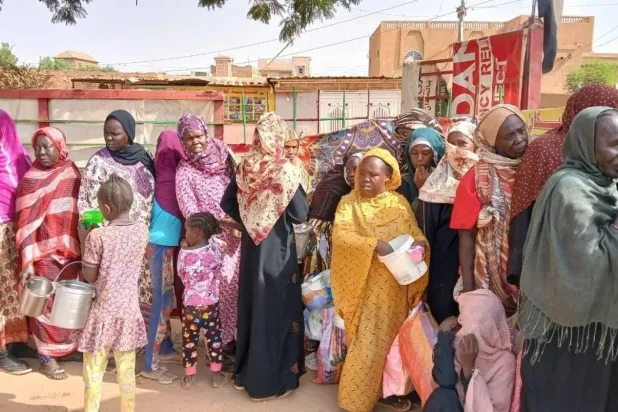
Thousands of displaced people in Sudan’s capital, Khartoum, are struggling to secure a daily meal as dozens of charity kitchens have closed or scaled back operations because of funding shortages, leaving growing numbers of families at risk of hunger. Al-Sadiq Siddiq, who supervises a charity kitchen in Omdurman, said dwindling donations had forced organizers to reduce the number of meals provided to families. “We are facing growing difficulties because of a shortage of financial support from donors and benefactors,” he said, warning that conditions were deteriorating as hunger spread among poor and vulnerable communities. The scramble for food had reached distressing levels, he added, with some people resorting to physical fights over portions of beans or lentils. “These conditions are pushing more families into hunger and leaving them unable to secure even the minimum amount of food they need,” he stated. One Meal a Day Abbas Mahjoub, a supervisor at a charity kitchen in the East Nile area, noted that the facility had served more than 800 families before it closed. Many residents now survive on a single meal a day, unable to meet their basic food needs. Al-Bukhari Ishaq, who supervised a kitchen in eastern Al-Jarif, said it had shut down more than eight months ago after funding from the East Nile Emergency Response Room, which provided grants to charity kitchens, declined. Ishaq told Asharq Al-Awsat that dwindling donations and reduced contributions from aid organizations, including the World Food Program (WFP) and the United Nations Children’s Fund (UNICEF), had severely undermined the kitchen’s operations. The facility had provided daily meals to around 400 families, he explained, and its closure deprived hundreds of households of an essential source of food amid worsening living conditions. Altouma al-Jak, who supports a family of nine, told Asharq Al-Awsat that her grandchildren had dropped out of school because she could no longer afford breakfast, transportation or school supplies, including clothes, shoes, books and notebooks. “Sometimes days go by when my children don’t have enough to eat,” she said sadly. Her family had depended on a charity kitchen for food, and its closure amounted to “a slow death,” she explained, particularly as soaring prices had put basic food supplies beyond the reach of many households. She expressed hope that the war would end and peace would return to Sudan, allowing people to live with dignity. Hunger Deepens Salwa Abdullah Adam lost her husband during the war when he was struck by a shell, leaving her solely responsible for seven children, the youngest a nine-month-old baby. Standing in a long line outside a charity kitchen to collect a simple meal for her children, she described the mounting hardship. “Life is getting harder day by day,” she remarked. Her children go to school without spending money and return home to eat whatever corn porridge is available, while the family struggles to meet their daily needs. Healthcare is another challenge. Adam said charitable doctors sometimes help her obtain medicines for her children from pharmacies, but when adults fall ill, they have little choice but to endure their illnesses and take painkillers. A Lifeline for Families Ali Abdullah Youssef faces similar difficulties to other families relying on charity kitchens, locally known as takaya, for their only daily meal. “Conditions are extremely difficult. Without this charity kitchen, we wouldn’t be able to get food,” he said. He warned that the closure of such kitchens would leave his family in a desperate situation, with no source of income and living costs continuing to rise. Accounts from beneficiaries illustrate the hardship caused by the closures, particularly among families that have lost their livelihoods and now depend on meals distributed by charitable initiatives. The struggle to obtain food comes amid mounting international warnings over Sudan’s worsening food crisis. On October 26, dozens of countries, including the United States and major European nations, expressed concern over the continued deterioration of food security in Sudan and called on both parties to the conflict to remove all obstacles to humanitarian aid deliveries. In June, the Integrated Food Security Phase Classification (IPC) reported that approximately 5.1 million people in Sudan were facing acute hunger. The crisis has been compounded by the war that erupted in 2023, which has damaged the agricultural sector and hampered farmers’ ability to harvest their crops, alongside a recent drought.