Turkey has recently made headlines following the government's seizure of a pro-opposition television channel, its exclusion from a business proposal initiated by France and Germany, and its signing of an agreement with Libya on "judicial authority" in maritime issues. These developments have sparked debate within Turkey, alongside several other developments. Four political areas are drawing criticism and highlighting the uncertain future of relations between Turkey and Europe.
The first concerns trade, the economy, and finance. Turkey's difficult and painful economic situation has been a source of concern for years, offering a clear example of one of the country's challenges over the past two decades. The steep devaluation of the Turkish lira has been particularly significant. When Turkey began negotiations to join the European Union in late 2005, the exchange rate stood at one euro to one lira. Today, a citizen needs 56 liras to purchase one euro. This painful situation has continued to worsen over time. In recent weeks, a financial embezzlement scandal has also emerged.
More than 120 investment funds, valued at $20 billion and promising returns to investors, were dissolved through Turkish government actions, affecting approximately half a million citizens. Morgan Stanley Capital Corporation announced that it was considering downgrading Turkey's status or removing it from the emerging markets category to stand-alone market status unless corrective measures were taken by fall 2027.
On the commercial front, relations between the European Union and Turkey are governed by the 1995 Customs Union. It is the only agreement of its kind signed between the EU and a third country under intense pressure, amid the EU's defensive measures against the increase in Turkish imports from China, particularly in the automotive sector.
In March 2026, the EU launched discussions on establishing a plan known as "Made in Europe," covering various products manufactured within its member states. On October 16, France and Germany proposed opening the plan to countries in the European Economic Area, namely the EU, Iceland, Liechtenstein, and Norway, with potential side agreements involving Switzerland and the United Kingdom. Japan, South Korea, and Turkey were excluded.
Turkish industrialists and government officials rejected the Paris and Berlin proposal, arguing that the European-Turkish Customs Union applies to industrial goods, including products from Bosch, Fiat, Renault, and Siemens, as well as a large number of Turkish products. Intensive discussions are currently underway on the matter. Was Turkey's exclusion an unintended oversight by the EU or a reflection of its lack of trust in the country's autocratic governance?
When Turkey began its efforts to join the EU in 2005, these included an obligation to align with the bloc's technical regulations and political principles. However, Turkey failed to adhere to this alignment, as it went against its fundamental choices, which were based on non-transparent acquisition procedures, the creation of a "super republic" system, and political oversight, control, and censorship of the judiciary, media, and civil society.
Furthermore, the restrictions associated with EU membership no longer corresponded with the state's "authoritarian" practices. Turkey's non-recognition of the Republic of Cyprus contributed to reducing and even limiting its EU accession negotiations. Notably, in 2007, the French president and German chancellor publicly opposed Turkey's potential membership. This was compounded by disputes between Turkey and Greece over maritime borders and other complex issues between the two countries.
This comprehensive failure raises a question: Was EU membership an important mechanism offered to Turkey? This kind of debate and discussion never took place within the EU.
A prominent researcher at a reputable American think tank argues that, in the fields of security and defense, Russia's invasion of Ukraine triggered intense discussions across Europe about the need to advance arms manufacturing and production on the continent.
Within this framework, Turkey has repeatedly claimed at the highest levels that its participation in any new security framework among Western European countries is indispensable. President Recep Tayyip Erdoğan said during the UN General Assembly in September 2026: "Europe that excludes or marginalizes Turkey from its security architecture cannot likely be strong or secure."
The rapid expansion of Turkey's defense industry has led to a series of agreements involving sales, acquisitions, and joint ventures, without translating into engagement in security discussions beyond cooperation on Ukraine's defense against Russia's war.
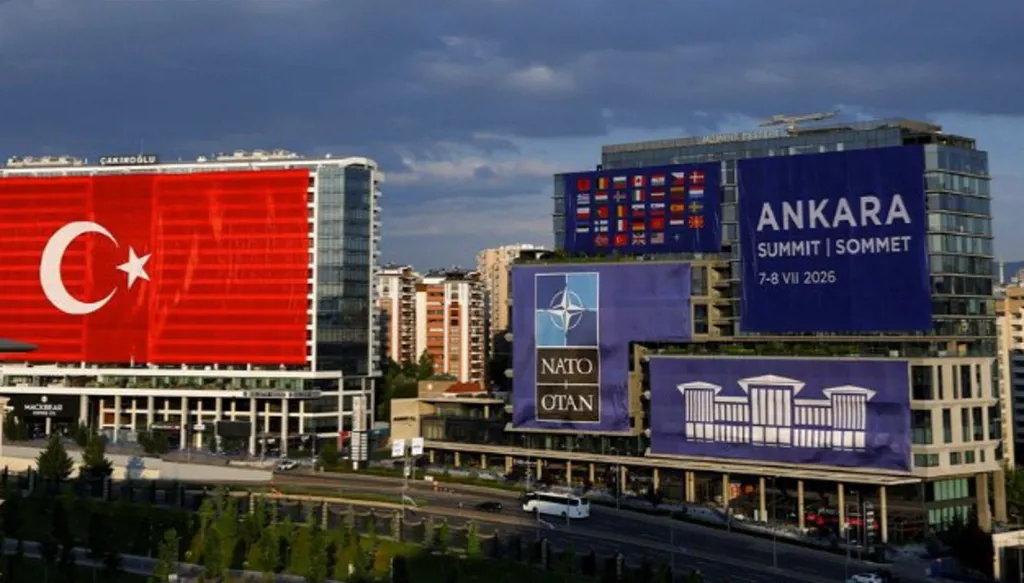
The 2026 NATO summit in Ankara showcased the Turkish defense industry but did not provide President Erdoğan with the recognition he expected in the security domain.
In May 2026, the same researcher followed up by writing: "The fundamental question is should European nations or the EU entrust their security under an official security partnership with Turkey? Given that this occurs through individual sales and joint projects. It doesn't happen in a structured way under the current political circumstances."
One of the reasons is the West's relationship with Ankara and Moscow, both before and after Russia's invasion of Ukraine, which prevented Turkey from imposing sanctions on Russia.
Another factor is Russia's connection with the administration of US President Donald Trump, even as it sought to restructure Europe in line with American interests and the US National Security Strategy. More importantly, there is the decline of the rule of law in Turkey.
Several disagreements also persist in the Eastern Mediterranean over maritime borders. On October 20, the unrecognized Libyan government signed a memorandum with Turkey concerning maritime borders, a move rejected by the EU and Egypt's Foreign Ministry. Bahrain, Cyprus, Israel, and the United Arab Emirates also rejected it.
What does this development mean for Turkey's internal situation and its relations with the outside world?
Disclaimer: The opinions expressed by the writers are their own and do not necessarily represent the views of Annahar.