Positions and warnings issued by Washington and Tehran suggest that U.S. President Donald Trump is on the brink of a decision that will define the next phase of the conflict, which has now been ongoing for about nine months. Similarly, Iran's regime is approaching a decision that could overturn the prevailing waiting game. Meanwhile, Israeli Prime Minister Benjamin Netanyahu is poised to strike imminently, with two objectives: weakening Iran's deterrent capabilities and disrupting the internal balances resulting from the Israeli elections.
The escalation is unfolding along a trajectory that precedes mediators' efforts to reach a settlement. The latest political efforts are being led by Qatari Prime Minister Sheikh Mohammed bin Abdulrahman Al Thani, who met separately in Washington on Monday with U.S. Vice President JD Vance and Secretary of State Marco Rubio. The Qatari official's visit comes amid strategic dialogue sessions between Washington and Doha, with the Iranian dispute emerging as a central topic.
However, the atmosphere surrounding the Qatari initiative does not appear favorable, as Trump questions the usefulness of negotiations and accuses Iranian officials of stalling, threatening a potential return to the military option at the beginning of the new year. Recently, the United States has launched investigations into possible Iranian involvement in dozens of cyberattacks targeting energy tankers in regions far from the Middle East.
Although Iran has expressed willingness to open the Strait of Hormuz within two days, it has tied this move to the implementation of its seven conditions by the United States. These include stopping the war on "all fronts" and releasing frozen deposits, while discussions on the nuclear file would be postponed to a later stage. Trump, however, insists on making the nuclear file the first item on the negotiation table. The lack of trust remains a decisive obstacle to reaching a compromise.
Tehran's skepticism about the value of negotiations mirrors that prevailing in the United States. This is evident in the intensified attacks on oil tankers in the Strait of Hormuz and Iran's threats to "change the geography of the battle if the enemy makes any mistake," as stated by chief negotiator Mohammad Bagher Ghalibaf.
Meanwhile, Abbas Moghtadaei, deputy head of the National Security Committee in the Iranian Parliament, warned that U.S. bases in Europe, including those in the UK and Germany, could become targets for Iran if these countries' territories are used to launch attacks against it.
Recent days have also seen calls in Iran to break the U.S. naval blockade "by all available means," fueling speculation about a confrontation with U.S. forces, particularly after Trump's warning that he would counter any Iranian move in this direction.
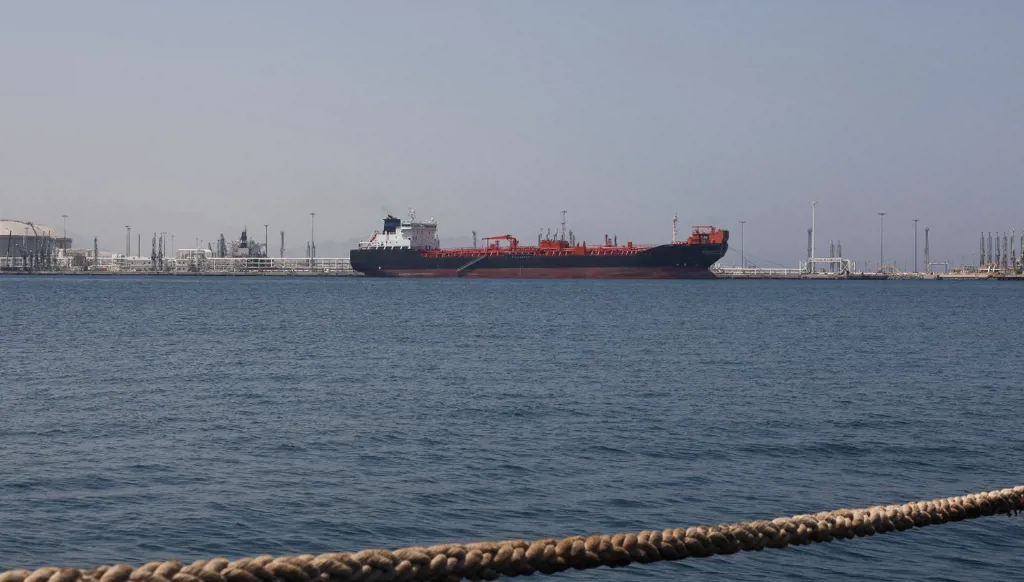
With oil prices falling to their lowest level in three months, Iran believes that the Strait of Hormuz is losing its influence on global markets. This is one of the reasons behind its intensified attacks on oil tankers. However, supplies leaving the Middle East remain at a high level.
In response to this shift, Iranian Army Commander Amir Hatami called for "tightening" the closure of the strait, while the Revolutionary Guards announced that they had set fire to two oil tankers that had "violated" the navigation rules established by Iran.
The question now is how this development will affect Iran's decisions: Will it fuel further tensions, or will it prompt flexibility in pursuit of a new agreement?
The current situation is unfavorable for Tehran but benefits Trump, who is betting on severing the link between the Strait of Hormuz and rising energy prices, a factor that played a major role in the Republican Party's historic defeat in the midterm elections.
As Washington approaches the moment of deciding whether to resume the war or rely on diplomacy to bring the conflict to an end, Iran is also facing an unusual period of concern amid the current waiting game.
Amid the calculations of the United States and Iran, Netanyahu has his own calculations in Israel.
Disclaimer: The opinions expressed by the writers are their own and do not necessarily represent the views of Annahar.