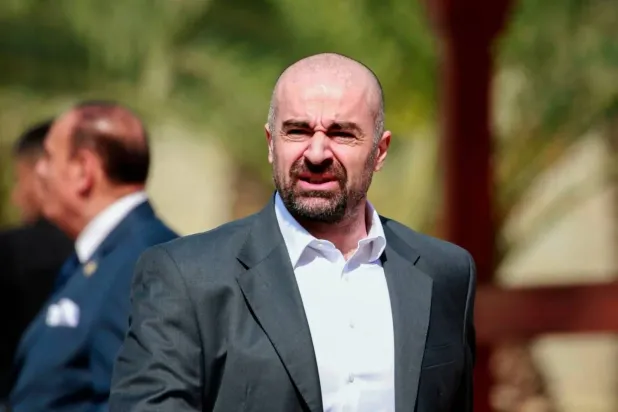
Iraqi Kurdistan's deepening political crisis has revived the prospect of rival administrations, with the Patriotic Union of Kurdistan (PUK) announcing its withdrawal from the regional government even as its longtime rival, the Kurdistan Democratic Party (KDP), says talks are underway to resolve the standoff. A senior KDP official said the party, led by Masoud Barzani, was in contact with the PUK, headed by Bafel Talabani, and representatives of other political groups in a bid to break the deadlock. The threat of a return to separate administrations has grown since the Kurdistan Regional Parliament convened last Wednesday for the first time since elections nearly two years ago, electing its leadership without the PUK, which denounced the move as unilateral and rejected it. The KDP won 39 seats in the October 2024 elections, ahead of the PUK's 23. The PUK later joined forces with the New Generation Movement, which secured 15 seats, to strengthen its hand in negotiations to form a government with its historic rival. On Thursday evening, Talabani declared that the PUK would not recognize the parliamentary session and would withdraw from the government. The KDP, however, defended the session as "neither a victory for one side nor a defeat for another, but a victory for the people of Kurdistan as a whole." The PUK, New Generation Movement, Kurdistan Islamic Union, National Stance Movement and Kurdistan Justice Group had all previously announced they would boycott the session. In a televised address, Talabani raised the prospect of a separate administration in Sulaymaniyah, warning that his party would match any move by its rivals to form a government. "If they appoint a prime minister, we will appoint a prime minister here. If they choose a minister, we will choose a minister here," he said. "They started this ... and I will be the one to end it." KDP leader Masoud Barzani, meanwhile, urged the parties that boycotted the session to return to parliament, attend future meetings and work together to serve the people of Kurdistan, support the political process and advance its next steps. Vala Fareed, the newly elected speaker of the Kurdistan parliament, told local media that reviving the legislature was essential to protecting the region's constitutional status and was not directed against any political party. The new Kurdish parliament speaker Vala Fareed (L) addresses a press conference after the session of Kurdistan's regional parliament, in Erbil on November 4, 2026. (Photo by Safin HAMID / AFP) PUK moves to quit government offices The PUK is pressing ahead with its withdrawal. Senior party official Mahmoud Khoshnaw told Asharq Al-Awsat that PUK representatives would begin vacating their government offices on Sunday, the first working day of the week. He warned that the parliamentary session could have "negative repercussions," saying its outcome could give outside powers grounds to intervene. Khoshnaw said the PUK could go further, potentially seeking administrative independence for Sulaymaniyah from Erbil. The KDP rejected suggestions that the parliamentary session was unlawful. Senior party official Dijwar Faiq said the legislature had convened nearly two years after the elections with 52 lawmakers from different blocs, parties and communities present, meeting the required legal quorum. Faiq told Asharq Al-Awsat that the KDP, as the largest party in parliament, had wanted the PUK and other groups to take part and had spent nearly two years trying to bring them on board. Despite repeated meetings and negotiations, he said, the PUK and other parties refused to participate. He said parliament would meet again on Monday to elect its legal committee and open nominations for the Kurdistan region's presidency. Rival parties clash over parliamentary quorum At the heart of the dispute is a question that has quietly divided the two parties for nearly two years: who could secure the parliamentary quorum first? Khoshnaw said the PUK could have rallied its allies to convene parliament but chose not to, preferring a negotiated settlement that included all parties. "The Kurdistan region cannot be governed solely by the arithmetic of parliamentary seats," he said, arguing that governance must also rest on principles that ensure all influential forces representing the Kurdish people have a role. Faiq challenged that account, saying the PUK had spent two years trying, unsuccessfully, to secure a quorum with New Generation to convene parliament and form a government. "If they had been able to secure a quorum, they would not have hesitated to convene parliament and form a government that excluded the KDP," he said. Together, the PUK and New Generation hold 38 of the Kurdistan parliament's 100 seats. Their alliance demanded half the positions in the regional government, a proposal the KDP rejected. The KDP argues that support from other parties would tip the balance in its favor, though it says it remains willing to share power with its historic rival on fair and balanced terms. Faiq urged parties seeking a place in government to participate according to their parliamentary strength and legal and electoral entitlements, and to help draft the government's program. Those unwilling to govern could choose the opposition, he said, but they must still attend parliamentary sessions. "Otherwise, what was the point of their participation in the elections in the first place?" he asked.