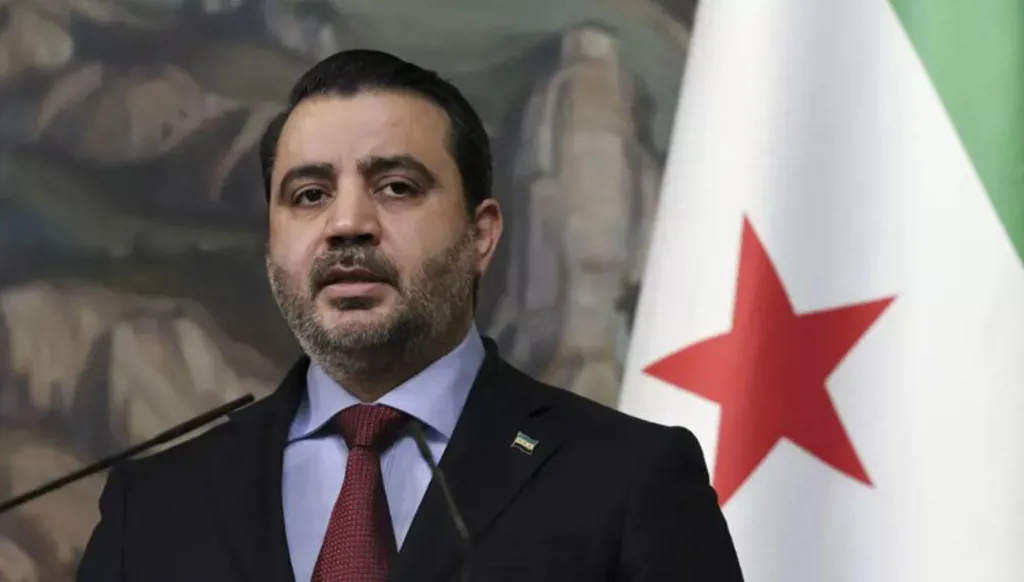
The statement “Geography is destiny, integration is a choice,” made by Syrian Foreign Minister Asaad al-Shaibani, is not a new concept but rather a clear and explicit declaration of policy.
Al-Shaibani made the statement at the 22nd Manama Dialogue, held in Bahrain from October 30 to November 1 under the theme “Middle East Security: Interests, Alignments and Integration.”
His remarks were intended to convey several messages. The first was that Damascus seeks to present itself as a partner in regional security rather than a source of instability or a platform for threatening neighboring countries. Syria's security, he suggested, is linked to that of the Gulf, and regional stability cannot be achieved by countries acting in isolation.
However, what concerns us most are the messages directed at Lebanon, Iraq and Jordan, countries where geography is an inescapable reality.
Through these messages, Damascus is signaling its desire to move beyond relationships historically marked by tensions, suspicions and border disputes toward cooperation based on security and economic coordination.
Syria and Lebanon cannot change their geographical location or ignore the natural ties connecting them, whether in trade, transportation, energy, water, security, borders or population movements. These ties even extend to family relationships, once reflected in the expression “one people in two countries.”
If Lebanon and Syria are bound by an unavoidable geographical reality, with each country affecting the other politically, economically and in terms of security, then integration between them should be a clear and unequivocal choice, beyond dispute.
But the question that matters to Lebanon is this: Does integration mean an equal partnership between two independent states, or is Damascus also seeking to restore its traditional regional role in Lebanon and the wider region?
So far, despite the beginning of cooperation between the two countries and several exchanges of official visits, the path toward “integration” has been far from smooth. This has led some to believe that Syria's approach toward Lebanon has not changed significantly.
Several questions therefore arise: Why has a summit between Presidents Joseph Aoun and Ahmad al-Sharaa not yet taken place?
Will al-Sharaa take the initiative to visit Baabda Palace as a gesture of goodwill and full recognition of Lebanon as a sovereign and independent state, after the Assad regime exercised political tutelage over it?
Why have negotiations on the displaced persons issue and security and intelligence cooperation failed to make greater progress?
And most importantly, does the new Syria genuinely want integration with Lebanon?