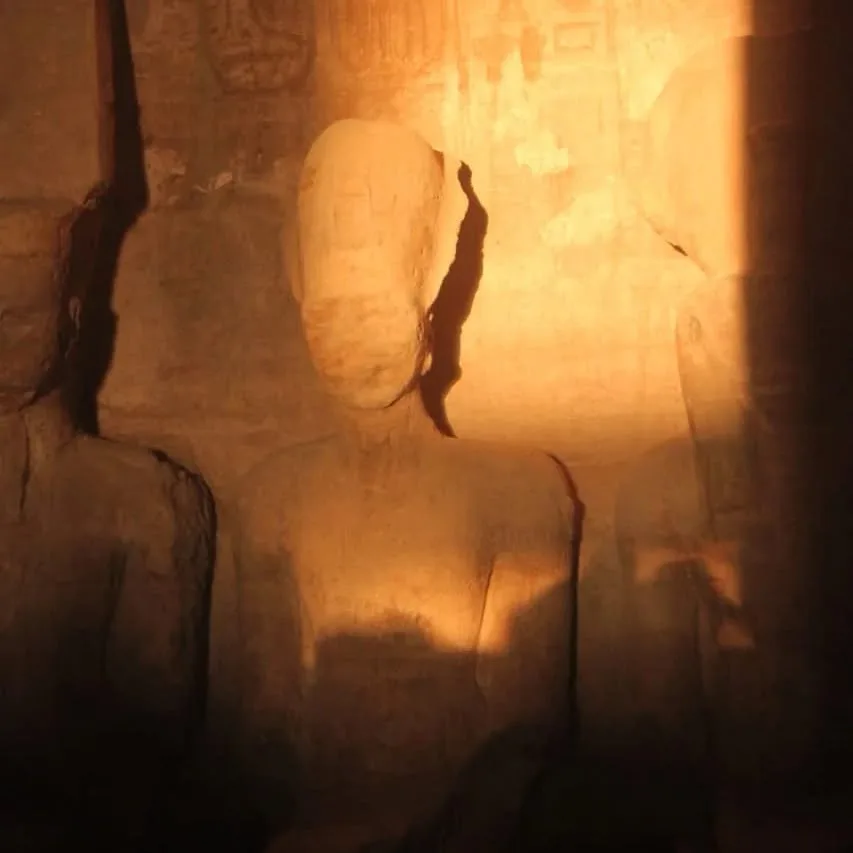
The sun illuminated the face of King Ramses II at Abu Simbel Temple in southern Aswan on Thursday, attracting around 7,000 tourists and visitors from around the world. Aswan Governor Amr Lashin attended the event, which highlighted the historical and archaeological significance of the Abu Simbel Temples and their importance on the global tourism map. The phenomenon began at 6.53 am, when sunlight travelled about 60 metres through the temple’s halls to reach the Holy of Holies. The spectacle lasted around 20 minutes, drawing enthusiastic reactions from visitors eager to witness and photograph the rare event. Lashin said the governorate had co-ordinated with security authorities and the relevant ministries and agencies to organise visitor access, ensure smooth movement around the temple and provide a safe and comfortable experience. Special entry and exit routes were arranged as part of preparations for the event. A large screen was also installed outside the temple to allow visitors to watch the phenomenon clearly. The celebrations included the Sun Alignment Festival, organised by the General Authority for Cultural Palaces from 17 to 22 October. Six Egyptian folk-art troupes performed traditional shows at open-air cultural venues, showcasing the diversity of Egyptian folklore and adding to the festive atmosphere in Abu Simbel and across Aswan. The solar alignment is one of ancient Egypt’s most remarkable astronomical and architectural achievements, demonstrating the advanced scientific and engineering knowledge of the ancient Egyptians. The phenomenon occurs twice a year, on 22 October and 22 February. Sunlight passes through the temple to illuminate the statue of Ramses II and statues of several deities inside the Holy of Holies. The October alignment is associated with the harvest season, while the February event is linked to the agricultural cycle and the Nile flood season. The post Sun illuminates Ramses II’s face at Abu Simbel before 7,000 visitors appeared first on Egyptian Gazette.