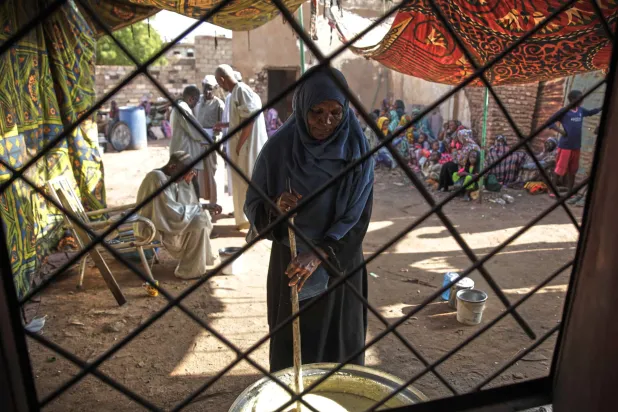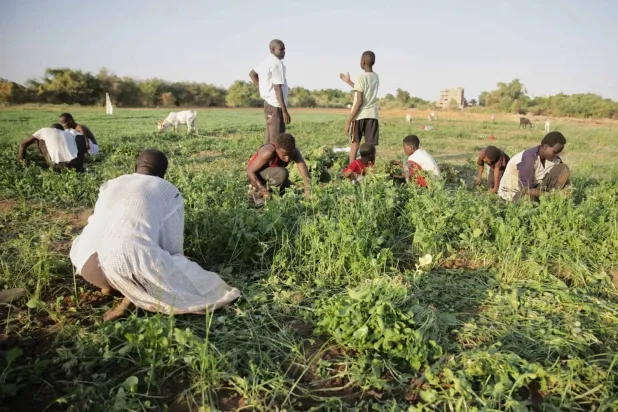
In Khartoum, where life is struggling to regain its rhythm after years of war, many doors remain closed to day laborers who once lived on each day's earnings. A day without work can leave a family without food, a child without money for school or a patient forced to stop treatment because medicine is out of reach. On sidewalks, in markets and at workshops, day laborers search for any job to get them through the day. More people are competing for fewer jobs, while rising prices and a weakening Sudanese pound erode their wages. As the gap between earnings and living costs widens, many face a stark choice: accept less pay or go home empty-handed. Compounding burdens Labor unionist Abdullah Youssef says the vast majority of workers "lost their jobs because of war, displacement and homelessness." Daily work available before the war is now scarce. Most workers support families with five or six children at different stages of schooling, he told Asharq Al-Awsat. Economic hardship has pushed some families into debt. Some people have been jailed for failing to meet their financial obligations. For day laborers, a wage is measured not just in hours worked but in the needs of an entire family. With food and service prices climbing, their earnings have lost much of their purchasing power before they reach home. Babiker Khalifa, a day laborer and father of three, says the war "destroyed the economy." His family gets by mainly on small meals of fava beans and lentils. Meat, fruit and vegetables are beyond their reach much of the time. His children need money each day for school, but there is not enough food at home to meet their needs, he told Asharq Al-Awsat. On some nights, they "cry from hunger." Babiker al-Taher faces much the same hardship. He fled to Gedaref after the war broke out, then returned to Khartoum to find even harsher economic conditions. "Sometimes we eat, and other times we don't," he said of his family, which includes four children. Rising prices and inflation have sharply cut the real value of a day laborer's pay. With more people seeking work, laborers often have to accept lower wages to avoid returning to their families empty-handed, he said. “We need a miracle” Even tradespeople and craftspeople still in work face shrinking purchasing power and rising living and production costs. Abdul Karim Ibrahim, a tailor supporting two sons and two daughters, says his daily earnings no longer meet his family's needs. The economic situation "needs a miracle," he said. Food is now unaffordable for many families, and medical treatment adds to the burden. Young barber Othman Ali says rising prices and a weakening currency have left his income insufficient for basic needs. Long power outages and disruptions to the banking apps his customers use for transfers also make it harder to collect payments. The war forced Ali to leave secondary school and work to help support his large family. He is part of a generation whose education has paid a direct price for the conflict. The war is no longer the only source of pressure on citizens, Youssef said. Higher levies and fees, a higher exchange rate used to calculate customs duties and bans on some imported goods have compounded the strain and widened the gap in markets, he said. He called for higher wages and better conditions for pensioners. Some employees receive very little pay, while some retirees receive sums that do not reflect their years of service, he said. Youssef urged the government to act quickly to help workers and their families. The persistent gap between wages and prices is leaving millions of families facing severe hardship, he said. “The most vulnerable” Day laborers are among those hardest hit by Sudan's war, economist Mohammed al-Nayer said. Halted construction and declining craft activity have stripped large numbers of their livelihoods. "These groups face extremely difficult living conditions amid lost job opportunities and unprecedented increases in the prices of goods and services, alongside a decline in the national currency's value and rising inflation, unemployment and poverty," he told Asharq Al-Awsat. A comprehensive reconstruction program could employ large numbers of day laborers in construction and related activities, he said. But they remain among the hardest hit as their sources of income remain disrupted. Al-Nayer said the state must fulfill its responsibility to protect vulnerable and poor people. He called for a comprehensive social protection program to address current economic challenges and support those most affected by the war. These accounts echo International Labor Organization warnings about the war's deep impact on Sudan's labor market: lost jobs, shrinking economic activity and disrupted livelihoods. Workers in the informal economy are among the most vulnerable.