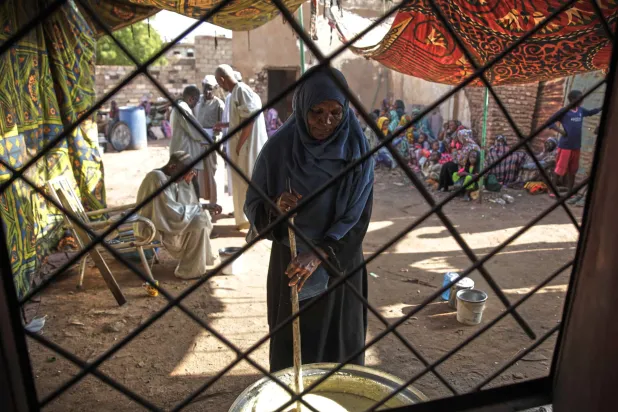
A local official at a displacement camp in Sudan's western Darfur region said more than 500 people had died from hunger and malnutrition recently, appealing for urgent humanitarian intervention to save the lives of hundreds of thousands of displaced people. Humanitarian conditions in the region continue to deteriorate amid the ongoing conflict between the Sudanese army and the Rapid Support Forces (RSF). Speaking to Asharq Al-Awsat, Mohammed Yaqoub, a local official at the Tawila displacement camp in North Darfur State, said many displaced families were unable to obtain even the minimum amount of food needed to survive, with conditions claiming the lives of more than 500 people at the camp. Earlier this week, the General Coordination of Displaced Persons and Refugees in Darfur announced that hundreds of displaced people had arrived at Tawila camp, which received 1,726 families comprising 8,390 people amid severe shortages of food, water and shelter supplies. UN and local estimates indicate that more than three million displaced people are currently living in camps across Darfur as a result of the war that erupted in Sudan in April 2023. Tawila camp is located 60 kilometers from El Fasher, the capital of North Darfur, and continues to receive waves of displaced people, placing growing pressure on humanitarian assistance provided by international and local organizations operating in the area. Urgent Need for Aid Yaqoub told Asharq Al-Awsat that nearly 16,000 displaced people had arrived in recent days at camps in the Shangil Tobaya, Kutum and Koma areas of Darfur, amid dwindling supplies of food and drinking water and declining healthcare services due to shortages in international funding. According to the latest report by UN humanitarian agencies, 34 million people in Sudan are in urgent need of emergency humanitarian assistance, with famine expected to threaten 20 areas across Darfur and Kordofan. Yaqoub said deaths among pregnant women and children were rising daily at an alarming rate because of shortages of doctors and medicines at the only functioning hospital in the Tawila area. He appealed to health organizations to intervene immediately and provide whatever medical assistance was available to displaced people. The local official also reported widespread malnutrition among children, along with outbreaks of malaria, dengue fever and chronic illnesses, raising fears of further deaths among women and men, particularly older people. He warned of the risk of diseases and epidemics spreading as health conditions deteriorate and drinking water and lifesaving medicines remain scarce. Signs of Famine Yaqoub told Asharq Al-Awsat that hundreds of displaced people had died from hunger and thirst while traveling to displacement camps in Darfur. "The severe shortage of humanitarian assistance and the emerging signs of famine, whose effects are beginning to cast a shadow over living conditions in Darfur, threaten the lives of millions of displaced people amid the continuing war and declining humanitarian response," he said. In a recent report, the General Coordination of Displaced Persons and Refugees, which monitors humanitarian conditions in Darfur, described conditions in the camps as extremely dire, calling for urgent relief assistance and swift international intervention. The group warned that shortages of food, basic necessities and healthcare were exposing the most vulnerable populations to growing humanitarian risks, including rising death tolls resulting from the humanitarian catastrophe facing the region.