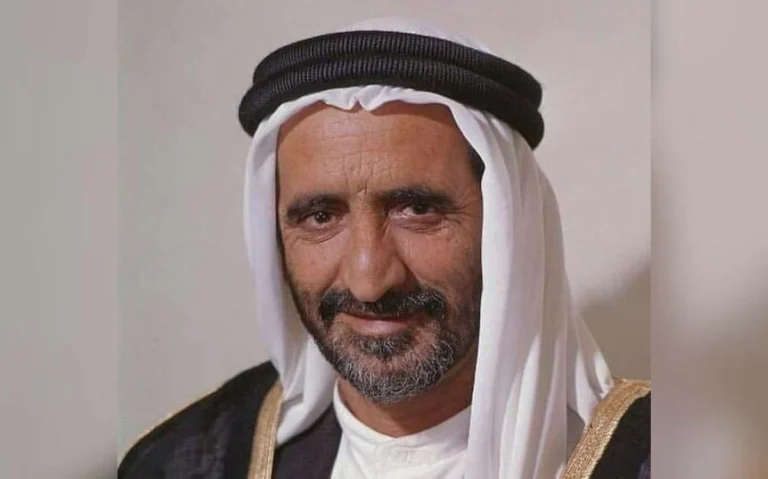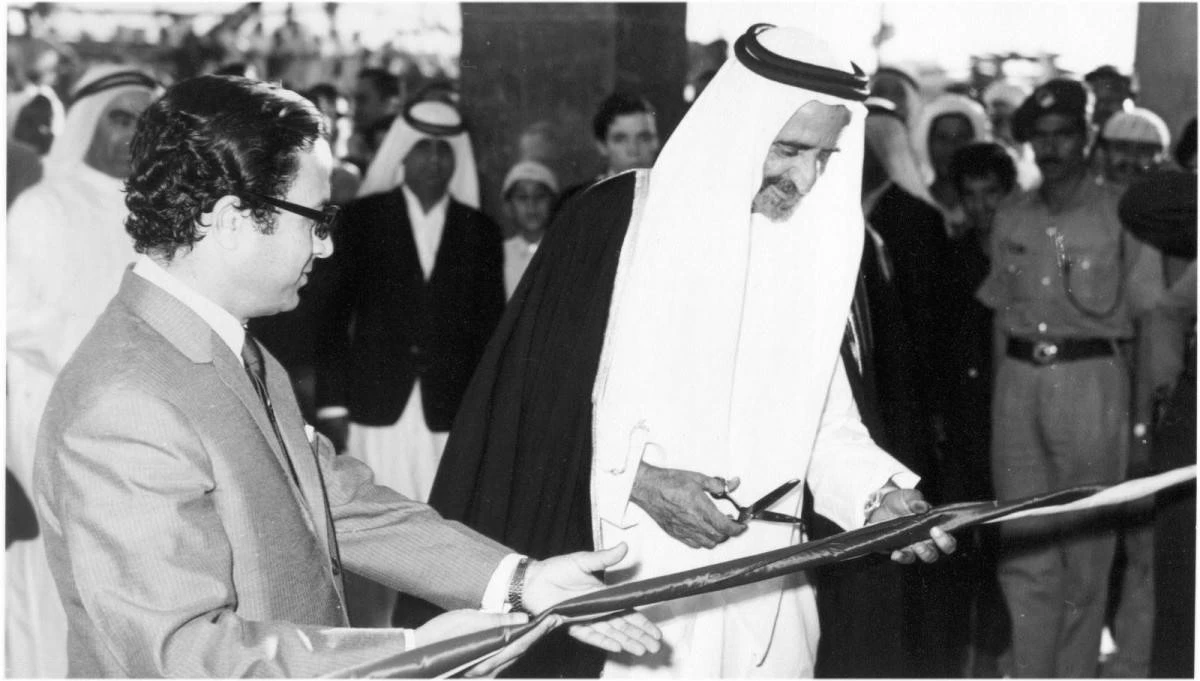
Every morning, Dubai wakes up to an airport that connects it to the world, ports through which global trade flows, roads and bridges that shorten distances, and a creek that still carries the memory of the city’s beginnings. These may seem like ordinary features of a global metropolis today, but they were once ideas and decisions made long before their significance became obvious.This is not a story about revisiting the past for nostalgia’s sake. Rather, it is about rediscovering beginnings that continue to shape the present. Late Sheikh Rashid bin Saeed Al Maktoum understood early on that Dubai could not build a larger future if it remained confined by the limitations of its present. The creek, the airport, the ports, electricity, water networks, roads and bridges were not built simply to meet immediate needs. They were created to serve a future that had yet to arrive.It was Sheikh Rashid who saw Dubai before others could. For him, the future began as an idea, and over time, that idea became a city.Dubai was searching for wider access to the world, while Sheikh Rashid was looking beyond the city’s borders and beyond its capabilities at the time. He envisioned a Dubai that could connect, trade, receive and engage with the world, eventually becoming a gateway linking continents and markets.As those gateways expanded, so too did Dubai’s role. A city once seeking connections gradually became a crossroads where the movement of people, commerce and ideas converged.In recalling those foundations, the Al Maktoum Foundation cites the words of His Highness Sheikh Mohammed bin Rashid Al Maktoum, Vice President, Prime Minister of the UAE and Ruler of Dubai: “Dubai is not a product of today. It is a city with a long history and a success story that extends over many decades, with stages, events and personalities.”Dubai Airport: When the runway was sandThe story of Dubai International Airport captures the essence of that vision.In 1959, construction began on a stretch of desert land. When the airport opened in September 1960, it featured a compacted sand runway and modest facilities compared with what would come later.At the time, Dubai was not a global aviation hub. Passenger traffic was nowhere near the levels seen today. The significance of that moment therefore lies not only in the opening of an airport, but in the question behind it: what could a small city become if it had direct and growing access to the world?When geography was no longer destinyBefore airports and major ports, Dubai Creek was at the centre of the city’s commercial life. It was linked to merchants, markets, vessels and the movement of people. Yet its shallow depth limited its ability to accommodate larger ships.Nature appeared to have imposed a limit on the city. Sheikh Rashid chose not to accept it.Instead, the decision was made to dredge and develop the creek to support greater commercial activity. The project required considerable resources at a time when Dubai’s means were far more limited than they would later become.The result was a change not only to the creek itself, but to Dubai’s relationship with geography. If the landscape constrained opportunity, then the landscape could be transformed to create new opportunities.Looking at Dubai Creek today, it is difficult to imagine what might have happened had it remained within its original boundaries. The lesson was clear: cities change not only by constructing new buildings, but by removing barriers that restrict movement and growth.The deepening of the creek became one of the earliest lessons of the Dubai model: expand capacity first, and growth can follow.Opening to the seaThat philosophy extended beyond the creek to Dubai’s ports.From Port Rashid to Jebel Ali Port, each stage represented a larger opening to international trade. Building a major port far from Dubai’s urban centre at the time may have seemed difficult to justify through immediate calculations. How many ships would arrive? How much trade would pass through it? Did the city really need such capacity?History, however, often rearranges questions.What appears excessive in one era may become essential in another. What seems larger than a city’s needs may ultimately help the city itself grow larger.Today, it is impossible to separate Jebel Ali from the vast logistics, industrial and commercial ecosystem that grew around it. The port’s existence is tied to a simple idea: what could happen if Dubai dramatically expanded its ability to receive and move trade?The beginning starts at homeTo tell Dubai’s story only through its airport, ports and creek would be to overlook a more human dimension of development.In 1959, Sheikh Rashid established the Dubai Electricity Company and the Dubai Water Authority. The first electrical connections followed in 1961, with networks expanding alongside the city’s growth. Water infrastructure and supplies also evolved over time, eventually leading to desalination projects.Here, development takes on its most basic and meaningful form. Before a city can illuminate a place on the world map, it must first light its homes.The earliest numbers associated with electricity and water may lack the grandeur of airports or ports, but they reveal something fundamental: development must improve daily life.A modern city begins with homes illuminated after sunset, reliable access to water, roads that make travel easier, and services that assure residents that the growth surrounding them is improving their own lives as well.The bridge beyond concreteWhen Al Maktoum Bridge opened in the 1960s as the first bridge spanning Dubai Creek, it represented more than a new structure crossing water.It changed how long people travelled, how neighbourhoods connected, and how trade, employment and daily activities flowed between both sides of the city.As additional bridges, crossings and roads were added, the network expanded along with Dubai itself.Infrastructure is often measured in kilometres and concrete, but its real impact is felt in moments no longer lost, distances no longer challenging and opportunities that become easier to reach.Sheikh Rashid saw Dubai before we didViewed together, the creek, airport, ports, electricity, water, roads and bridges reveal something larger than the projects themselves.Dubai continually increased its capacity to accommodate something greater: more ships, more flights, more trade, more residents, faster movement and broader opportunity.This reflects an important distinction between predicting the future and shaping it.Prediction seeks to determine what will happen. Shaping the future means creating the capacity to respond to greater possibilities.The goal in the 1960s was not to know how many passengers would use Dubai Airport six decades later. It was to ensure that Dubai’s connection with the world would not remain limited.The goal was not to forecast the exact size of future trade. It was to build ports and infrastructure capable of supporting expansion.The vision was never about knowing the future. It was about ensuring that the present would not stand in its way.Sheikh Rashid and the UnionThe story of Sheikh Rashid cannot be separated from another defining achievement: the founding of the United Arab Emirates.Alongside the late Sheikh Zayed bin Sultan Al Nahyan and the other rulers of the Emirates, Sheikh Rashid played a central role in establishing the federation on December 2, 1971.The concept of “founding” therefore carries a dual meaning. While Dubai was building its economic, urban and service infrastructure, the UAE was taking shape as a unified nation with its own institutions and ambitions.Today, generations live with the outcomes of decisions they never witnessed being made. They travel through airports whose existence seems natural, cross bridges that once did not exist, and benefit from institutions built long before their time.The projects themselves were never the final objective. They were answers to larger questions: What does Dubai need to move beyond the limits of its present? How can more space be created for people and the city to grow?Those questions drove Sheikh Rashid’s era of construction and expansion. Today, they continue through the vision of His Highness Sheikh Mohammed bin Rashid Al Maktoum.On the 36th anniversary of Sheikh Rashid’s passing, Sheikh Mohammed expressed that continuity in a message to his father:“My father and my leader… every achievement that has been realised after you has something of you in it, every new dream that we have pursued is an extension of your dreams, and every line that we have written in the glory of our country is part of your book.”The memory of Sheikh Rashid does not return Dubai to the past. Rather, it returns the city to the question that launched its journey.A question that pushed it beyond the limits of the present and towards what lay ahead.From founding to sustainability, Dubai’s story has been one of constant renewal, a city that never pauses at its achievements because it has always transformed each accomplishment into the beginning of a new question: What comes next?