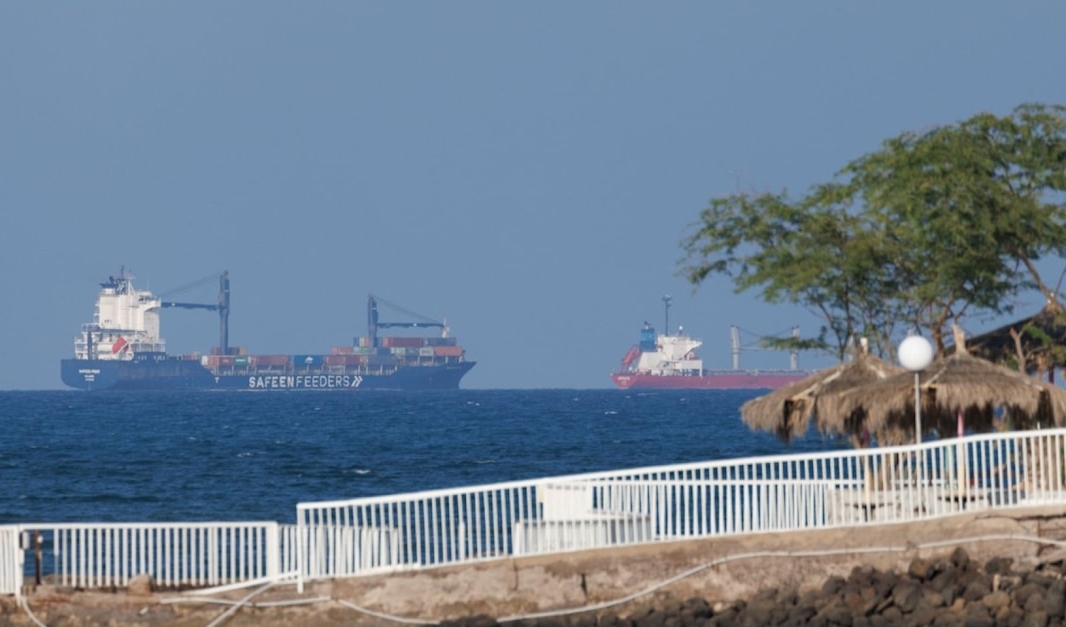
For the third consecutive day, Yemen's Sanaa forces have tightened restrictions on Saudi maritime traffic in the Red Sea, disrupting supply chains linked to the ports of Jeddah and Yanbu.
Several Asian shipping companies have begun rerouting vessels around the Cape of Good Hope to avoid potential attacks by Yemeni forces. Meanwhile, Sanaa is considering moving from the first phase of its maritime blockade, which targets Saudi ships and vessels operated by Saudi shipping companies, to a second phase that would ban all ships heading to Saudi ports regardless of their nationality.
An additional escalation could include preventing Saudi Arabia from exporting crude oil entirely. Ansar Allah political bureau member Hezam Al-Asad warned on X that "Saudi Arabia's belief that smuggling oil through the Mediterranean will ensure its continued flow is extreme stupidity." He added that "the next steps taken by Sanaa forces could shut off the tap entirely," referring to a possible halt of oil exports through Yanbu port.
His remarks suggested that Sanaa could target the East-West oil pipeline, which transports around 7 million barrels of Saudi crude from the eastern region to Yanbu, in response to any potential Saudi military action.
A shipping source in Yemen's western port city of Hodeidah told Al-Akhbar that all commercial vessels crossing the Red Sea have complied with instructions from Yemen's naval forces. The source said ships have kept identification systems active and added details about their crews, while denying any disruption to their routes.
"The maritime traffic remains normal and has not changed since Sanaa announced the ban on Saudi vessels crossing the Red Sea," the source said.
The restrictions on Saudi oil flows through the Red Sea, combined with the continued closure of the Strait of Hormuz, have begun affecting global oil markets.
Despite Saudi efforts to downplay the impact on Jeddah's port activity, maritime tracking platform MarineTraffic recorded a decline in vessels heading to Saudi ports through the Bab Al-Mandab Strait. The number fell after the blockade announcement from 73 ships to around 29 vessels on Tuesday.
Satellite images also showed dozens of ships gathering off Saudi shores, particularly near Bab Al-Mandab, including areas close to Bishah and Jizan. Several tankers were forced to change course in either the Red Sea or the Gulf of Aden.
Reuters reported that four additional vessels joined six others that Sanaa said it had prevented from crossing the Red Sea earlier. The ships included two Saudi oil tankers that were attempting to pass through Bab Al-Mandab before rerouting toward the Suez Canal. This brought the total number of Saudi tankers blocked from crossing the strait to 10 within 48 hours of the ban taking effect.
The restrictions on Saudi oil flows through the Red Sea, combined with the continued closure of the Strait of Hormuz, have begun affecting global oil markets. Expectations that oil prices could reach $100 per barrel by the end of the week grew after prices climbed to $94 per barrel, a 4% increase following a decline below $70 in recent weeks.
Bloomberg reported that investors have become less willing to buy Saudi oil due to concerns over potential attacks on vessels and the risks associated with violating the Yemeni blockade.
This is an edited translation for a report published in Arabic.