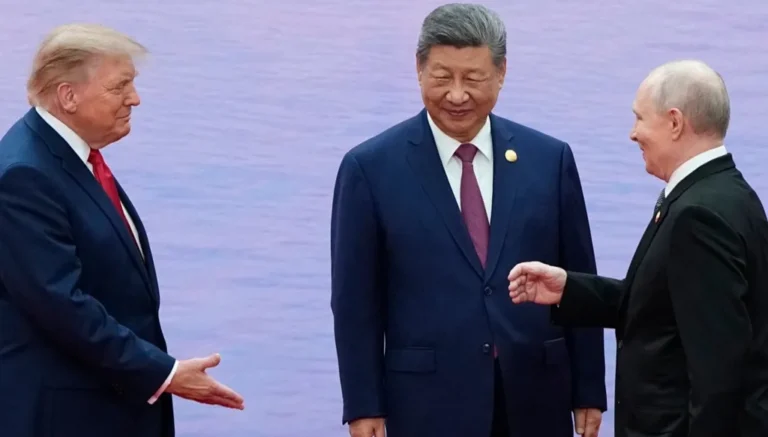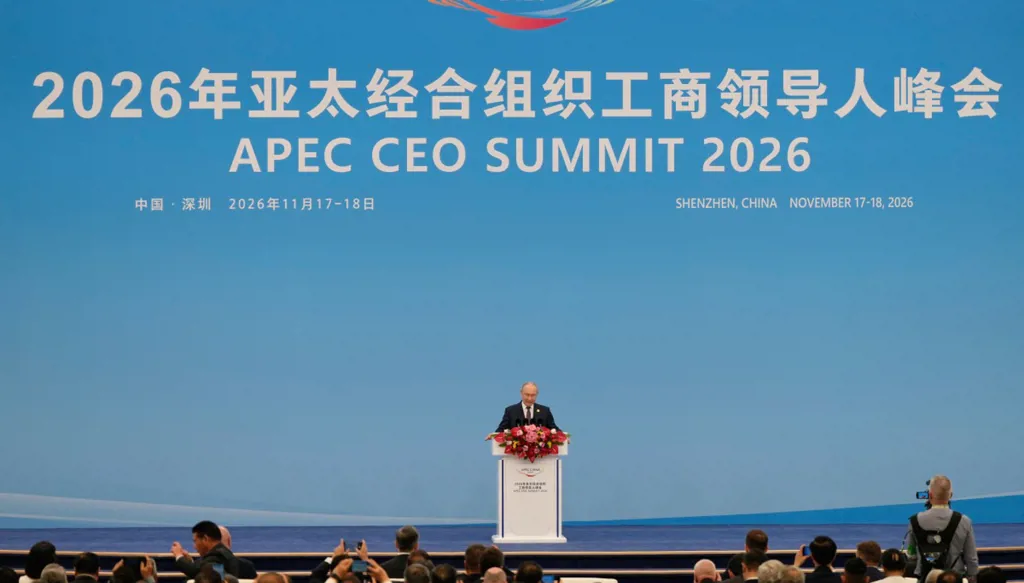
Russian President Vladimir Putin predicted that the upcoming trilateral summit with his Chinese counterpart Xi Jinping and US President Donald Trump would be "very useful", as the Asia-Pacific Economic Cooperation (APEC) forum opened on Wednesday in the southern Chinese city of Shenzhen. The three leaders are scheduled to meet on Thursday, November 19, in the first gathering of its kind.
Putin began his visit by attending the forum's CEO Summit, where he welcomed the participating business leaders and corporate executives. According to Sputnik, he said that the Asia-Pacific region had become a hub of the global economy and industrial and technological activity.
Russia's TASS news agency reported that Putin described Shenzhen, in southern China, as a symbol of the country's prosperity and a model to emulate. He praised its rapid development and transformation over the decades from a fishing village into one of the world's largest technology industry hubs.
Beijing said the trilateral summit would address issues related to international peace and stability. According to Reuters, the leaders are expected to discuss the wars in Ukraine and Iran, as well as trade, artificial intelligence and nuclear weapons. The White House announced that Trump would raise efforts to limit nuclear weapons, at a time when Beijing has previously rejected attempts to involve it in talks on the issue with Washington and Moscow, which possess the world's two largest nuclear arsenals.
Before heading to Shenzhen, Trump held talks with Japanese Prime Minister Sanae Takaichi during a dinner hosted by Philippine President Ferdinand Marcos in Manila on Tuesday evening. A Japanese Foreign Ministry official told Agence France-Presse that the two sides reaffirmed their close cooperation on Indo-Pacific issues. Takaichi's participation in the forum comes amid tensions with Beijing sparked by her remarks on Taiwan.
At the opening of the business summit, Xi called for the removal of barriers to trade and investment and for supply chains to remain stable, stressing that China would continue to expand its openness in the manufacturing and services sectors. He also called for stronger partnerships in scientific and technological innovation, deeper cooperation in the digital economy and artificial intelligence, and an accelerated transition to a low-carbon economy.
His call came after Washington announced this week that it would tighten restrictions on China's access to advanced chips used to train and run artificial intelligence models. Beijing vowed to retaliate, adding another point of contention to bilateral talks as the tariff truce reached by Trump and Xi on the sidelines of last year's APEC summit in South Korea approaches its expiration in January.
Trump and Xi agreed in Washington in September to establish a communication channel to address AI-related incidents and open a dialogue on the technology's risks and benefits. The two sides are scheduled to discuss in Shenzhen how to implement the agreement, including identifying which incidents would require notification to the other side and which authorities would be responsible for communication.
US Treasury Secretary Scott Bessent said Washington expects to discuss ways to evaluate and test advanced models before their release and ensure that human beings retain control over them. The Shenzhen talks will give the two countries an opportunity to agree on a mechanism for reporting incidents, while access to advanced chips remains a point of contention between them.