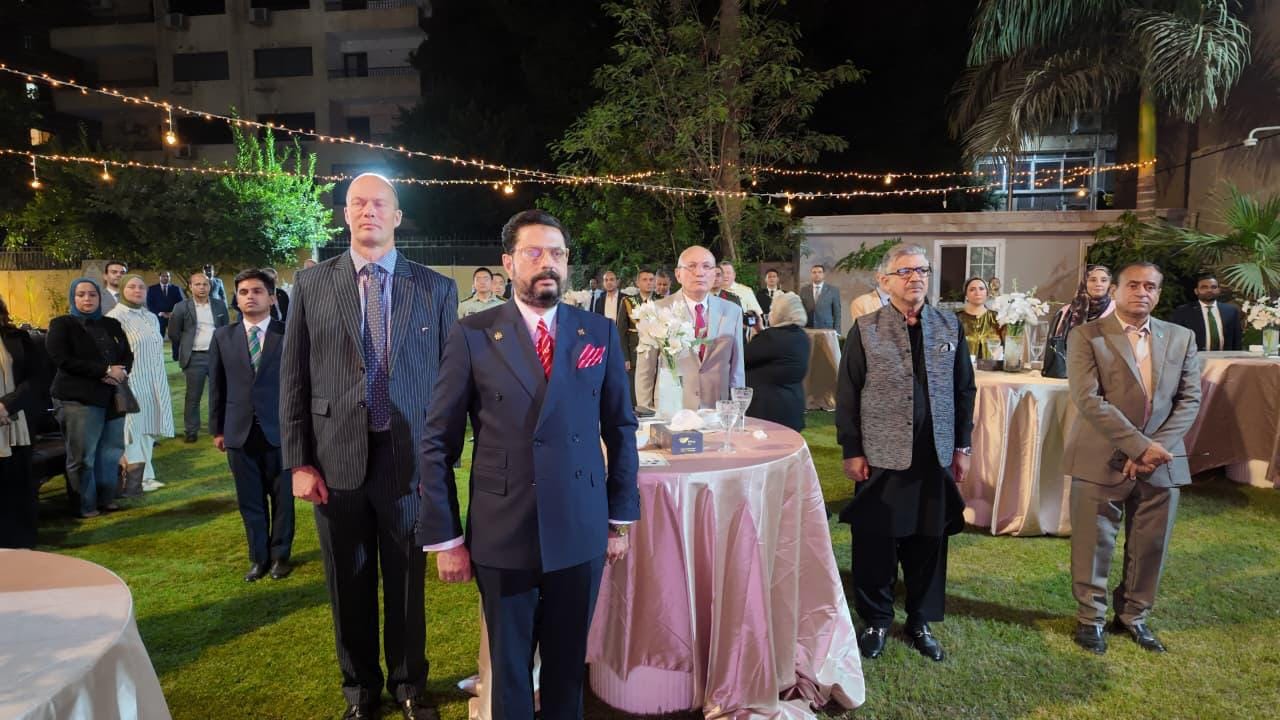
The Embassy of Pakistan in Egypt celebrated the 500-year legacy of the Mughal Empire with a cultural event highlighting its enduring influence on South Asia’s architecture, arts, traditions, and cuisine. Attended by ambassadors, media representatives, and Egyptian dignitaries, the event showcased the Mughal era’s lasting contribution to Pakistan’s cultural identity and its role in fostering cultural ties between Pakistan and Egypt.
In his speech, Pakistan’s Ambassador to Egypt, Aamir Shouket, highlighted the Mughal Empire’s profound influence on South Asian history and its lasting imprint on Pakistan’s cultural identity. Beginning in 1526 with Babur’s victory at the First Battle of Panipat, the Mughal era witnessed remarkable achievements in governance, architecture, the arts, and cultural exchange.
Shouket underscored Lahore’s rich Mughal heritage, particularly the Badshahi Mosque, Lahore Fort, and Shalimar Gardens, which exemplify the synthesis of Persian, Central Asian, and local traditions. He also highlighted the Urdu language, poetry, music, calligraphy, and miniature painting as expressions of this shared cultural heritage.
A central feature of the celebration was the Mughal culinary legacy, including biryani, qorma, kebabs, and shahi tukray. The ambassador noted that these traditions had evolved through the use of local ingredients, regional tastes, and generations of culinary creativity. He emphasised that food in Pakistan represents hospitality, family, and friendship, drawing parallels with Egypt’s own generous traditions of welcoming guests.
Reflecting on Pakistan–Egypt relations, Shouket observed that both countries were heirs to great civilisations whose monuments embody historical memory, creativity, and enduring human aspirations.
The event reaffirmed the importance of cultural dialogue and celebrated the Mughal legacy as a living heritage connecting peoples through history, art, and cuisine.