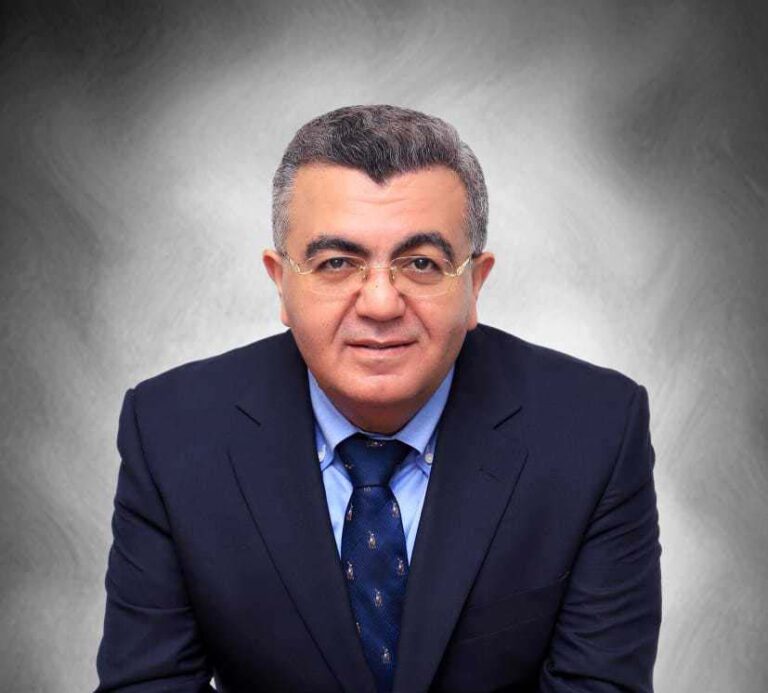
Cairo’s hosting, on Sunday, August 16, 2026, of the conference “The India-Egypt Partnership in BRICS: Towards a Common Agenda for the Global South,” organized by the Embassy of India in Cairo in cooperation with the Indian Council of World Affairs (ICWA), comes at a particularly important juncture for the future of Egyptian-Indian relations and for the role the two countries can play within the broader framework of the Global South. The significance of this meeting lies not merely in the calibre of its participants or the diversity of the issues on its agenda, but also in the importance of its being held in Cairo, at a time when India holds the BRICS chairmanship in 2026. This gives the dialogue between Cairo and New Delhi a scope that extends beyond bilateral relations and opens the way for a more ambitious conception of the two countries’ role in shaping the cooperation agenda among emerging economies and societies. From this perspective, Cairo is not merely hosting a conference on BRICS; it is hosting an opportunity to rethink the future of the Egyptian-Indian partnership and its place within the transformations currently reshaping the international system. The world is changing rapidly, while economic, technological, and political balances of power are being recalibrated. At the same time, countries of the Global South are seeking a greater role in international decision-making, as well as institutions and mechanisms that can provide them with the genuine capacity to articulate and advance their interests rather than merely participate symbolically in the international system. Since Egypt officially joined BRICS in January 2024, Cairo has become part of an international process that extends well beyond immediate economic considerations. BRICS membership enables Egypt to broaden its network of economic and political relations, diversify its international partnerships, and strengthen its position as a bridge connecting the Arab world, Africa, and Asia. This geographical and strategic advantage should not be viewed merely as an additional element of Egyptian foreign policy. India, meanwhile, represents a major Asian power with growing economic, technological, and diplomatic weight, as well as extensive experience in addressing the concerns of developing countries. This gives its partnership with Egypt a distinctive character. India should not be reduced to the role of a market or a source of investment and technology, just as Egypt should not be reduced to the role of a regional market or geographical gateway. Rather, the two countries have the potential to become partners in shaping a broader vision for cooperation among countries of the Global South. This is precisely where the real value of the Cairo conference lies. The issues on its agenda—from strategic convergence and global governance, to development finance, trade and investment, followed by technology, innovation and digital transformation, and ultimately culture and civilization dialogue—collectively reflect the foundations upon which a deeper Egyptian–Indian partnership could be built. The session devoted to global governance is of particular significance, because any discussion of the future of BRICS cannot be separated from the larger question of what the international system will look like in the years ahead. Developing countries are no longer satisfied with simply demanding greater representation within existing institutions. They are increasingly seeking more effective mechanisms through which they can influence the formulation of the rules governing the global economy and international politics. Egypt, with its strategic geographical position, diplomatic experience, and Arab and African weight, and India, with its economic and technological capabilities and its regional and international presence in Asia and beyond, can together offer an important model of cooperation between two powers of the Global South—one based not on polarization, but on shared interests and the expansion of areas of cooperation. Professor Hatem Sadek In the economic sphere, the opportunities are particularly evident. Trade, investment, and development finance can provide a practical starting point for translating the strong political relationship between Cairo and New Delhi into tangible outcomes. The objective should not be limited to increasing the volume of bilateral trade; it should also include building joint value chains, encouraging reciprocal investment, connecting businesses with research institutions, and creating new opportunities for young people and entrepreneurs. Technology may be the area with the greatest potential to transform the relationship in the coming phase. India has accumulated significant expertise in the digital economy, technological services, and innovation, while Egypt possesses a young human-resource base, a strategically important geographical position, and expanding capabilities in telecommunications and digital transformation. If Indian expertise is combined with Egyptian capabilities, cooperation could move beyond technology transfer toward the development of joint projects, the production of knowledge, and the creation of solutions tailored to African and Arab markets. Yet there is another area that is no less important and that may not have received the attention it deserves: culture. Egyptian-Indian relations possess a historical and cultural capital not necessarily found in many contemporary international relationships. Egypt and India are civilizations with deep historical roots and rich intellectual, artistic, and cinematic legacies capable of reaching peoples in ways that can sometimes transcend the influence of traditional political instruments. Accordingly, the inclusion of culture and civilization dialogue on the conference agenda should not be regarded as merely ceremonial. It can constitute one of the important avenues for advancing the relationship. Cooperation in cinema, media, education, the arts, translation, universities, and research institutions can create a sustainable network of human and institutional connections, giving the Egyptian-Indian partnership a dimension that extends beyond formal relations between governments. Such avenues require a long-term vision. Modern diplomacy is no longer based solely on embassies and agreements. Culture, education, creativity, media, and technology have become essential instruments for building international influence and mutual understanding. The broader the foundation of communication among institutions and societies, the greater the capacity of political relations to withstand changing circumstances. Egyptian-Indian relations should not, however, become merely an occasion for mutual celebration of a shared history. The present moment requires Cairo and New Delhi to move from talking about potential to creating potential. BRICS can provide an important platform for such efforts, but it is not an end in itself. The real value of Egyptian and Indian membership will become evident when it translates into projects, investments, educational programs, technological partnerships, cultural initiatives, and cooperation across African, Arab, and Asian markets. Egypt can play an important role in this process by virtue of its position in the Arab world and Africa, while India can contribute its expertise and its extensive Asian and international networks. If the two countries succeed in building this bridge, the benefits will extend beyond Egypt and India to other countries of the Global South seeking models of cooperation that are not based on dependency or polarization. Most importantly, such cooperation does not need to be directed against any major international power. Building a more pluralistic world does not necessarily mean confronting the major powers. Rather, it means giving more countries the capacity to choose their partners, diversify their relationships, defend their interests, and contribute to shaping the rules governing the international economy and global politics. From this perspective, the Egyptian–Indian partnership within BRICS can offer a different model: cooperation based not on closed alliances, but on open interests; not on excluding others, but on expanding the space for international participation. The real challenge, however, remains the transition from vision to implementation. Conferences and dialogues derive their value not simply from taking place, but from the mechanisms and pathways they leave behind for sustained follow-up and measurable outcomes. Developing Egyptian–Indian dialogue therefore requires more regular mechanisms linking government institutions, universities, research centres, the business sector, cultural institutions, and the media, ultimately leading to specific projects whose results can be assessed. The transformations underway in the international system are compelling countries of the Global South to reconsider the nature of the partnerships they require. The issue is not simply the creation of new blocs, but the development of flexible networks of cooperation capable of responding to economic, technological, and political changes while giving states greater room for strategic maneuver and decision-making. In this context, Egypt and India represent two important cases. Each possesses regional weight that extends beyond its geographical boundaries, and each operates within an international environment characterized by multiple interests and diverse partnerships. Their ability to coordinate positions and develop joint projects within BRICS could therefore add a practical dimension to the broader debate over the future of the Global South. For this reason, the “India-Egypt Partnership in BRICS” conference should be viewed as a test of the direction that Egyptian–Indian relations may take in the next phase. The question is no longer simply: What can BRICS offer Egypt and India? It is also—and perhaps more importantly: What can Egypt and India offer BRICS and the Global South? If Cairo and New Delhi can answer this question through concrete projects and sustainable, measurable partnerships, the “common agenda” represented by the August 16 conference can move beyond being merely the title of a diplomatic dialogue and become a practical framework for a more balanced and influential partnership among countries of the Global South. Professor Hatem Sadek, Helwan UniversityThe post Opinion | The India-Egypt Partnership in BRICS: Cairo and New Delhi’s Opportunity to Shape a New Agenda for the Global South first appeared on Dailynewsegypt.