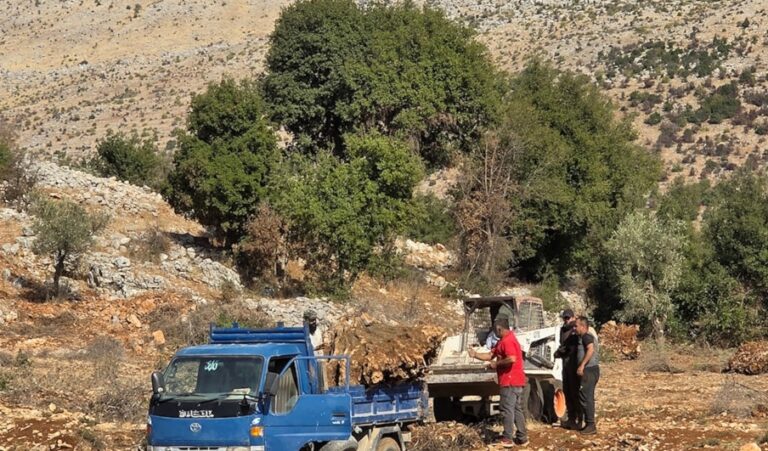
Recent moves by President Joseph Aoun and Prime Minister Nawaf Salam have exposed the lies behind their willingness to engage Hezbollah in dialogue to stabilize Lebanon. Rather than pursue reconciliation, the two leaders have reaffirmed their commitments to Washington and Riyadh to wage a broad political, economic, media, military and security campaign against the resistance. The authorities have instructed the army and security agencies to pursue Hezbollah members suspected of involvement in arms transfers and summon party officials linked to such cases, regardless of their organizational rank. Late last week, Aoun and Salam brought the country close to a major crisis by ordering expanded investigations into the Dahr Al-Baidar truck case. Security agencies were instructed to pursue individuals whose names allegedly emerged during the questioning of two Hezbollah members. Military and security officials subsequently obtained clarification from Prosecutor General at the Court of Cassation Ahmad Rami al-Hajj that he had ordered further investigations, not arrests. Asked whether the reports should be denied, he reportedly replied, “Why issue a statement that reassures them? Let them remain anxious.” Al-Hajj, one of the officials appointed by US and Saudi envoys to Lebanon, has also acted in alignment with the government’s decision to classify Hezbollah’s military wing as an illegal organization. These measures are only the visible part of a broader campaign. Previously discreet understandings with Washington and Riyadh are increasingly being expressed openly. While Saudi Arabia remains preoccupied with Yemen, Washington has made its demands explicit. The new CIA station chief in Beirut, known as Austin, has met Lebanese officials and called for steps to isolate Hezbollah and begin disarming it. If military mobilization and security conditions prevent action in the south, he reportedly argued, the government should take concrete measures elsewhere in the country. According to Al-Akhbar, Austin visited the Israeli occupation before arriving in Beirut and adopted its position that the Lebanese army was failing to act against Hezbollah. This argument has been used to justify limiting the expansion of the “pilot zones” approach. Austin also told Lebanese officials not to expect Washington to pressure Israel, while demanding that Lebanon demonstrate its willingness to make peace with it. The Search for Hezbollah’s Money According to several observers, the latest US alert began after Western, Arab and Lebanese intelligence agencies received information that Hezbollah was preparing to implement a support plan for displaced people. Secretary-General Sheikh Naim Qassem had announced the initiative in a speech commemorating Sayyed Hassan Nasrallah and Sayyed Hashem Safieddine. The US State Department reacted strongly after Reuters reported that $200 million had reached Hezbollah. Information gathered by local, Arab and international security agencies subsequently suggested that the amount was considerably higher. The support plan, outlined by Hezbollah Executive Council Chief Sheikh Ali Damoush, was estimated to involve around $600 million. The revelations prompted scrutiny of Hezbollah’s finances, including whether it continued to pay its members regularly and whether its health, social and educational institutions were operating normally. One person in contact with US officials likened the development to a “major, high-impact military operation” by Hezbollah, citing the alarm it had caused in Washington and among its Arab and Western allies. Political and media allies of the US in Lebanon soon launched a campaign questioning the source of the funds. They also revived concerns about border monitoring and accused security agencies of failing to control the crossings. According to sources, Central Bank Governor Karim Souaid told US officials that the country’s financial channels, including the central bank, commercial banks, money-transfer companies and exchange offices, had recorded no transactions of such magnitude within such a short period. The irony was that Souaid was simultaneously estimating how many dollars the central bank might receive from the spending generated by Hezbollah’s new support plan. Washington’s Military Demands US Secretary of State Marco Rubio personally called Aoun to demand further action. Expressing surprise that Lebanese authorities lacked information about hundreds of millions of dollars reaching Hezbollah, Rubio urged the president to work directly toward repealing the boycott law. US Ambassador to Lebanon Michel Issa subsequently took up the issue in meetings with lawmakers and public statements. The dispute unfolded amid legal action against Lebanese Ambassador to Washington Nada Moawad over her unauthorized contacts with Israel’s ambassador to the US. Rubio was particularly concerned that Lebanon might skip a planned round of military talks in Tampa, warning that non-participation would harm negotiations. He urged Aoun to pressure the army command to accept a direct coordination mechanism with the Israeli military. He also said US Central Command would gradually reduce the size of its team mediating between the two sides. Rubio further demanded “proof” that Lebanon was serious about pursuing those responsible for the Dahr Al-Baidar truck case. The presidential palace’s statement on the call addressed these issues. A US State Department spokesperson reinforced Washington’s position on Monday, saying the framework agreement explicitly required the Lebanese government to disarm Hezbollah throughout the country. The spokesperson described disarmament as essential to implementing the agreement. The statement echoed demands Austin had made during meetings with Lebanese officials. When warned that forcibly disarming Hezbollah would draw the army into a political, popular and military confrontation with the group, Austin reportedly replied: “Why are you afraid of confronting Hezbollah, and why fear civil war if it is a means of establishing state authority?” Testing Hezbollah’s Response by Force Aoun and Salam have sought to use the situation to test Hezbollah’s reaction to the measures being prepared. They instructed the army and security agencies to ready military and security operations in Beirut’s southern suburbs, the capital, the Bekaa and South Lebanon. Reports soon emerged of planned raids on apartments and warehouses in Beirut’s southern suburbs. Hezbollah moved quickly to warn security and military officials that it understood they were acting on political orders. However, it cautioned that those who blindly carried out directives capable of triggering an internal confrontation would share responsibility for the consequences with those who issued them. The group warned that its members and resistance fighters would treat any attempt to forcibly enter a facility or arrest a party official as an Israeli attack and respond accordingly. Hezbollah also took steps on the ground to underline its warning. Military and security commanders subsequently began consulting relevant officials to find a way to prevent a confrontation. Reviving the Bets of the Past Two Years The authorities have gained no new leverage, yet they appear unwilling to reassess their policies over the past six months. Instead, they are once again betting on Israeli military action to defeat the resistance in Lebanon. State officials and their advisers cite information reaching senior leaders that war with Iran could resume at any moment. They believe Israel would seize on any Hezbollah misstep to launch a major offensive and abandon previous understandings. These leaders, including right-wing party chiefs, also believe Washington and Riyadh want Hezbollah’s domestic opponents to move beyond political rhetoric and take concrete action. One party leader reportedly said at an internal meeting that pressure on the army and security forces was intended to intensify efforts to contain Hezbollah and prevent it from fighting Israel, ostensibly to spare Lebanon further damage. This approach portrays a full partnership with Israel, evoking the Kataeb Party’s role during the 1982 Israeli invasion. The party cooperated with Israeli forces, which later helped bring its leader to the presidency. Hezbollah Warns Officials of the Consequences MP Mohammad Raad, head of Hezbollah’s Loyalty to the Resistance bloc, described the resistance as “a necessary and legitimate national defense option for Lebanon.” He called attempts to demonize it “a national and moral crime,” arguing that its legitimacy underpinned all other forms of legitimacy and that denying its right to resist was “an assault on life.” Responding to Salam’s remarks, Raad accused some officials of undermining the resistance, denying its national achievements and legitimacy, and targeting its members and support base to comply with US directives. He attributed this approach to growing normalization with Israel, domestic political opportunism and efforts to appease foreign powers seeking to draw Lebanon into Israel’s orbit. Such efforts, he argued, deliberately bypassed the constitution and Lebanese law. MP Ali Fayyad said Rubio’s remarks to Aoun exposed the extent to which Lebanese officials had subordinated themselves to foreign powers. He accused the authorities of deliberately widening their dispute with the resistance beyond the issue of weapons to target the resistance as a whole. By doing so, Fayyad argued, the government had placed itself in confrontation with a fundamental component of Lebanese society. He warned that its policies had brought the country to a dangerous level of internal tension and that the authorities would bear full responsibility for the consequences. Al-Hajj Expands Financial Investigations Al-Hajj has also widened his search for Hezbollah’s funds. After asking the Information Branch of the Internal Security Forces to scrutinize money-transfer companies and exchange offices for transactions linked to Hezbollah or Al-Qard Al-Hasan, he turned his attention to Lebanese expatriates’ finances, particularly those of Shiites. He has requested checks on the sources of funds used in property purchases and sales across Lebanon. Some Christian political groups have portrayed these measures as a response to fears of a “Shiite takeover” of Christian areas. However, the investigations serve a broader US objective of constraining Lebanon’s cash economy. Requiring people to deposit their money in banks would allow authorities to examine its origins and restrict funds they associate with the resistance and its supporters. The measures could also place additional pressure on displaced people from South Lebanon who rely on substantial financial support from expatriates in North America, Europe and Africa, whether or not Al-Hajj is aware of that wider consequence. This is an edited translation of an article originally published in Arabic.