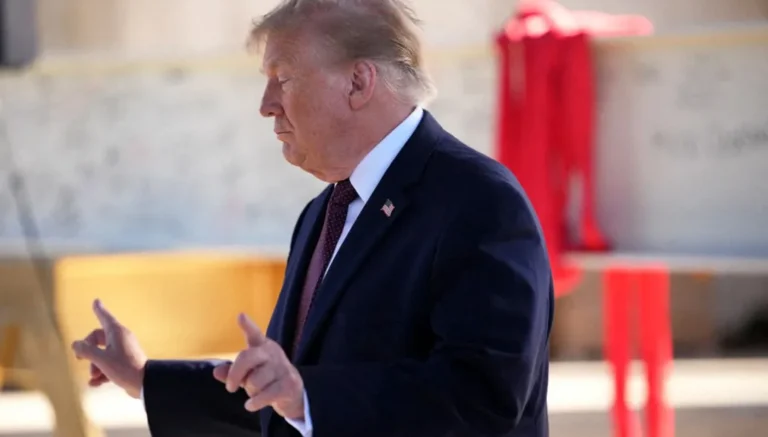
The US midterm elections have ended in a major victory for the Democratic Party, which has taken control of both the Senate and the House of Representatives. This will weaken President Donald Trump domestically, setting the stage for political and procedural confrontations between Trump and the Democratic majority in Congress, which will seek to keep the president in check until the end of his term. What concerns us here, however, is the impact of the Republican Party’s and the president’s defeat in the midterm elections on US policy toward Lebanon.
First, Hezbollah and the so-called “resistance axis,” which is celebrating the Democratic Party’s victory, should be reminded that Israel’s destruction of the Gaza Strip took place during the term of former President Joe Biden. The same applies to the defeat inflicted on Hezbollah in Lebanon, following the killing of most of its senior, second-tier and third-tier leaders, including two successive secretaries-general. As for Syria, the former regime also fell during Biden’s presidency, under the watch of his Democratic administration.
Against this backdrop, the shifting balance of electoral power in the United States is simply part of the country’s political competition, even when the outcome is a landslide in favor of the Democratic Party. This means that Lebanon will remain on the US administration’s agenda in some capacity for the next two years, under a president who retains considerable powers over foreign policy. Hezbollah would therefore be mistaken to believe that its troubles are over. It would also be wrong to assume that US involvement in Lebanon will disappear following these elections. Opposition to the arms of the group designated as a terrorist organization will remain firmly on the agenda of both the US administration and Congress. Nor will support for the Lebanese leadership, represented by Presidents Joseph Aoun and Nawaf Salam, fade away. The same applies to support for the Lebanese Army, which will remain a top priority for any current or future US administration.
This is hardly something Hezbollah should celebrate, yet the group is once again rejoicing over an illusory victory. What works for the United States does not necessarily work for Lebanon. Accordingly, Hezbollah will not be allowed to rebuild its military capabilities and regain its former influence, as this would set the stage for another major war with Israel, regardless of who serves as prime minister. Gadi Eisenkot, Naftali Bennett, Yair Lapid and Avigdor Lieberman are not leaders of the “Axis of Unity of Fronts.” Should they come to power, they will approach the security situation along Israel’s northern border through the lens of the October 7 attack, known as “Operation Al-Aqsa Flood.”
In any case, it is clear that Hezbollah’s interests fundamentally lie in weakening the army and, through it, undermining the very idea of a Lebanese state capable of asserting its sovereignty over all its territory. We therefore call on the Lebanese state, following the Israeli elections and then the US elections, to take the initiative and move swiftly on the negotiating track once the new Israeli government is formed. It should seize the opportunity presented by the US administration’s continued support for negotiations, even after the latest elections, so that Lebanon does not remain on the sidelines of the region and miss a historic opportunity to reclaim itself.
President Trump will remain in office until the end of his term, and on the Lebanon issue, he may cooperate with the Democratic Party in Congress. The Democratic Party cannot be reduced to one senator here and one member of the House of Representatives there, raising Iranian flags in their homes or carrying them in their hearts! America remains America!
Disclaimer: The opinions expressed by the writers are their own and do not necessarily represent the views of Annahar