“Lebanon First” is not a new slogan. But “Lebanon First and Last” is. The difference is that “Lebanon First,” without specifying what comes next, leaves room for interpretation. “Lebanon First and Last,” on the other hand, leaves nothing before or after it.
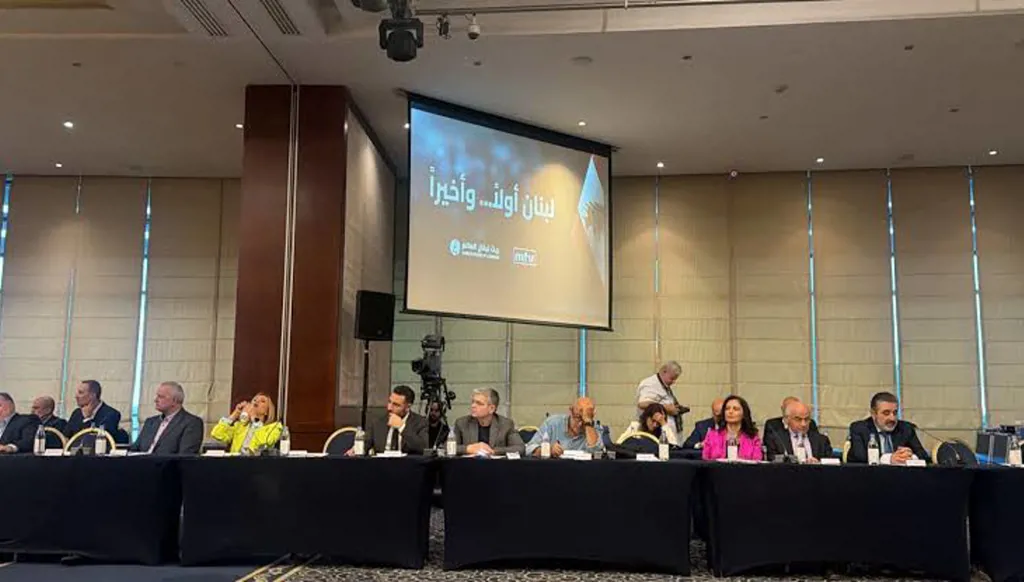
This was the slogan of a conference held a week ago, bringing together prominent figures from sovereignist political forces, political parties, independent political figures, and civil society. This is why Lebanon, and the vast majority of Lebanese, need to close ranks, particularly the broad segments of society that have spent many years resisting attempts to swallow up Lebanon, subdue it, and bring it under external control, turning it into one vast Iranian prison.
The slogan is not a call for isolation, withdrawal into oneself, or turning one's back on the country's pluralistic reality. Rather, it is a call to put Lebanon and its interests ahead of all other causes, commitments, inclinations, and affiliations.
Neutrality does not mean turning our backs on just causes in the region, foremost among them the Palestinian cause. Instead, it reflects the Lebanese desire to turn the page on sacrificing Lebanon on the altar of other people's causes, whatever they may be. Lebanon has paid the price for the region's conflicts, wars, and disputes over more than seventy years. The time has come to turn our attention inward and put Lebanon, in all its sectarian, regional, political, and social diversity, above everything else.
Lebanon's interests require all of us to preserve our differences, diversity, and pluralism without putting the fate of the Lebanese at risk, as has happened, and continues to happen, for more than seventy years. Without exception, we have all made mistakes in our choices and in the ways we have expressed ourselves. Each of us, in our own way, has handed over part of our country to external powers that have fought one another using our blood, our security, our dreams, and our future, until we have become, within our own borders, communities devastated by successive disasters or perpetually at risk of suffering them.
Today, the region is going through one of its most difficult and dangerous periods. New maps are being drawn as an old regional order, inherited from the end of the First World War, comes to an end, while a new order for the region has yet to emerge.
It is no longer possible to view the Middle East through the lens of the Cold War, nor through the eyes of those who witnessed the fall of the Berlin Wall. A new Middle East is taking shape. We do not know what form it will ultimately take, and we certainly cannot predict what its map will look like. It may bear little resemblance to the maps drawn after the First World War.
Many red lines fell during the second decade of the twenty-first century, and many more will fall over the next two decades. As these red lines are crossed, the borders of existing entities and the limits of ambitions that transcend them are being forged in fire and blood. For the foreseeable future, this will remain a region of prolonged wars and conflicts.
Lebanon will be at the heart of these dangerous transformations, whose repercussions have already begun to strike our already fragile political entities. If the Lebanese do not wake up to confront this phase with a new approach that puts their country first and last, and work to keep it as neutral as possible to protect it from the turmoil engulfing its surroundings and the voracious ambitions of neighboring powers, the day may come, sooner than we think, when we discover that Lebanon has once again been placed on the region's table, leaving us with nothing but the scraps.
Disclaimer: The opinions expressed by the writers are their own and do not necessarily represent the views of Annahar