Regardless of the outcome of the Israeli elections and who wins, the future direction of ongoing events and wars will not become clear for at least two or three months. If the American president cannot “impose” a national unity government, which is considered an American interest, then new elections will be the only option, even if they are unlikely to bring about a fundamental change in the political landscape.
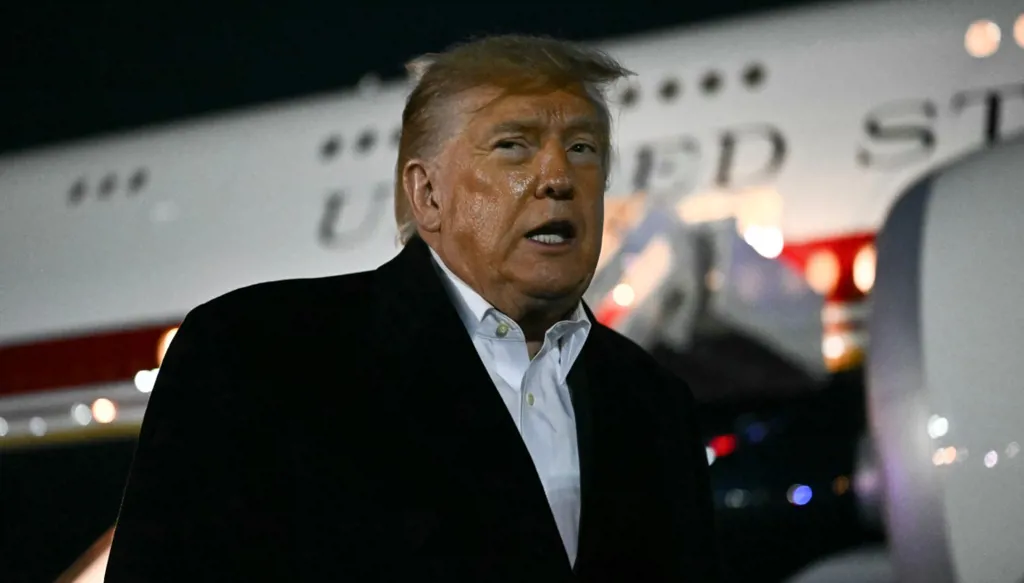
In Washington, Donald Trump has decided that his presidential powers will not prevent him from continuing his war on Iran, even if he loses the Republican majority in Congress in the upcoming Tuesday elections.
In Israel, it remains unclear whether the “caretaker government,” with a suspended Knesset, can decide to participate in large-scale military operations against Iran, given that the ongoing wars were not a contentious issue in the electoral campaigns of the competing parties.
In America as in Israel, there will be no serious discussion of solutions and settlements concerning Lebanon, Gaza, the West Bank, and Syria until the issue of Iran and its proxies is resolved, whether through war or negotiations, both of which have proven difficult.
While escalation was postponed until after the American elections, despite Benjamin Netanyahu's insistence on accelerating it to boost his election chances, the capitals concerned are certain that the war will resume, with all parties involved willing to see it happen.
In the meantime, Trump maintained his temporary truce with Iran, which Iran exploited to continue its war against Saudi Arabia through its Houthi proxies. Meanwhile, Israel continued its daily crimes and violations. Nothing changed on the ground, whether in Gaza, where assassinations and destruction continued despite the ceasefire; in Lebanon, where preparations for a new phase of expanding the occupation are underway without any sign of seriousness in direct negotiations; in the West Bank, where settlers were tasked with sabotaging the olive harvest season and continuing their attacks; or in Syria, where Israel repeated its incursions in the south and insisted on meddling and intervening in the Suwayda issue.
At this delicate moment, the countries of the “Mecca Alliance,” acting in their respective capacities, decided to open a dialogue with Iran aimed at avoiding a renewed war and pushing toward the resumption of negotiations between Tehran and Washington. They did not expect immediate results but sought to establish “mutual” rules for post-war relations.
It is clear that Tehran has separated the issues. The first concerns regional security and the “mechanism” it previously proposed “without external parties,” focusing specifically on the Gulf region, with Iran dominant within it. Therefore, Tehran appeared uninterested in formal regional agreements under the heading of “non-aggression.” The second issue concerns the war with the United States. If Iran has anything to offer to end the war, whether regarding its nuclear program, the Strait of Hormuz, or militias, it will not place it in the “Mecca Alliance” basket. Instead, it wants to negotiate these matters with Washington in relation to its future role and influence.
Iran did not treat the initiative by the alliance countries, Saudi Arabia, Turkey, and Pakistan, as an “opportunity” that might spare it further losses. Rather, it viewed it as confirmation of the growing power it believes it has gained through the war, as it still considers itself on the verge of defeating the United States.
While interests drove Trump to war and are now driving him to seek an end to it, ideological fanaticism and the logic of domination prevail in Israel and Iran. In such a situation, there is no room for rationality or moderation.
Disclaimer: The opinions expressed by the writers are their own and do not necessarily represent the views of Annahar.