As Washington pushes Beirut to confront Hezbollah, regional diplomatic warnings intensify over the risk of a wider Israeli offensive and a new front in the U.S.-Iran confrontation.
Arab and international warnings to Lebanon have continued over the risk of escalation in the south and the possibility of being drawn into a confrontation if the region erupts or a U.S.-Iran war breaks out. There are also concerns that southern Lebanon could be used to send regional messages, potentially exposing the country to a large-scale Israeli war. According to diplomatic sources, Qatar's recent move to support Lebanon carried messages urging the country not to give Israel an opportunity to strike, or even provide it with pretexts to expand its military operations.
French Foreign Minister Jean-Noël Barrot's move in support of Lebanon has heightened concerns over the tense regional situation and its impact on the country, amid the deadlock in Iranian-American negotiations. The move forms part of European efforts to prevent war and preserve a minimum level of stability in light of continued Israeli threats of war.
As Lebanon awaits the Iraqi message and its implications, with Prime Minister Ali al-Zaidi expected to visit Beirut, Iraq is seeking to restrict weapons and prevent attacks against states in the region. Lebanon appears to be at the eye of the storm, caught between mounting American pressure on the state to take further action against Hezbollah and Iran's push to use the Lebanese arena as leverage in the confrontation. These pressures come amid Israeli threats to launch a comprehensive war and occupy additional territory in southern Lebanon.
All these moves hinge on the anticipated U.S. role. Washington's position, conveyed through Secretary of State Marco Rubio's call to President Joseph Aoun, brings the focus back to the decisive actor in the Lebanese-Israeli negotiation track and security arrangements. Information indicates that the U.S. administration is displeased with the state's inability to assert control. Rubio questioned Hezbollah's influence and capabilities, urging the state to take swift measures to cut off its financial resources and dismantle its structure. He also called for direct security coordination between Lebanon and Israel in the south and an end to the boycott of Israel.
American discontent is reflected in the atmosphere within the U.S. administration and, according to diplomatic sources, points to Washington moving toward tough measures against Lebanon, potentially including sanctions and increased pressure on the state to confront Hezbollah. Washington wants the state to handle these files differently than before, a shift it seeks to impose at the scheduled military meeting in Tampa by increasing coordination between the Lebanese and Israeli armies, adopting a mechanism to verify the army's work in disarming, and taking political, judicial and military measures against Hezbollah's entities and institutions.
The United States appears to be paying little heed to official Lebanese reservations about confronting Hezbollah and avoiding a clash with it, despite Hezbollah's increasingly extreme measures against the state, backed directly by Iran. This support is reflected in Iranian visits to Beirut and diplomatic contacts with Lebanon. Hezbollah's escalation has included demands for the return of the explosives confiscated in Dahr al-Baydar to the "resistance," coinciding with meetings held in Beirut by Iranian Deputy Foreign Minister Saeed Khatibzadeh.
Arab and European visits to Lebanon have carried calls for the state to establish a clear path toward regaining control over its territory, while American messages have warned Lebanon to proceed with its measures in accordance with the framework agreement. Although the state has already begun taking precautionary measures, including revoking the licence of Bank Saderat Iran, the danger facing the country is growing amid the U.S.-Iran confrontation. The situation raises fears of a full-scale explosion at an unexpected moment, particularly if Israel ignites the southern front.
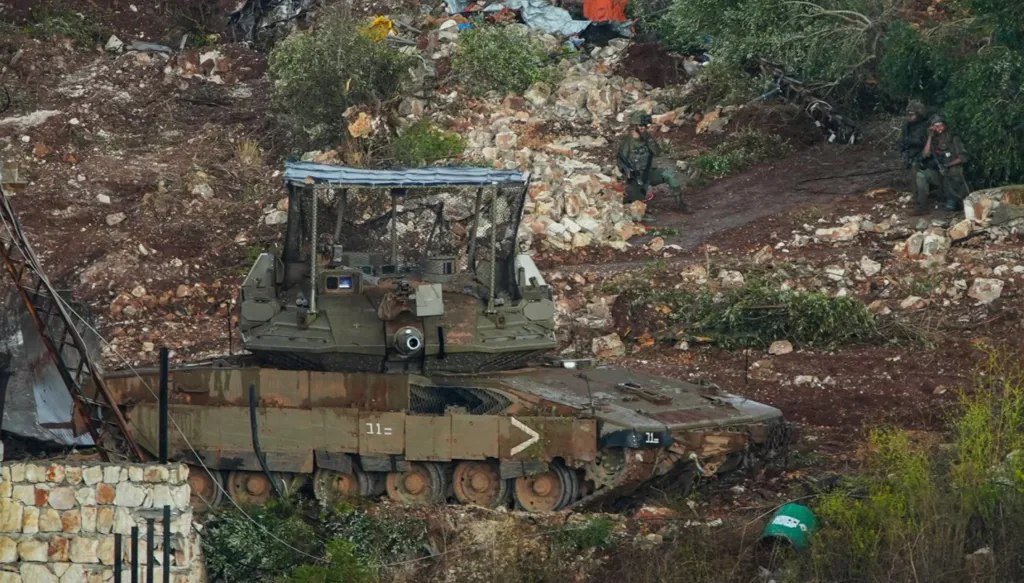
Hezbollah's continued provocations are providing justifications for the occupation, including through weapons supplies and declarations challenging the Americans by announcing the rebuilding of its military capabilities. Meanwhile, information indicates that Israel has informed the Americans of its plan to occupy southern Lebanon up to the Awali River and strike the southern suburbs of Beirut if Hezbollah launches operations against Israeli forces. Israel is clearly prioritizing the possibility of war and consolidating its occupation of the security zone, which spans 600 square kilometres.
Disclaimer: The opinions expressed by the writers are their own and do not necessarily represent the views of Annahar.
Thank you for subscribing to our newsletter