As calls grow to replace the Taif Agreement with a new political formula, Lebanon faces a defining choice: complete the framework of state sovereignty and power-sharing, or risk returning to a cycle of armed confrontation.
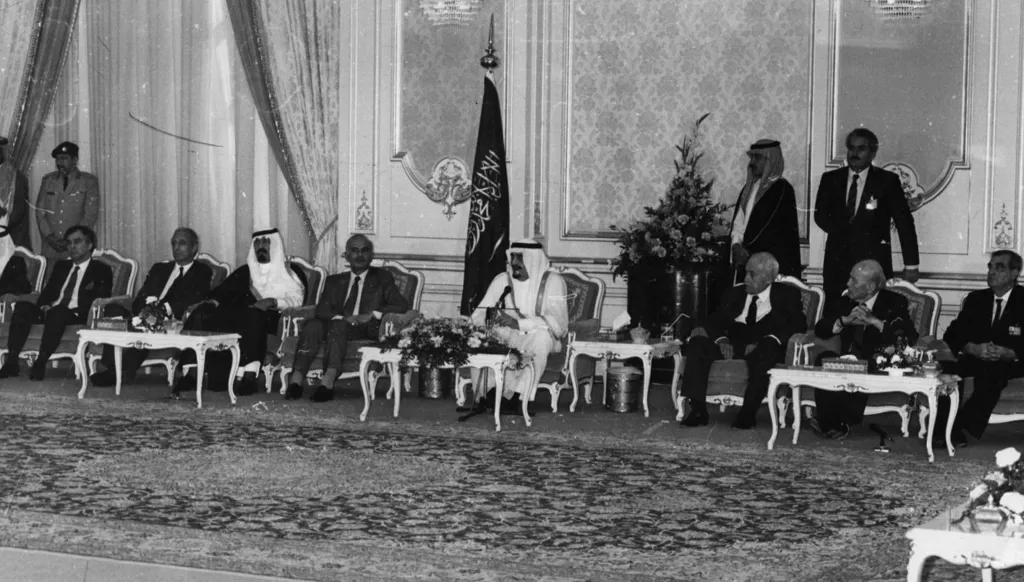
On October 22, 1989, around 60 Lebanese deputies approved a document in Taif that brought an end to a war that had outlasted its causes. The Taif Agreement was not the product of consensus, but of exhaustion, forged amid a severe imbalance of power and under a heavy Syrian grip.
It provided the framework around which the desired state was to be built. But the walls were never completed, and the framework never became a home.
Thirty-seven years later, those close to Hezbollah are calling for the framework to be dismantled and replaced with another built under arms. This is a recipe for perpetual civil war. The weapons underpinning this demand are losing their justification by the day: they no longer deter Israel and instead bring destruction. After the government banned Hezbollah's military activity and the party's political credit eroded, an attempt is underway to turn its position into a permanent veto held by one party over the representational rights of all others.
Taif was not simply a division of parliamentary seats, but a form of undeclared federalism: a federalism of components rather than regions. Parity between Christians and Muslims embodied the spirit of the 1943 National Pact even before it reflected that of Taif. It was intended to guarantee against exclusion and the monopolization of sovereign decision-making. Thus, discourse around "demographic representation" is not a technical amendment, but an attempt to dismantle the spirit of consensus at the heart of the Lebanese Constitution.
Ironically, what is most often described today as "antiquated" in Taif is precisely what the Syrian regime prevented from being implemented:
A Senate to consolidate the representation of the country's components.
A national body to abolish political sectarianism, paving the way for a state of citizens.
Expanded administrative decentralization.
Taif was never tried and found wanting. It was left at the mercy of regional winds.
Yes, Taif has its flaws, particularly in the selective manner in which its provisions were implemented under foreign guardianship. But the remedy is to complete the building, not demolish it: a parliament free of sectarian constraints and a Senate that reflects the interests of the country's components and guarantees their partnership.
In this arrangement, demographic representation would move to the House of Representatives, while safeguards would be entrusted to the Senate. No component would be required to trade its security for a booby-trapped civil peace.
The condition for this reform is that it must follow the state's monopoly on arms, not precede it. Every amendment imposed on the Lebanese political contract was imposed by those holding the rifle: Damascus in 1990, followed by Doha after May 7, 2008. Reform before disarmament is not reform, but a temporary ransom. The crisis is one of commitment, not of texts, and can be resolved only through a sequence of security and political guarantees tied to the implementation of the Constitution.
The sequence, therefore, is clear: a state monopoly on arms first, followed by decentralization that gradually deepens toward an explicit or implicit federal structure, and then neutrality enshrined internationally. Neutrality before disarmament is an illusion, while decentralization before disarmament amounts to disguised partition. Disarmament accompanied by a guaranteed political horizon is the path to sovereignty.
Federalism is not a coup against Taif, but a commitment to its spirit. The states that exercised guardianship over Lebanon refrained from revealing that spirit, fearing it would turn the country into a pluralistic example liberated from the logic of war and autocracy. What is required is to transfer state sovereignty and the rights of the country's components from custom into the Constitution and institutions, building unity through partnership rather than dominance.
The path runs through Taif, not around it: administrative decentralization, followed by financial decentralization, then a constitutional federal structure safeguarded by the Senate.
Time is not on Lebanon's side. The historical window is closing rapidly, and civil peace and state neutrality can endure only through national unity strengthened by constitutional guarantees.
Preserving Lebanon's cultural and religious pluralism is a strategic interest for the entire region. Lebanon was the Arab world's printing press, journalistic hub, university, haven and bridge to the world. As its presence waned, militias, a security state and a jihadist emirate filled the void. It is time for Lebanon and the region to move beyond eras written by rifles.
The question is not whether Taif will change. It certainly will. The question is whether the Lebanese will write their next national contract before they lift the arms from their necks, or only afterward.
Thank you for subscribing to our newsletter