As Israel hardens its stance and threatens further occupation, Hezbollah rejects discussions on its weapons while the Lebanese state faces mounting domestic and international pressure, with the risk of a regional war, sanctions and deeper instability looming.
It has become clear that the US-sponsored negotiations between Lebanon and Israel have reached a critical juncture, amid Israel’s hardline stance and the conditions it is imposing on Lebanon. Just days before the Israeli elections, Lebanon appears to be walking a tightrope between escalating domestic crises, as the confrontation between the authorities and Hezbollah intensifies, with the group stepping up its opposition to measures targeting explosives and refusing any discussion of bringing weapons under state control, and the deepening US-Iranian confrontation, which threatens to plunge the region into another war that Israel is preparing to join, with even more severe repercussions for Lebanon.
Lebanon has recently received Arab and international warnings that a dangerous phase lies ahead, as well as American warnings that amounted to an ultimatum to the state over its failure to take action against Hezbollah, dry up its financial resources, and dismantle its military sectors and civilian institutions. These warnings have come alongside Israeli threats of war and the occupation of areas that could extend as far as the Awwali River and include the Western Beqaa, under the pretext that Hezbollah is rebuilding its capabilities and bringing in weapons.
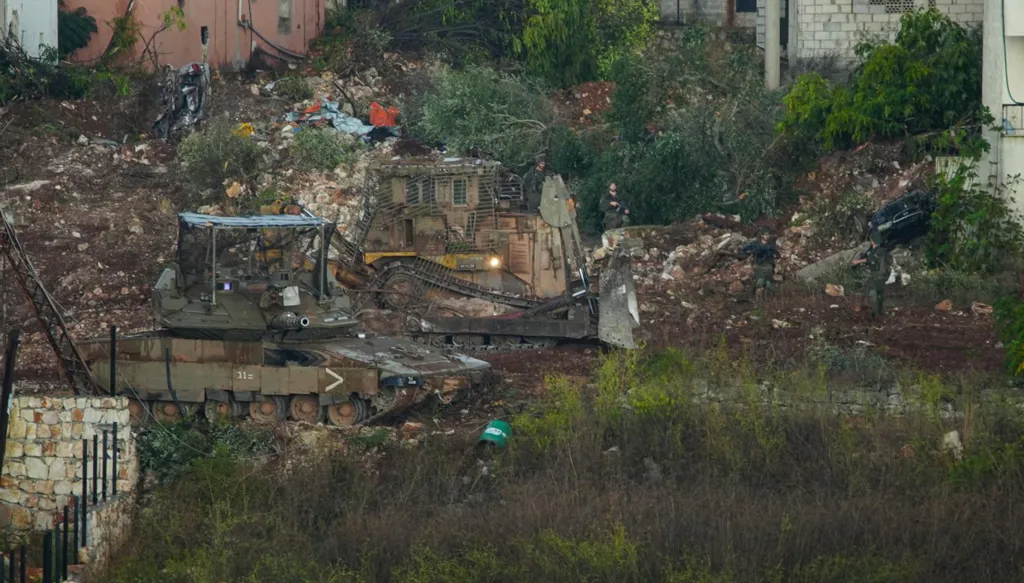
While the state continues to place its hopes in negotiations and in US pressure on Israel to withdraw from areas it has occupied, thereby giving Lebanon leverage to implement its decisions on weapons, the overall domestic and international climate points to a dead end on all fronts. There are no indications that Israel will withdraw from the occupied areas in the south. On the contrary, the occupation of the Yellow Security Zone appears to be becoming permanent.
Meanwhile, Hezbollah is escalating its confrontation with the state, clinging to its weapons and rejecting any dialogue that could lead to a settlement shielding Lebanon from the regional conflict. Instead, it is acting as though the situation were still as it was before October 8, 2023, asserting its role as the decisive force in the “army, people, resistance” equation. It is taking the lead in determining the strategy surrounding its weapons and the movement of explosives under the banner of “resistance,” while openly declaring its support for Iran. Iranian officials who recently visited Lebanon have also made no secret of their determination to revive the forces of the so-called Axis of Resistance and provide Hezbollah with all forms of support as it confronts Israeli and American projects in the region.
Lebanon can no longer afford another war or another venture into providing military support. Nor can it afford to continue placing its hopes in negotiations conducted in their current form, which have yielded no decisive leverage or sources of strength to enable the state to restore its sovereignty.
This does not mean that the state can suspend negotiations or abandon the framework agreement, as doing so would expose the country to serious risks, including damage to Lebanon’s international relations and the possibility of a blockade and sanctions. However, the state can pursue several tracks to establish an Arab and international protective framework against Israel’s conditions and its plan to reach a peace agreement with Lebanon, along with security, economic, and political arrangements that are independent of the Arab position.
This would prevent the state from remaining hostage to its hopes that the United States might provide it with leverage without imposing conditions, costs, or commitments in return for meeting its demands, whether regarding Hezbollah’s weapons, an Israeli withdrawal, reconstruction, or assistance to the Lebanese army.
The state has begun taking measures against Hezbollah following the breakdown of dialogue and communication, as well as its inability to forge a unified national position in the face of the dangers threatening the country, including the risk of a third war or another act of military support that could drag Lebanon into a new catastrophe.
Yet the situation is not as straightforward as some suggest. Hezbollah is raising the stakes of the confrontation and showing little regard for the consequences the country may face. It remains firmly committed to its external calculations, continues to provide pretexts for further escalation, and invites occupation by openly declaring that it is rebuilding its combat capabilities.
Meanwhile, Lebanon is sliding into a dark tunnel and a catastrophic situation, with social, financial, security, and political crises mounting. The country is at risk of being swallowed by the shifting sands and gathering clouds of a regional war that threaten to tear apart and ignite the Lebanese domestic front.
Disclaimer: The opinions expressed by the writers are their own and do not necessarily represent the views of Annahar
Thank you for subscribing to our newsletter