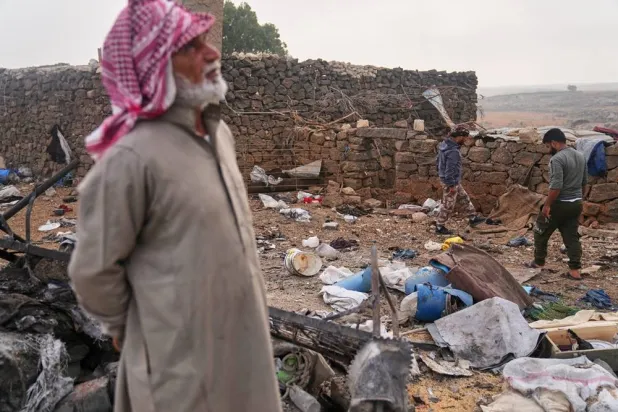
An informed Jordanian source confirmed that “areas near the northern border with Syria have provided, and continue to provide, a haven for terrorists and drug traffickers.” The source told Asharq Al-Awsat that “numerous targets inside Syria are not under the control of the Syrian government,” noting that these gatherings “have served as a launchpad to target Jordanian security.” Jordanian security asserted that it “seeks to protect its borders from sites that serve as a launchpad for operations targeting its security and stability, which are areas outside the control of regular Syrian security forces.” Meanwhile, Jordan has found itself “at the forefront of confronting the risks of terrorist activity on its borders,” according to the source. The source stated that the death toll from Jordanian airstrikes targeting ISIS operatives in southern Syria has risen “to at least 24 terrorists.” The same source linked “ISIS to drug trafficking networks, which have recently resumed their operations in southern Syria.” The Jordanian source maintained that the strikes were based on precise intelligence. Amman also expressed its willingness to cooperate with Damascus on security assessments, intelligence sharing and border protection. Syria, however, condemned the bombardment, denied any prior coordination with Jordan and accused Amman of carrying out strikes that killed several civilians. Jordanian sources disputed that account, insisting the operation had been coordinated with Syrian authorities and targeted locations identified through confirmed intelligence. They linked the ISIS operatives targeted in the strikes to the cell behind last Friday’s attack at a church in the village of Hammoud, in Jordan’s Karak governorate. The Jordanian source noted that the kingdom had largely secured its northern border through its own efforts since 2012, confronting militias and militant groups operating in southern Syria that have repeatedly threatened Jordanian civilians. The airstrikes destroyed warehouses holding large quantities of weapons and narcotics near Sweida and in the Syrian desert, according to intelligence information obtained by Asharq Al-Awsat. The intelligence also pointed to cooperation between militant groups in southern Syria and smuggling networks along the Jordanian border. An informed source described the links, coupled with a recent rise in intercepted smuggling attempts, as a dangerous development for the kingdom’s security. Jordanian forces have intercepted 160 infiltration and smuggling attempts along the Syrian border since the beginning of the year, including 22 infiltration attempts and 138 operations involving drugs and weapons. Seized contraband included large quantities of narcotic pills and other drugs, weapons, explosives, drones, GPS devices and communications equipment. Smugglers have increasingly used drones and balloons, complicating border surveillance and efforts to trace the origins of cross-border operations. Jordanian Minister of Government Communication Mohammad Momani warned that his country’s patience was running out over militant activity threatening national security. Between 2024 and 2026, Jordan carried out several airstrikes against drug-traffickers, arms smugglers and militant groups under security and intelligence-sharing arrangements with the Syrian government. The operations were aimed at protecting civilians on both sides of the border from militant and criminal networks.